Manasa Devi Temple – Goddess of Snakes
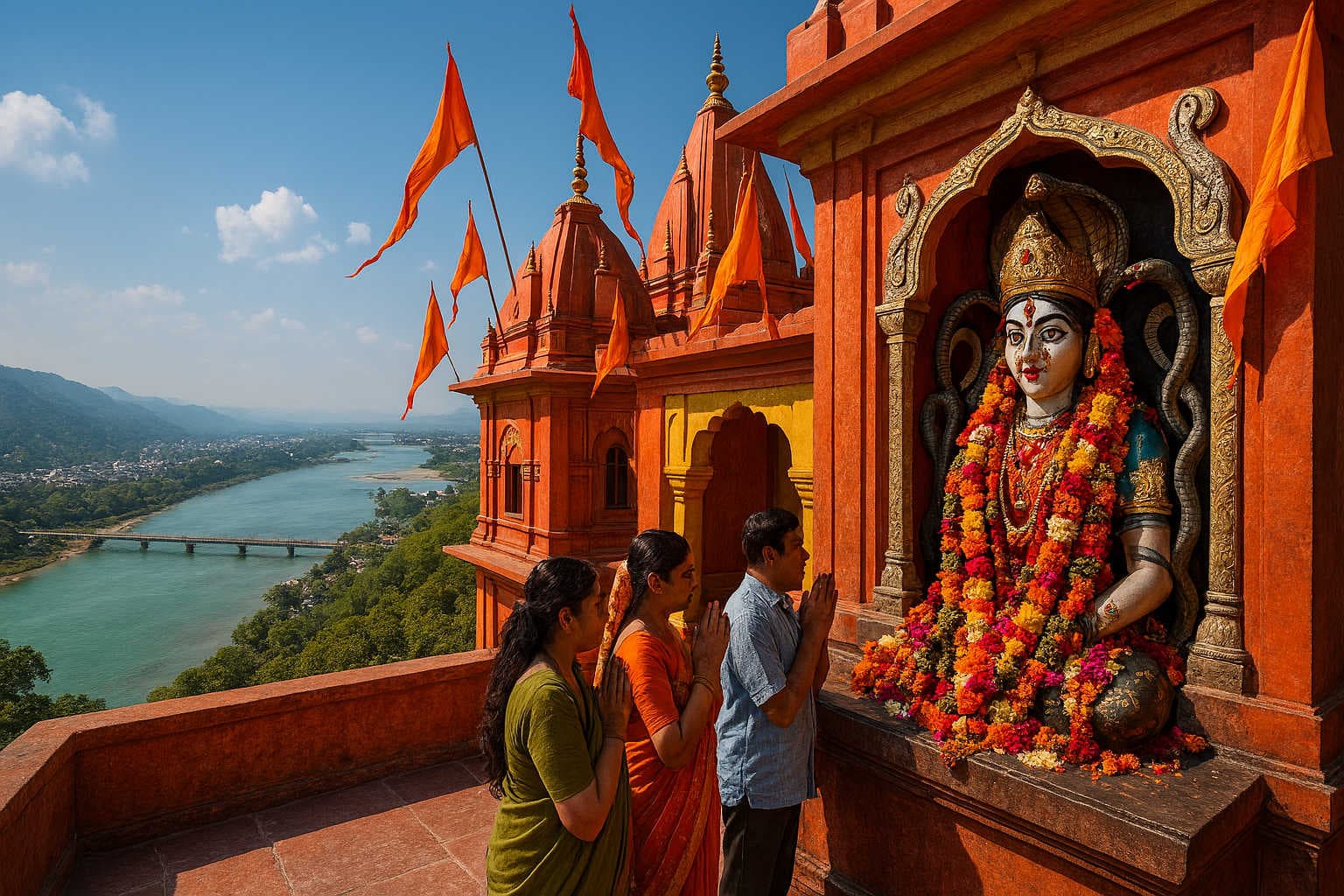
Perched on the Bilwa Parvat of the Shivalik Hills in Haridwar, the Manasa Devi Temple is one of the most revered Shakti shrines in North India. Dedicated to Goddess Manasa, the temple draws thousands of devotees every year, especially during the pilgrimage season.
The temple is not only an important part of the Haridwar Panch Tirth (five sacred shrines) but also holds great mythological significance as the seat of the serpent Goddess, revered for protection from snakebites, fertility, and fulfillment of wishes.
Who is Goddess Manasa Devi?
Manasa Devi is a powerful Goddess in Hindu tradition, particularly in Bengal, Assam, Bihar, and Uttarakhand. She is believed to be the daughter of Sage Kashyapa and Kadru, and in some legends, the sister of the serpent king Vasuki. She is often associated with snakes and revered as the serpent Goddess who protects against venomous bites.
Manasa Devi is also worshipped for fertility, prosperity, and protection from diseases. Folk traditions describe her as a compassionate mother who responds quickly to the prayers of devotees.
Her iconography often shows her seated on a lotus or throne, surrounded by snakes, holding symbolic objects like lotus, conch, or pitcher.
The Legend of Manasa Devi
The mythology of Manasa Devi intertwines with the eternal theme of devotion and recognition. According to legend, she longed for human worship but was initially ignored. To establish her supremacy, she caused snakebites and calamities until people began to acknowledge her divinity.
One of the most famous legends is that of Behula and Lakhindar, narrated in the Bengali text Manasamangal Kavya. After Lakhindar died of a snakebite on his wedding night, his wife Behula undertook a long journey with his body on a raft, singing praises of Manasa. Moved by her devotion, the Goddess restored Lakhindar’s life. This story cemented Manasa Devi’s role as a Goddess of protection, compassion, and healing.
The Temple in Haridwar
The Manasa Devi Temple in Haridwar is one of the three prominent Siddh Peethas of the region, the others being Mansa Devi, Chandi Devi, and Maya Devi temples. Together, they form the sacred triangle of devotion in Haridwar.
-
Location: On Bilwa Parvat, offering a panoramic view of Haridwar city and the flowing Ganga.
-
Access: Pilgrims can reach the temple either by trekking uphill or by taking the popular ropeway known as “Mansa Devi Udankhatola.”
-
Sanctum: Houses two idols of Goddess Manasa—one with eight arms and another with three heads and five arms. Both represent her dual nature as compassionate and fierce.
Spiritual Significance
The temple is considered extremely powerful for those seeking to:
-
Overcome fear of snakes and protect themselves from snakebites.
-
Fulfill wishes for marriage, children, and prosperity.
-
Find healing from illnesses and freedom from negative influences.
Devotees often tie sacred threads on the branches of the temple’s holy tree, symbolizing their wishes. Once the wish is fulfilled, they return to untie the thread, expressing gratitude to the Goddess.
Rituals and Worship
The temple follows daily rituals of Shakti worship, with special emphasis on offerings symbolizing fertility and prosperity.
-
Morning and Evening Aarti: Priests perform devotional songs and lamp ceremonies.
-
Offerings: Milk, fruits, coconuts, flowers, and particularly bilva leaves are considered auspicious.
-
Wish Fulfillment Tradition: Tying sacred threads as vows is one of the most popular practices at the temple.
-
Nag Panchami: The most important festival here, celebrated with grandeur, when devotees offer milk and prayers to snakes as messengers of the Goddess.
Festivals at the Temple
-
Navratri: Both Chaitra and Sharad Navratris witness grand celebrations, with devotees thronging the temple in thousands.
-
Nag Panchami: The day dedicated to snakes, when Goddess Manasa is worshipped with utmost devotion.
-
Kumbh Mela and Kanwar Yatra: During these large-scale pilgrimages in Haridwar, Manasa Devi Temple becomes a focal point for devotees.
Manasa Devi and Chandi Devi – Twin Goddesses
An interesting aspect of Haridwar’s spiritual geography is the pairing of Manasa Devi with Chandi Devi. While Manasa Devi’s temple is on the Bilwa Parvat, Chandi Devi resides on the Neel Parvat across the Ganga. Devotees believe that worshipping both goddesses together grants complete blessings of Shakti.
It is also said that without visiting both, the Haridwar pilgrimage remains incomplete.
Pilgrimage Experience
Visiting the temple is a deeply spiritual experience. The ropeway ride offers breathtaking views of the Ganga flowing through Haridwar, the bustling ghats, and the Himalayas in the backdrop. As devotees climb towards the shrine, the chanting of hymns, the sound of bells, and the fragrance of incense fill the air.
Inside the temple, the sight of Goddess Manasa surrounded by serpent motifs instills awe and reverence. Devotees often report a feeling of inner calm and divine protection after offering prayers here.
Nearby Attractions
Pilgrims often combine their visit to Manasa Devi Temple with:
-
Chandi Devi Temple – another Siddh Peetha across the Ganga.
-
Maya Devi Temple – one of the oldest temples of Haridwar, marking it as a Shakti Peetha.
-
Har Ki Pauri – the sacred ghat where the evening Ganga Aarti draws thousands.
-
Bharat Mata Mandir – a unique temple dedicated to Mother India.
Why Visit Manasa Devi Temple?
The temple is not just about snake worship—it is about faith in divine protection and maternal grace. For centuries, devotees have come here with unfulfilled desires and left with hope, healing, and blessings.
The Goddess Manasa represents the inseparable bond between humans and nature, reminding us of the reverence we must hold for all creatures, including snakes.
Conclusion
The Manasa Devi Temple in Haridwar is more than a shrine—it is a living testimony of faith, myth, and tradition. Whether one seeks protection from snakebites, blessings for fertility, or simply spiritual peace, the Goddess is believed to grant boons to her sincere devotees.
Standing high on the Shivalik hills and overlooking the holy Ganga, the temple continues to attract pilgrims from across India, binding them with the eternal power of Shakti.