Lalita Devi Temple – One of 51 Peethas
Among the 51 Shakti Peethas spread across the Indian subcontinent, the Lalita Devi Temple of Prayagraj holds a place of immense significance. Dedicated to Goddess Lalita Devi, this temple is deeply revered by devotees of Shaktism and is believed to be the spot where the fingers of Goddess Sati fell when Lord Vishnu cut her body to stop Shiva’s grief-filled cosmic dance.
Located in Prayagraj (formerly Allahabad), a city already known for its spiritual magnetism as the site of the Triveni Sangam (the confluence of the Ganga, Yamuna, and the hidden Saraswati), Lalita Devi Temple stands as an ancient testimony to faith and divine feminine energy.
The Legend of Lalita Devi Temple
The story of Lalita Devi Temple is rooted in the eternal tale of Sati and Shiva. When King Daksha insulted his son-in-law Lord Shiva and humiliated Sati, she immolated herself in the sacrificial fire. Overcome with grief, Shiva carried her body across the universe, performing the destructive Tandava.
To save the cosmos, Lord Vishnu released his Sudarshan Chakra, cutting Sati’s body into pieces. Wherever the pieces fell, a Shakti Peetha was established. It is said that Sati’s fingers fell in Prayagraj, sanctifying the land and giving rise to the Lalita Devi Temple.
This legend binds the temple eternally to the cosmic cycle of creation, destruction, and renewal, making it an essential pilgrimage for devotees of the Goddess.
The Goddess Lalita Devi
Lalita Devi is regarded as a benevolent yet powerful form of the Goddess. She represents:
-
Compassion and grace – as she fulfills the wishes of her devotees.
-
Protection and power – as she shields devotees from negativity.
-
Wisdom and creativity – as she embodies the Shakti that sustains the universe.
She is often depicted in bright attire, seated on a lotus, radiating divine beauty and strength.
Temple Architecture
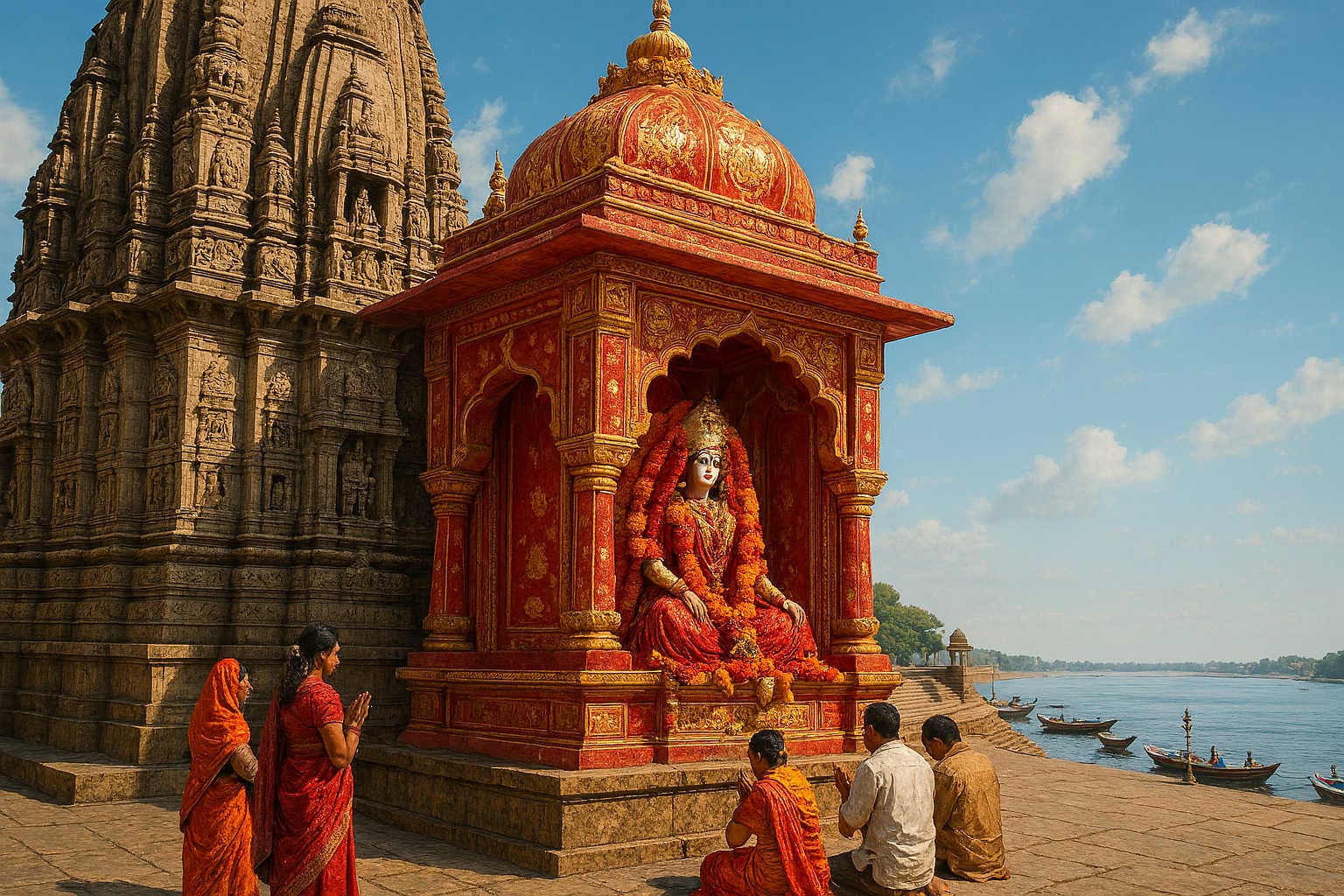
The Lalita Devi Temple showcases the beauty of North Indian temple architecture. Though it has been renovated several times over the centuries, it still retains its ancient aura.
-
Sanctum (Garbha Griha): Houses the idol of Goddess Lalita, adorned with red clothes, sindoor, flowers, and jewelry.
-
Shikhara: The tall spire of the temple reflects traditional Hindu style, often decorated during festivals.
-
Courtyard: Spacious enough to accommodate large gatherings, especially during Navratri and Kumbh Mela.
-
Location Advantage: Its proximity to the Triveni Sangam makes it a must-visit shrine for pilgrims performing rituals there.
Spiritual Importance
Being one of the Shakti Peethas, the Lalita Devi Temple is not just a regional shrine but a pan-Indian center of faith. Devotees believe that praying here helps in:
-
Overcoming obstacles and difficulties.
-
Seeking blessings for marriage and fertility.
-
Attaining inner strength and peace.
-
Receiving the Goddess’s grace for prosperity.
The temple also plays an important role during the Kumbh Mela, when millions gather in Prayagraj. Many pilgrims consider their Kumbh pilgrimage incomplete without offering prayers at Lalita Devi Temple.
Rituals and Worship
Worship at the temple follows traditional Shakti rituals:
-
Daily Puja: Priests perform aarti in the morning and evening, accompanied by chanting of Devi mantras.
-
Navratri: Both Chaitra (spring) and Sharad (autumn) Navratris are celebrated with grandeur. Devotees fast, chant hymns, and offer red clothes and flowers to the Goddess.
-
Special Offerings: Sindoor, bangles, sweets, and coconuts are considered auspicious offerings.
-
Shakti Puja: Devotees often perform special pujas to overcome challenges and to seek victory over adversities.
Festivals and Celebrations
The temple comes alive during major Hindu festivals:
-
Navratri: The most significant festival for Shakti temples, with thousands of devotees visiting each day.
-
Durga Puja: Celebrated with great enthusiasm, symbolizing the triumph of Goddess over demons.
-
Kumbh Mela: Every twelve years, Lalita Devi Temple becomes one of the central sites of pilgrimage for the millions who come to Prayagraj.
-
Magh Mela: Another important occasion when devotees throng the temple after taking a holy dip in the Sangam.
Nearby Attractions
Pilgrims visiting Lalita Devi Temple often also explore:
-
Triveni Sangam: The sacred confluence where ritual baths are believed to cleanse all sins.
-
Hanuman Mandir: A reclining Hanuman temple near the Sangam, famous for its unique idol.
-
Alopi Devi Temple: Another revered Shakti shrine of Prayagraj, associated with Sati’s disappearance.
-
Akshaya Vat (Immortal Banyan Tree): Believed to be eternal, located inside the Patalpuri temple at the Allahabad Fort.
Why Visit Lalita Devi Temple?
Visiting the Lalita Devi Temple is not just about ritual worship but also about experiencing the spiritual essence of Shakti Peethas. Pilgrims feel a deep connection with the Goddess here, as the temple embodies both the sorrow of Sati’s sacrifice and the eternal power of divine femininity.
The temple’s atmosphere is filled with chants, the fragrance of incense, and the devotion of countless pilgrims, creating a space where seekers feel uplifted and spiritually charged.
Conclusion
The Lalita Devi Temple of Prayagraj stands as a timeless reminder of the story of Sati, Shiva, and the cosmic play of life and death. As one of the 51 Shakti Peethas, it is not only a site of immense mythological importance but also a living center of devotion and energy.
For those who journey to Prayagraj for the Sangam or the Kumbh, a visit to Lalita Devi Temple is indispensable. Here, devotees find solace, strength, and blessings from the Goddess who continues to watch over them with compassion and power.
The temple is more than stone and idol—it is a living force of Shakti, radiating divine protection and eternal grace.