Durga Temple of Varanasi – Power of the Red Goddess
In the sacred city of Varanasi, where every corner echoes with devotion and timeless legends, the Durga Temple stands out as a vibrant and spiritually charged shrine. Famously called the Temple of the Red Goddess, this ancient temple is dedicated to Maa Durga, the fierce embodiment of Shakti (divine energy). Painted in striking red hues, the temple reflects the fiery power of the Goddess and her role as the protector of devotees.
Unlike many temples in Varanasi known for serenity, the Durga Temple exudes raw energy, faith, and divine strength. It is not only a place of worship but also a cultural landmark that continues to fascinate devotees and travelers alike.
Historical Background of Durga Temple
The Durga Temple of Varanasi is believed to have been constructed in the 18th century by a Bengali queen. Some accounts suggest it was Rani Bhabani of Natore (Bengal) who commissioned the temple as a symbol of devotion to Goddess Durga.
Since its establishment, the temple has been associated with the Durga Kund (a sacred pond adjacent to the temple), adding further spiritual significance. According to legend, the idol of Durga housed in the temple is swayambhu (self-manifested), meaning it appeared on its own and was not installed by human hands. This divine manifestation adds to the aura of mysticism that surrounds the temple.
Architecture – The Red Goddess Shrine
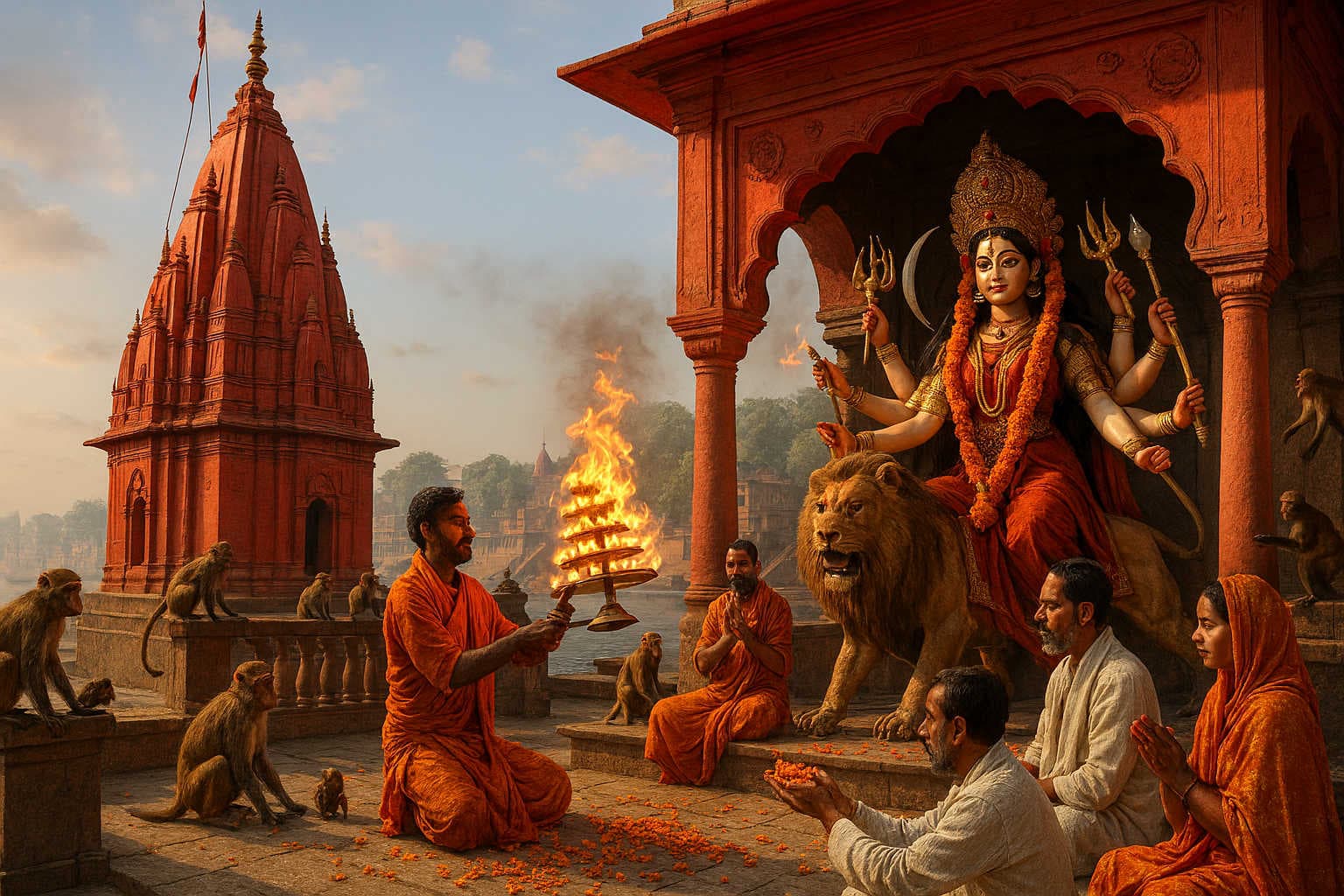
The temple is a classic example of North Indian Nagara-style architecture. Its most distinctive feature is the red-painted shikhara (spire) and walls, symbolizing energy, strength, and the divine feminine power of Durga.
-
Sanctum (Garbhagriha): The sanctum houses the idol of Goddess Durga, richly adorned with ornaments, flowers, and weapons. She is often shown seated on a lion, embodying courage and protection.
-
Temple Complex: The premises include pillared halls where devotees gather for rituals, and a vibrant courtyard often filled with monkeys, who are considered guardians of the temple.
-
Durga Kund: The adjacent rectangular pond adds beauty and spiritual depth. It is believed that during Navratri, the reflection of the temple in Durga Kund becomes a sacred sight for devotees.
The Spiritual Significance of Goddess Durga in Varanasi
Goddess Durga is revered as the invincible mother and protector who destroys evil forces. In Varanasi, a city ruled by Lord Shiva, the presence of Durga Temple signifies the essential balance of Shiva (consciousness) and Shakti (energy).
Devotees believe that worship at the Durga Temple brings:
-
Strength and Protection – The Goddess protects her children from adversities and evil influences.
-
Fulfillment of Desires – Those who sincerely pray are said to have their wishes granted.
-
Spiritual Power – Durga’s blessings help devotees rise above fear and weakness.
Thus, the temple is not only a spiritual destination but also a source of courage and faith.
Durga Kund – Sacred Pond of the Goddess
The Durga Kund is closely tied to the temple. According to legends, the pond was once connected directly to the holy Ganga river. Ritual bathing here during festivals was believed to wash away sins and invoke the blessings of the Goddess.
Today, the pond still holds sacred value, especially during rituals and festive processions. Its tranquil waters provide a serene contrast to the intense energy of the temple.
Festivals and Rituals at Durga Temple
The temple is particularly vibrant during festivals, with Navratri being the grandest celebration.
-
Navratri: During these nine nights dedicated to the Goddess, the temple becomes a sea of devotion. Thousands of devotees gather, lamps are lit around the Durga Kund, and special rituals are conducted daily.
-
Durga Puja: Celebrated with grandeur, particularly by the Bengali community in Varanasi, it includes cultural programs, rituals, and community feasts.
-
Daily Worship: Priests perform aarti and devotees offer red flowers, sindoor, and sweets to the Goddess. The ringing of bells and chanting of mantras create an electrifying atmosphere.
Legends and Beliefs
Several legends are associated with the Durga Temple:
-
Self-Manifested Idol: The idol of Goddess Durga is said to be self-manifested, making the temple an especially powerful Shakti Peeth.
-
Guardian Monkeys: The presence of monkeys in and around the temple is considered auspicious, believed to be blessings of Lord Hanuman, who protects the Goddess.
-
Durga as Protector of Kashi: Local tradition holds that Goddess Durga is the protector of Varanasi, shielding the city and its inhabitants from calamities.
Visiting the Temple
Pilgrims visiting the Durga Temple often combine it with darshan at the Kashi Vishwanath Temple and the Annapurna Devi Temple, completing a spiritual circuit of Shiva and Shakti shrines.
-
Best Time to Visit: Early mornings for peaceful darshan, or during Navratri for experiencing its grandeur.
-
Location: The temple is situated near Durga Kund, about 2 km from Banaras Hindu University.
-
Atmosphere: The temple complex is bustling with activity—devotees chanting, monkeys jumping around, and bells ringing in a continuous rhythm of devotion.
Conclusion
The Durga Temple of Varanasi, with its red-painted grandeur and fiery presence, symbolizes the fearless power of the Goddess. It reminds devotees of the strength within, the protective love of the divine mother, and the eternal balance of the cosmos where Shakti complements Shiva.
For pilgrims and visitors alike, the temple is not only about worship but also about experiencing the fierce, nurturing, and protective aspect of divinity. Standing by the Durga Kund, gazing at the red temple against the backdrop of Varanasi’s timeless skyline, one feels the living pulse of faith that has flowed through Kashi for centuries.