Mumbadevi Temple – Guardian of Mumbai
In the heart of Mumbai, India’s financial capital and a city that never sleeps, stands an ancient shrine that reminds its citizens of their roots—the Mumbadevi Temple. This sacred site, dedicated to Goddess Mumbadevi, is not only a center of devotion but also a symbol of the city’s very identity. In fact, the name Mumbai itself is derived from this guardian deity, making the temple deeply interwoven with the history and culture of the metropolis.
The Legend of Goddess Mumbadevi
According to legend, Mumbadevi is a form of the Mother Goddess or Shakti, believed to be a powerful protector of the land and its people.
Mythology narrates that long ago, a demon named Mumbarka terrorized the region. The gods, troubled by his tyranny, appealed to the Divine Mother for help. The Goddess descended in a fierce form and vanquished Mumbarka, freeing the people from his oppression. Before dying, the demon repented and asked the Goddess to take his name. Fulfilling his last wish, she became known as Mumbadevi, and the land later came to be called Mumbai.
This story highlights her role as a protector deity—one who guards the city and its people through time.
History of the Temple
The origins of the Mumbadevi Temple are ancient, dating back several centuries. Historians suggest that the first shrine was built in the 14th century by the local fishermen and agrarian communities who regarded Mumbadevi as their patron deity.
The original temple stood at the site where today’s Chhatrapati Shivaji Maharaj Terminus (CST) is located. Over time, as the city developed, the shrine was shifted to its current location at Bhuleshwar in South Mumbai.
Despite the bustling urban surroundings, the temple has retained its aura of devotion, standing as a reminder of Mumbai’s origins.
Architecture and Deity
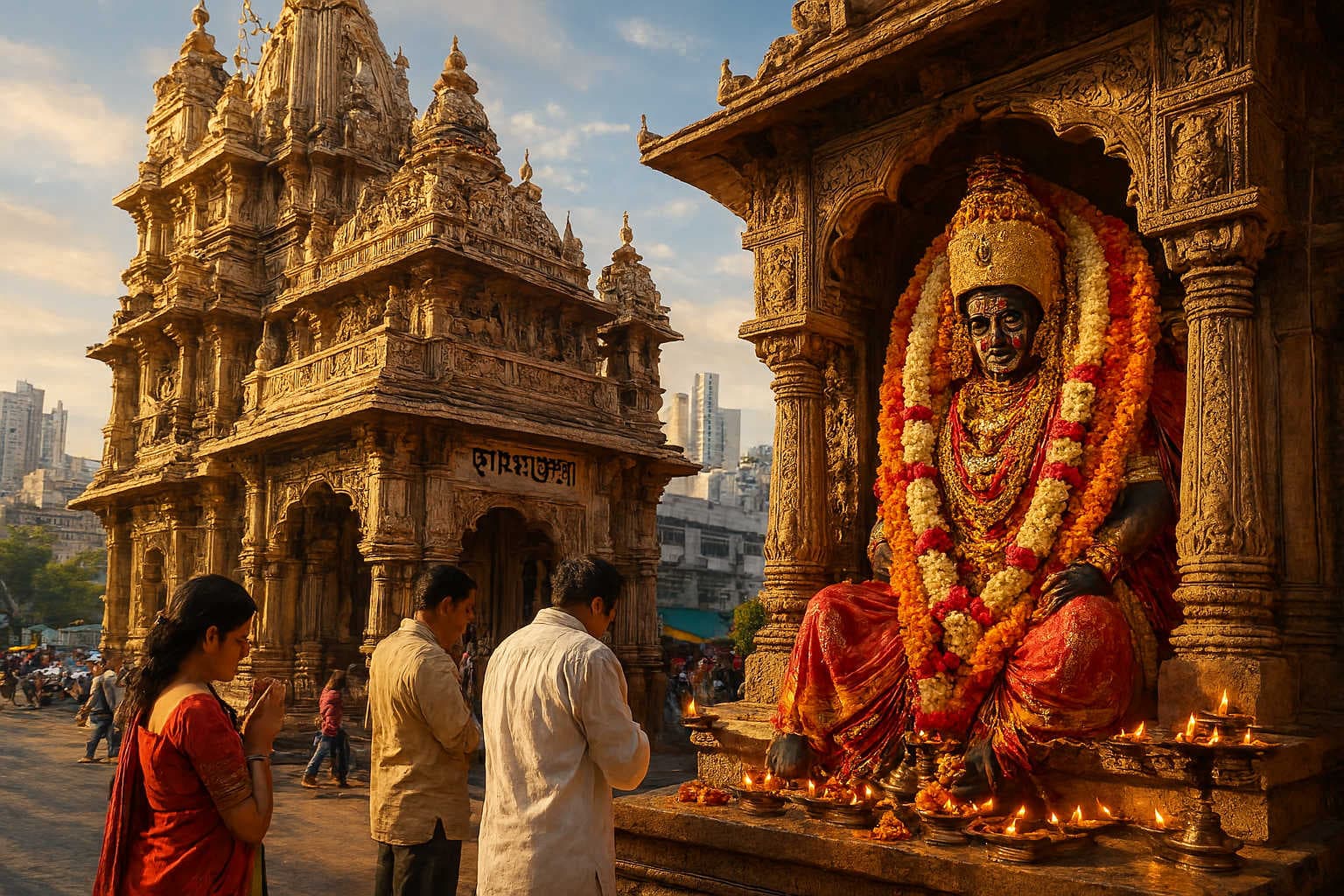
The Mumbadevi Temple may not be as grand as some of the larger Shakti temples of India, but it exudes an old-world charm.
-
Sanctum: The sanctum houses the idol of Goddess Mumbadevi, depicted without a mouth, symbolizing deep spiritual power and silence. She is adorned with a silver crown, nose ring, and necklaces, radiating a divine aura.
-
Other Deities: Alongside her, idols of Lord Ganesha, Hanuman, and other guardian deities are also worshipped.
-
Temple Style: Built in traditional Maharashtrian temple style, the structure includes a modest mandap, stone walls, and intricate wooden carvings.
-
Offerings: Devotees offer coconuts, flowers, and oil lamps, with Tuesdays being considered especially auspicious.
Though simple in scale, the temple resonates with centuries of continuous worship and devotion.
Spiritual Significance
The Mumbadevi Temple holds deep spiritual meaning:
-
Guardian of Mumbai: Devotees believe that the Goddess continues to protect the city and its people from calamities.
-
Shakti Worship: As a manifestation of Shakti, she represents strength, resilience, and the nurturing force of the Mother Goddess.
-
For the Common People: Unlike some temples associated with royalty, Mumbadevi was historically worshipped by fishermen, traders, and farmers, reflecting her close bond with the ordinary citizens.
Even today, devotees flock here to seek blessings for health, prosperity, and protection.
Festivals and Celebrations
The temple comes alive during festivals:
-
Navaratri: The nine nights of Navaratri are celebrated with grandeur, as the Goddess is adorned in various forms and devotees throng the temple for darshan.
-
Special Tuesdays: Every Tuesday is dedicated to Mumbadevi, and the temple sees long queues of worshippers offering prayers and lighting lamps.
-
Local Traditions: Fishermen and traders often perform rituals here before embarking on a new venture, continuing the age-old tradition of seeking the Goddess’s blessings for prosperity and safety.
Mumbadevi and the City of Mumbai
The significance of Mumbadevi Temple goes beyond religion—it is deeply tied to the city’s identity:
-
The very name Mumbai is derived from Mumba (Mumbadevi) and Aai (mother), meaning Mother Mumba.
-
The temple reflects Mumbai’s blend of tradition and modernity—a city that is both a global hub and a place of timeless faith.
-
It serves as a spiritual anchor for residents, reminding them of the Goddess’s guardianship amidst the city’s chaos and hustle.
Visiting the Temple
-
Location: Bhuleshwar, in South Mumbai, near Zaveri Bazaar.
-
Timings: The temple is open from 6:00 AM to 9:00 PM, with special crowds on Tuesdays.
-
Best Time to Visit: Festivals like Navaratri provide the most vibrant experience, though daily darshan offers peace in the midst of the busy city.
-
Experience: The narrow lanes leading to the temple, filled with shops selling flowers, coconuts, and offerings, add to the traditional charm.
Conclusion
The Mumbadevi Temple is more than an ancient shrine—it is the soul of Mumbai. As the guardian deity and namesake of the city, Goddess Mumbadevi embodies resilience, protection, and maternal care.
In a metropolis where skyscrapers rise and life moves at lightning speed, the temple continues to offer a space of calm devotion, reminding Mumbaikars of their roots and the protective presence of their city’s Mother Goddess.
Whether you are a resident seeking blessings or a traveler exploring Mumbai’s heritage, a visit to Mumbadevi Temple is a journey into the city’s spiritual heart.