Kamakshi Temple – Goddess of Kanchipuram
Among the many sacred shrines of Tamil Nadu, Kamakshi Amman Temple in Kanchipuram holds a special place. Dedicated to Goddess Kamakshi, a powerful form of Parvati, this temple is celebrated as one of the most important Shakti Peethas of India. With its golden vimana, ancient legends, and spiritual energy, the temple draws devotees from across the country who seek blessings of love, wisdom, and protection from the Divine Mother.
The Legend of Goddess Kamakshi
The name Kamakshi translates to “the one with eyes full of love” (Kama meaning desire and Akshi meaning eyes). She is revered as a compassionate mother, but her mythology also reflects her fierce and protective side.
According to legend:
-
Once, the city of Kanchipuram was tormented by a powerful demon. To destroy him, the Goddess took the form of Kamakshi, seated in deep meditation on a Sri Chakra, surrounded by her attendants.
-
Another tradition narrates that when Lord Shiva was absorbed in meditation, Parvati wished to unite with him. To please him, she performed penance in Kanchipuram, standing on one leg over a needlepoint, under a mango tree near the temple tank. Finally, Shiva appeared and accepted her as his consort.
-
In yet another story, it is believed that Kamakshi is none other than Lalita Tripura Sundari, the supreme goddess of the Sri Vidya tradition, embodying both beauty and power.
These stories emphasize Kamakshi’s role as a giver of grace and remover of obstacles, balancing gentleness with strength.
Architecture of the Temple
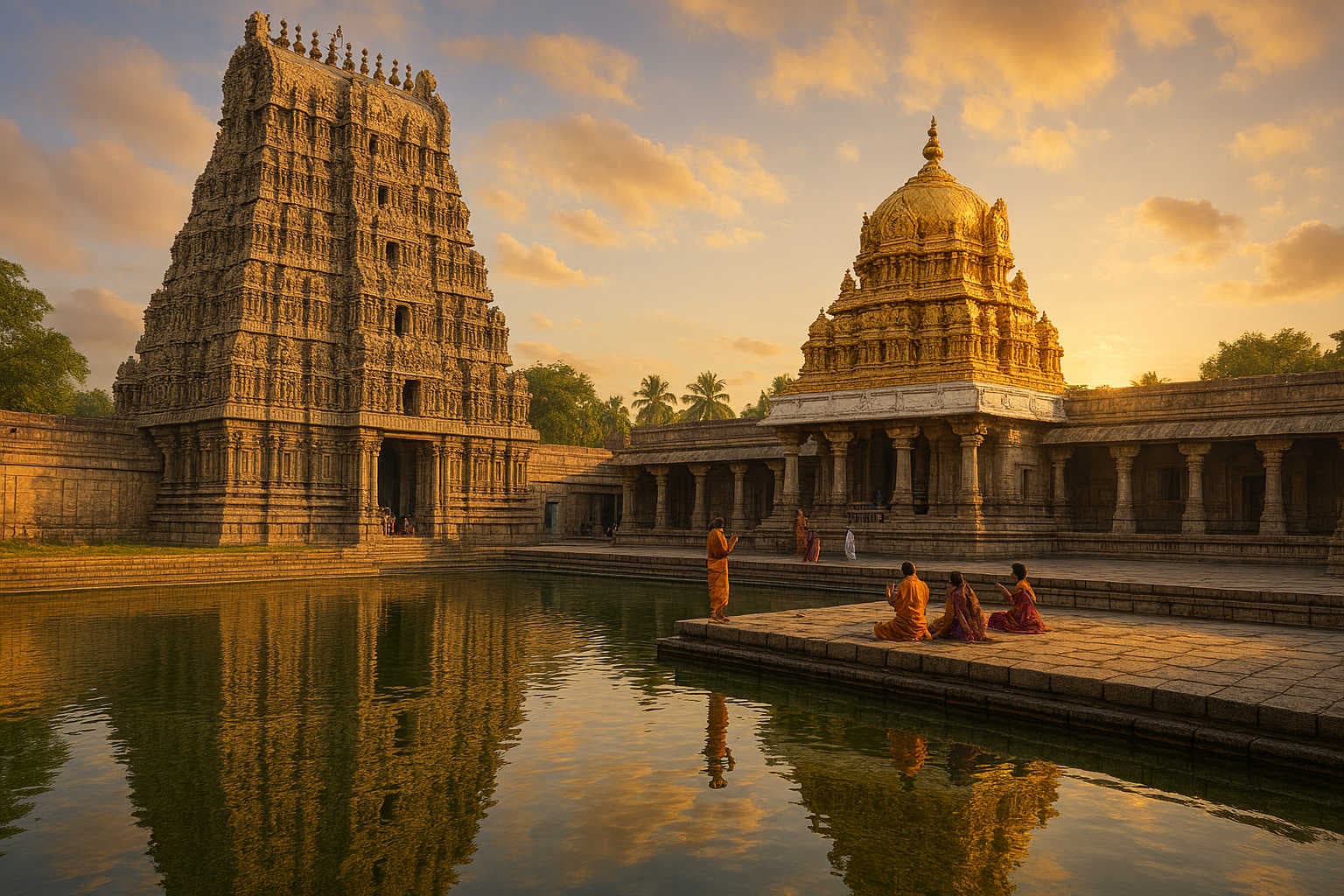
The Kamakshi Amman Temple reflects the grandeur of Dravidian architecture.
-
Golden Vimana: The sanctum is crowned with a shimmering golden vimana, symbolizing divine radiance.
-
Sanctum of Kamakshi: The Goddess sits in a unique posture called Padmasana (lotus position), signifying peace, prosperity, and fertility. Unlike most goddess temples where weapons are emphasized, here Kamakshi holds symbols of love and compassion, including a sugarcane bow and flower arrows.
-
Sri Chakra: The sanctum is built on a Sri Chakra yantra, making it a vital site of Tantric worship and a center of Shakti energy.
-
Temple Tank: The temple has a sacred water tank known as Pushkarini, believed to hold purifying powers.
-
Gopurams: The towering gateway gopurams are adorned with intricate carvings of deities, celestial beings, and mythological scenes.
The temple layout reflects both spiritual symbolism and artistic mastery, combining devotion with architectural brilliance.
Spiritual Importance – A Shakti Peeth
The Kamakshi Temple is recognized as a Shakti Peeth, a sacred site where parts of Goddess Sati are believed to have fallen when Lord Shiva carried her body across the universe. Tradition states that Sati’s navel or abdomen fell here, making the site immensely powerful for devotees of Shakti.
-
Symbol of Feminine Power: Kamakshi represents the divine feminine energy, granting love, fertility, and strength.
-
Sri Vidya Tradition: The temple is also a major center for followers of the Sri Vidya cult, where worship is performed through the Sri Chakra, emphasizing the Goddess as the ultimate reality.
-
Blessings: Devotees believe that worshipping here fulfills desires, removes obstacles in marriage, and blesses seekers with knowledge and spiritual progress.
Festivals and Rituals
The temple celebrates several festivals with grandeur:
-
Navaratri: The nine nights of Navaratri are celebrated with great devotion, with the Goddess adorned in different forms each day.
-
Panguni Brahmotsavam: Held in March–April, this festival sees colorful processions, chariot pulling, and cultural events.
-
Varalakshmi Vratam: Women especially observe this ritual, seeking the blessings of the Goddess for prosperity and family well-being.
Daily rituals include abhishekams, alankarams (decorations), and aartis, creating an atmosphere of spiritual vibrancy.
Historical and Cultural Significance
-
The temple is believed to have been built by the Pallavas and later expanded by the Cholas and Vijayanagara kings, showcasing centuries of architectural evolution.
-
It is considered one of the three holy shrines of Kanchipuram associated with the Goddess—along with Kamakoti Peetham and Kanchi Kailasanathar Temple.
-
Renowned saint and philosopher Adi Shankaracharya is said to have established the Sri Chakra in the sanctum, reinforcing the temple’s spiritual importance.
Thus, the Kamakshi Temple is not just a shrine but also a center of philosophy, Tantric traditions, and cultural heritage.
Visiting the Temple
-
Location: Kanchipuram, Tamil Nadu, about 70 km from Chennai.
-
Best Time to Visit: October to March offers pleasant weather; festivals like Navaratri and Panguni Brahmotsavam are especially grand.
-
Timings: The temple is open from early morning until late evening, with multiple rituals throughout the day.
-
Experience: Visitors can experience the serenity of the sanctum, the beauty of the gopurams, and the calm of the temple tank.
Conclusion
The Kamakshi Temple of Kanchipuram is more than a place of worship—it is a spiritual powerhouse where myths, rituals, and architecture converge. As the compassionate yet powerful form of Parvati, Kamakshi embodies the essence of Shakti, nurturing her devotees with love and strength.
Whether one comes seeking divine blessings, architectural marvels, or cultural richness, the temple leaves an everlasting impression. It stands as a reminder that the Divine Mother is both a fierce protector and a gentle nurturer, guiding humanity with her ever-watchful, loving eyes.