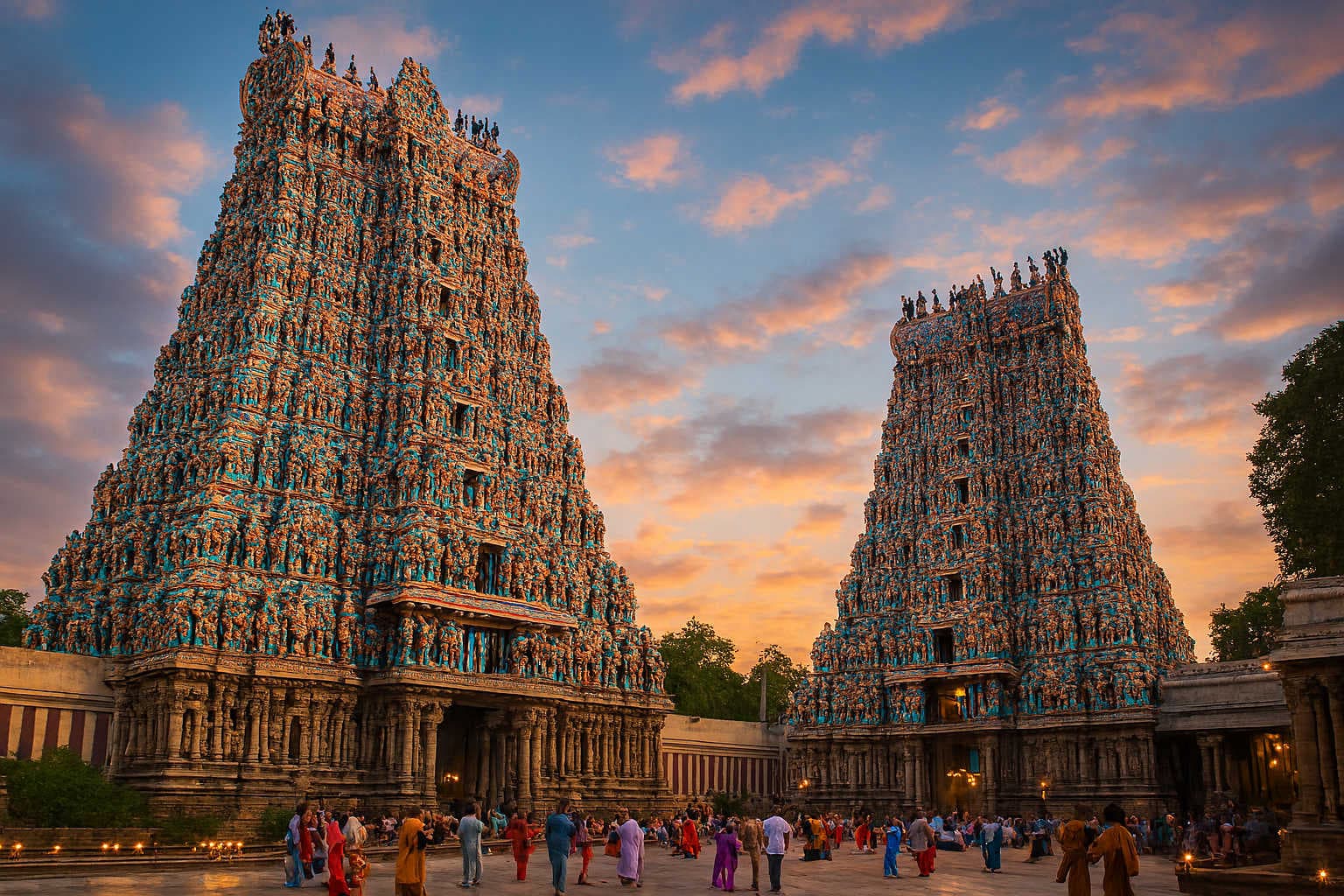
Meenakshi Temple – The Warrior Queen of Madurai
In the heart of Madurai, Tamil Nadu, stands one of India’s most awe-inspiring temples—Meenakshi Amman Temple, dedicated to Goddess Meenakshi, the warrior queen, and her consort, Lord Sundareswarar (Shiva). A shining example of Dravidian architecture and a hub of South Indian culture, this temple is not only a place of worship but also a living legend where history, mythology, and artistry come together.
The Legend of Meenakshi – The Warrior Queen
The story of Goddess Meenakshi is deeply woven into the temple’s identity.
-
Divine Birth: According to mythology, Meenakshi was born to King Malayadhwaja Pandya after he and his queen prayed for a child. Unlike other princesses, she was born with three breasts, and a prophecy declared that her extra breast would vanish when she met her destined husband.
-
The Warrior Princess: Meenakshi grew into a fierce warrior, conquering kingdoms and expanding her father’s empire. Her valor and leadership won her the love of her people, and she was celebrated as a queen in her own right.
-
Meeting Shiva: During her conquests, Meenakshi encountered Lord Shiva in his form as Sundareswarar, and at that moment, her third breast disappeared, fulfilling the prophecy. Their divine union symbolized the balance of power, love, and spirituality.
This tale sets the foundation of the temple, where Meenakshi and Shiva are enshrined together as equals—a rare depiction in Hindu temples.
Architecture of Grandeur
The Meenakshi Amman Temple is one of the most remarkable examples of Dravidian temple architecture.
-
Gopurams (Gateway Towers): The temple has 14 gopurams, some soaring over 150 feet, covered with thousands of vibrant sculptures depicting deities, demons, and mythological figures. Each tower is a riot of colors and details that narrate stories from the epics.
-
The Golden Lotus Tank: The temple has a sacred water tank called Porthamarai Kulam (Golden Lotus Tank), where devotees purify themselves before darshan. Legends say divine beings once assembled here to discuss sacred texts.
-
Halls and Mandapas: The Hall of Thousand Pillars is an architectural wonder, with each pillar carved with intricate details and some producing musical notes when tapped.
-
Shrines: The temple has separate sanctums for Meenakshi and Sundareswarar, emphasizing the dual divinity worshipped here.
The sheer scale and intricacy of the temple complex make it one of the largest and most beautiful temples in India.
Festivals – A Celebration of Life
The Meenakshi Tirukalyanam (celestial wedding of Meenakshi and Sundareswarar) is the temple’s most famous festival.
-
Duration: Celebrated every year in April, the festival spans 10 days.
-
Highlights: The divine marriage procession is re-enacted with grandeur, drawing thousands of devotees and tourists. Streets of Madurai come alive with music, dance, and rituals.
-
Symbolism: The festival signifies the sacred union of feminine and masculine energies, celebrated with devotion and joy.
Other festivals like Navaratri and Chithirai Festival are equally vibrant, making the temple a center of Tamil cultural heritage.
Cultural and Historical Significance
The temple is not just a place of worship but a cultural epicenter of Tamil Nadu.
-
It has been mentioned in Sangam literature (dating back over 2,000 years), showing its antiquity.
-
Kings of the Pandya dynasty expanded the temple, while the Nayaka rulers in the 16th and 17th centuries gave it its present grandeur.
-
Today, the temple continues to be a hub for classical music, dance, and arts, keeping traditions alive.
Madurai itself is often called the “Temple City”, with Meenakshi Temple at its heart, shaping the identity of the region.
Spiritual Significance
What makes Meenakshi Temple unique is the centrality of the Goddess. Unlike most temples where the male deity dominates, here Meenakshi Amman is the primary deity, highlighting the role of feminine divinity.
-
Devotees believe worship at this temple grants courage, leadership, and prosperity, reflecting the qualities of the warrior queen.
-
The temple also represents the balance of Shakti (feminine energy) and Shiva (masculine energy), reminding devotees of the interconnectedness of power and compassion.
Visiting the Temple
-
Location: Madurai, Tamil Nadu, easily accessible by air, rail, and road.
-
Best Time to Visit: October to March offers pleasant weather, though April is ideal for witnessing the grand festival.
-
Temple Timings: The temple opens early morning and closes late at night, with multiple rituals and aartis throughout the day.
Visitors are advised to spend several hours exploring the temple’s vast complex, absorbing the carvings, sculptures, and spiritual atmosphere.
Conclusion
The Meenakshi Temple of Madurai is more than just a sacred site—it is a living legend. With its stunning architecture, colorful gopurams, and a mythology centered around a warrior queen, the temple represents both the artistic genius and spiritual depth of South India.
Here, amidst the chants, rituals, and eternal presence of Meenakshi and Sundareswarar, devotees find inspiration, strength, and divine grace. The temple stands as a symbol of how faith, culture, and history merge into a timeless spiritual experience.
In the story of Meenakshi—the warrior, queen, and goddess—worshippers see not only a protector but also the embodiment of feminine power that continues to inspire across generations.