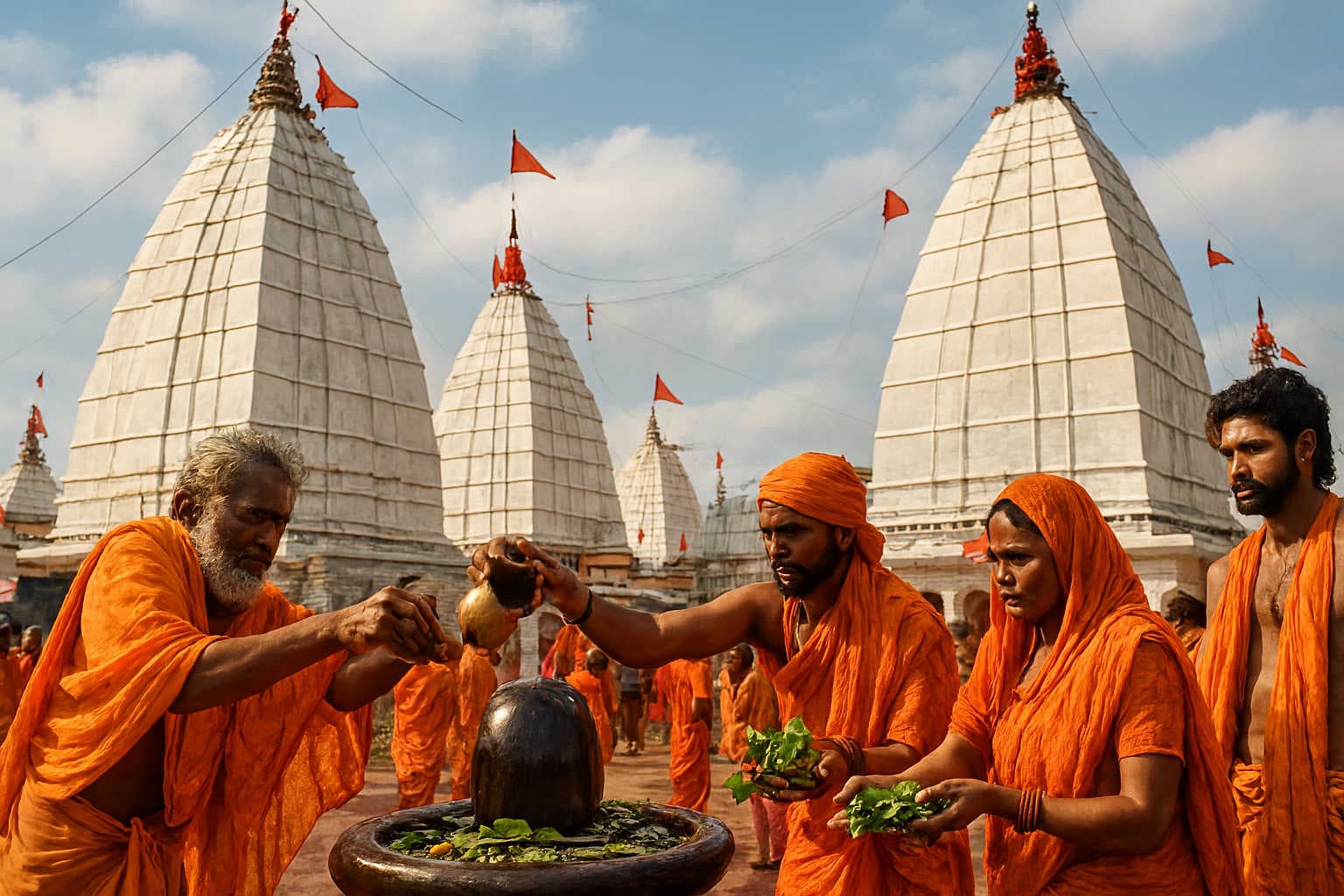
Baidyanath Dham – Temple of Shiva the Healer
Among the twelve sacred Jyotirlingas of Lord Shiva, the shrine of Baidyanath Dham in Deoghar, Jharkhand, occupies a unique place. Revered as the temple where Shiva is worshiped as the Supreme Healer (Vaidya), it is believed that those who come here with faith are relieved of their physical, mental, and spiritual ailments. The temple, also called Baba Baidyanath Dham, is one of the most important pilgrimage sites in eastern India, attracting millions of devotees every year, especially during the holy month of Shravan.
The Mythological Legend of Baidyanath
The origins of Baidyanath Jyotirlinga are rooted in ancient legend.
-
Ravana’s Devotion: According to the Shiva Purana, Ravana, the mighty king of Lanka and great devotee of Shiva, performed severe penance to please the Lord. To prove his devotion, he offered his ten heads one by one into the sacrificial fire. Moved by such dedication, Shiva appeared and restored Ravana to life, healing his wounds like a divine physician—thus earning the name Vaidyanath (Healer).
-
The Jyotirlinga’s Establishment: Ravana requested Shiva to accompany him to Lanka. Shiva agreed but gave him a Lingam with a condition—it must not be placed on the ground until Ravana reached Lanka. On his way, Ravana was tricked by the gods, and the Lingam was placed at Deoghar, where it became immovable. Hence, the site became sanctified as Baidyanath Jyotirlinga.
This story highlights themes of devotion, divine compassion, and destiny, giving Baidyanath its special healing aura.
The Temple Complex
The Baidyanath Dham Temple is not a single shrine but a large complex of 22 temples, each dedicated to different deities.
-
Main Shrine: The central sanctum houses the Jyotirlinga of Shiva, worshiped daily with offerings of water, milk, and bel leaves. Devotees often pour holy water brought from the Ganga at Sultanganj, 108 kilometers away, as part of their vow.
-
Other Shrines: The complex also includes temples of Parvati, Ganesha, Kali, Hanuman, and others, making it a complete spiritual hub.
-
Architecture: The temple, built in the Nagara style, features a tall spire adorned with red flags fluttering in the wind, symbolizing divine energy and blessings.
The Kanwar Yatra – Devotion in Motion
The most significant event associated with Baidyanath is the Shravani Mela, held during the month of Shravan (July–August).
-
Devotees known as Kanwariyas collect holy water from the Ganga at Sultanganj and walk barefoot to Deoghar, covering over 100 kilometers, to offer it to the Jyotirlinga.
-
This annual pilgrimage is considered the longest religious fair in the world, with millions of participants.
-
The sight of saffron-clad devotees carrying kanwars (decorated pitchers on bamboo poles) chanting “Bol Bam” fills the region with unmatched spiritual energy.
This unique tradition symbolizes surrender, penance, and healing through devotion.
Spiritual Significance of Baidyanath
The shrine is believed to bestow blessings of health and longevity, as Shiva here is worshiped as the Divine Healer.
-
Devotees seek relief from chronic diseases, misfortunes, and mental suffering.
-
Couples pray for marital harmony and children.
-
Pilgrimage to Baidyanath Dham is also said to grant moksha, the ultimate liberation.
The combination of myth, ritual, and living faith makes Baidyanath a temple where healing is not just physical but deeply spiritual.
Festivals and Rituals
-
Maha Shivaratri: Thousands of devotees offer night-long prayers, chanting hymns and performing abhishekam of the Lingam with milk, honey, and water.
-
Shravan Mela: The largest festival of the temple, lasting a full month, with millions of pilgrims arriving daily.
-
Daily Worship: Rituals begin at dawn with offerings of water and continue through the day with aartis, bhajans, and Rudrabhishek.
The temple also has a strong tradition of Tantric worship, reflecting the blending of Shaiva and Shakti practices in the region.
Baidyanath Dham in Pilgrimage Circuits
Baidyanath is not only one of the twelve Jyotirlingas but also counted among the 108 Shakti Peethas, as it is believed that Sati’s heart fell here. This makes Deoghar doubly sacred, as both Shiva and Shakti are worshiped here in union.
Pilgrims often combine their visit with nearby sacred spots such as:
-
Tapovan Caves – where sages performed penance.
-
Naulakha Temple – a grand structure dedicated to Radha-Krishna.
-
Trikuta Hills – a scenic site associated with mythology.
Visiting Baidyanath Dham
-
Location: Deoghar, in the Santhal Pargana region of Jharkhand.
-
Access: Deoghar is connected by rail and road. The nearest airports are Deoghar Airport and Patna Airport.
-
Best Time to Visit: The temple can be visited year-round, but Shravan is the peak season, though extremely crowded. October–March offers more pleasant conditions for travel.
Conclusion
The Baidyanath Dham Temple in Deoghar is a powerful symbol of Shiva’s compassion as the Supreme Healer. Rooted in the legend of Ravana’s devotion and Shiva’s grace, the shrine continues to draw millions who come seeking relief from suffering and blessings for health, happiness, and liberation.
Here, amidst the chants of “Bol Bam” and the sight of saffron-clad pilgrims, one feels the living energy of Sanatan Dharma. Baidyanath Dham is not just a temple—it is a place where faith itself heals, where Shiva stands as the eternal Vaidya, curing both body and soul.