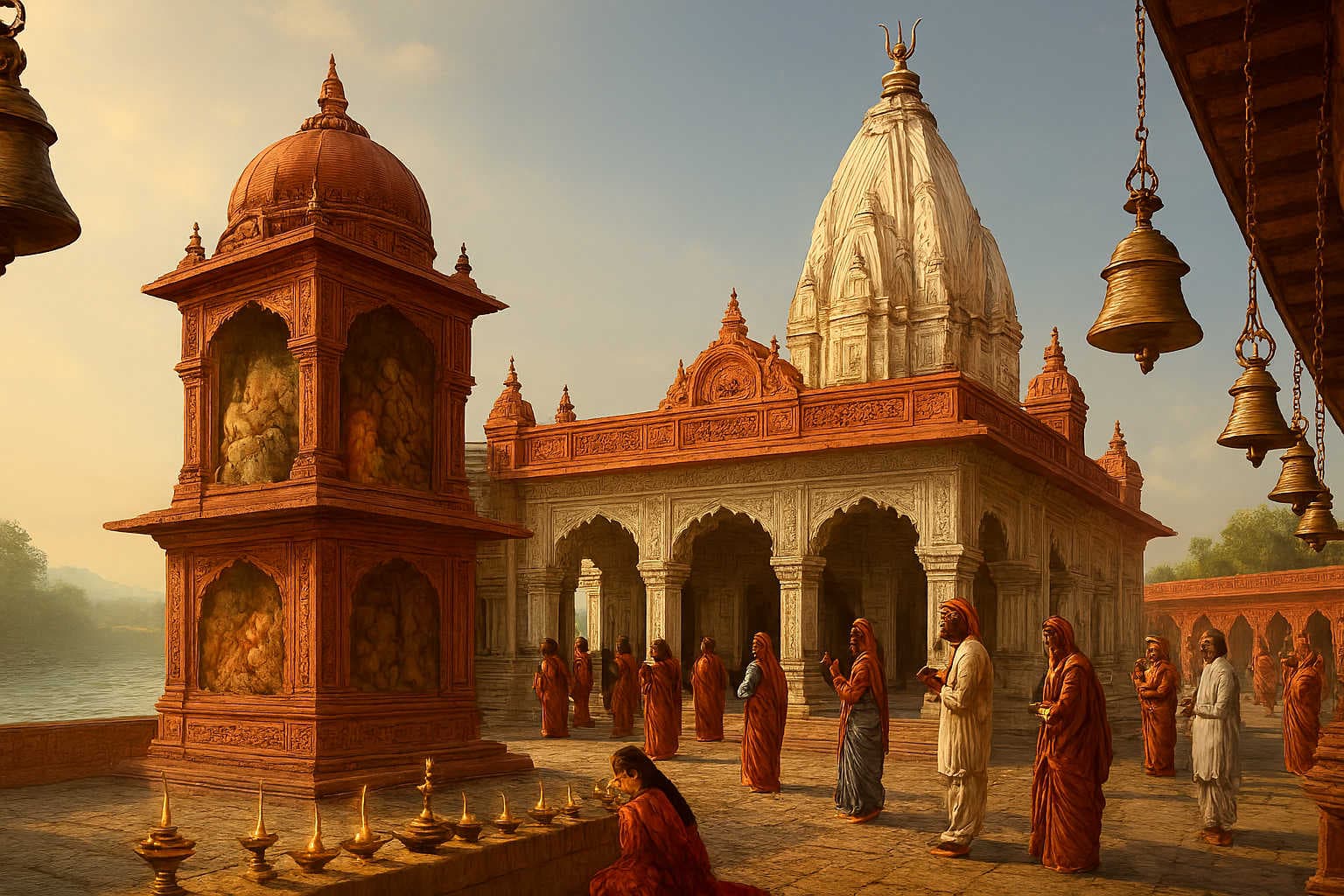
Daksheswara Temple – Where Sati Immolated Herself
Nestled in the sacred city of Haridwar, the Daksheswara Mahadev Temple holds a place of immense significance in Hindu mythology. This temple is intimately tied to the legend of Sati’s self-immolation, an event that shook the universe and laid the foundation for the establishment of the Shakti Peethas. Dedicated to Lord Shiva, the temple is not only a pilgrimage destination but also a living reminder of the eternal love between Shiva and Sati, and the consequences of arrogance and disrespect in spiritual life.
The Myth of Sati and Daksha’s Yajna
The temple derives its name and importance from the famous Daksha Yajna episode described in the Puranas:
-
Daksha’s Arrogance: Daksha Prajapati, one of the sons of Lord Brahma, organized a grand yajna (sacrificial ritual). Despite being Sati’s father, he disapproved of her marriage to Shiva, whom he considered unorthodox and ascetic. Out of pride and disdain, Daksha deliberately did not invite Shiva to the yajna.
-
Sati’s Grief: Although uninvited, Sati decided to attend the ceremony, hoping to reconcile with her father. However, upon arrival, she found Shiva insulted and disrespected. Unable to bear the humiliation of her beloved, Sati immolated herself in the sacrificial fire, declaring that she could not live with the dishonor of her Lord.
-
Shiva’s Wrath: When Shiva learned of Sati’s death, his grief turned into fury. He unleashed Virabhadra, a fierce warrior born of his anger, who destroyed the yajna and punished Daksha by beheading him. Later, on the request of the gods, Shiva restored Daksha to life, but with the head of a goat.
This episode is considered one of the most pivotal in Hindu mythology, symbolizing the intensity of divine love and the destructive consequences of ego.
The Significance of Daksheswara Temple
The Daksheswara Temple stands on the very spot where Sati immolated herself. For this reason, the site is considered sacred and deeply symbolic:
-
It marks the beginning of the story of the Shakti Peethas, where Sati’s body parts fell across the Indian subcontinent.
-
It demonstrates the unbreakable bond between Shiva and Shakti, highlighting the theme of divine union.
-
The temple is a reminder of the futility of arrogance, as Daksha’s pride led to the destruction of his yajna.
For devotees, visiting this temple is not just about offering prayers, but about remembering the lessons of humility, devotion, and divine love.
Architecture of the Temple
The present structure of the Daksheswara Temple, built in 1810 AD by Queen Dhankaur, showcases simple yet elegant architecture:
-
Main Shrine: Dedicated to Lord Shiva as Daksheswara Mahadev, the sanctum houses a Shiva Lingam that is continuously worshiped by devotees.
-
Surrounding Shrines: The complex also includes shrines dedicated to Goddess Kali, Lord Ganesha, and other deities associated with the legend.
-
Sacred Pond: The temple is situated near the Ganga River, with a pond called Daksha Kund, where pilgrims take ritual baths before offering prayers.
-
Murals and Carvings: Many walls depict scenes from the Daksha Yajna and Sati’s sacrifice, making the temple not only a place of worship but also a narrative space of mythology.
Festivals and Rituals
The temple comes alive during festivals, especially:
-
Maha Shivaratri: Thousands of devotees throng the temple, offering prayers, milk, and bel leaves to the lingam. The festival marks the divine union of Shiva and Shakti.
-
Shravan Month: The monsoon month of Shravan sees devotees offering water from the Ganga to the deity, continuing the tradition of Kanwariyas.
-
Daksha Mahadev Mela: Held in August, this fair celebrates the temple’s unique history, attracting pilgrims from across India.
Daily rituals include aarti, chanting of Shiva mantras, and Rudrabhishek, invoking Shiva’s healing and transformative energies.
Spiritual Significance
The Daksheswara Temple is not merely a reminder of Sati’s sacrifice—it holds deep spiritual meanings:
-
It represents the power of devotion, as Sati chose her spiritual truth over worldly ties.
-
It underscores the union of Shiva and Shakti, without which creation cannot exist.
-
It teaches the consequences of arrogance, as Daksha’s pride led to his downfall.
-
It is considered a place of atonement, where devotees seek forgiveness for mistakes and pray for peace in family relationships.
Daksheswara Temple and the Shakti Peeth Tradition
Although not a Shakti Peeth itself, Daksheswara Temple is closely tied to the origin of the tradition. Sati’s immolation at this spot marked the beginning of Shiva’s cosmic dance of grief, during which her body was cut into 51 parts by Vishnu’s Sudarshana Chakra. These parts fell at various locations, creating the revered Shakti Peethas.
Thus, the temple is considered a prelude to the Shakti Peeth pilgrimage, making it an essential stop for devotees of both Shiva and Shakti.
Visiting Daksheswara Temple
The temple is located in Kankhal, a suburb of Haridwar in Uttarakhand.
-
Accessibility: Haridwar is well connected by rail and road to major cities like Delhi, Rishikesh, and Dehradun. The nearest airport is Jolly Grant Airport in Dehradun.
-
Best Time to Visit: October to March offers pleasant weather for pilgrimage. However, the temple is most vibrant during Maha Shivaratri and Shravan month.
-
Nearby Attractions: Haridwar itself is a major pilgrimage city, home to the famous Har Ki Pauri Ghat, Mansa Devi Temple, and Chandi Devi Temple. Pilgrims often combine these visits with Daksheswara Temple for a complete spiritual journey.
Conclusion
The Daksheswara Temple in Haridwar is not just a shrine; it is a symbol of one of Hinduism’s most transformative legends. It tells the story of Sati’s devotion, Daksha’s arrogance, and Shiva’s cosmic wrath, all culminating in the eternal message of humility, love, and divine truth.
For devotees, visiting this temple is a chance to walk into mythology itself, to bow before the place where Sati immolated herself and where the seeds of the Shakti Peeths were sown. It is a reminder that while the ego may destroy, devotion always heals and unites.