Vaidyanath Temple – The Healer Lord
Among the twelve sacred Jyotirlingas of Lord Shiva, the Vaidyanath Temple in Deoghar (Jharkhand) holds a special place in the hearts of devotees. Known as the shrine where Shiva manifests as the Healer Lord, this temple is believed to cure physical ailments, free devotees from suffering, and grant spiritual liberation. Popularly called Baba Baidyanath Dham, it is not only a pilgrimage destination but also a powerful center of faith, healing, and divine blessings.
The Name and Meaning
The name Vaidyanath is derived from Vaidya (doctor or healer) and Nath (Lord). According to Hindu belief, Shiva is the supreme physician who heals both the body and soul. At Deoghar, he is worshiped in this aspect, making the shrine especially revered by those seeking recovery from illness and spiritual well-being.
Mythological Legends
The temple’s sanctity is rooted in ancient legends, particularly those from the Shiva Purana and local folklore:
-
Ravana’s Devotion: The most popular legend tells of Ravana, the demon king of Lanka, who performed intense penance to please Lord Shiva. To gain invincibility, he offered his ten heads one by one. Pleased with his devotion, Shiva appeared and restored Ravana’s heads, acting as a divine physician (Vaidya). In return, Shiva granted him the Jyotirlinga. Ravana attempted to carry it to Lanka, but under divine intervention, he placed it at Deoghar—where it became the Vaidyanath Jyotirlinga.
-
Healing Aspect of Shiva: Another belief says that after Ravana’s act, Shiva resided here as the Healer Lord, symbolizing that sincere devotion can restore life, health, and balance, no matter how severe the suffering.
These legends highlight why devotees turn to Vaidyanath for both physical healing and inner strength.
Architecture of the Temple
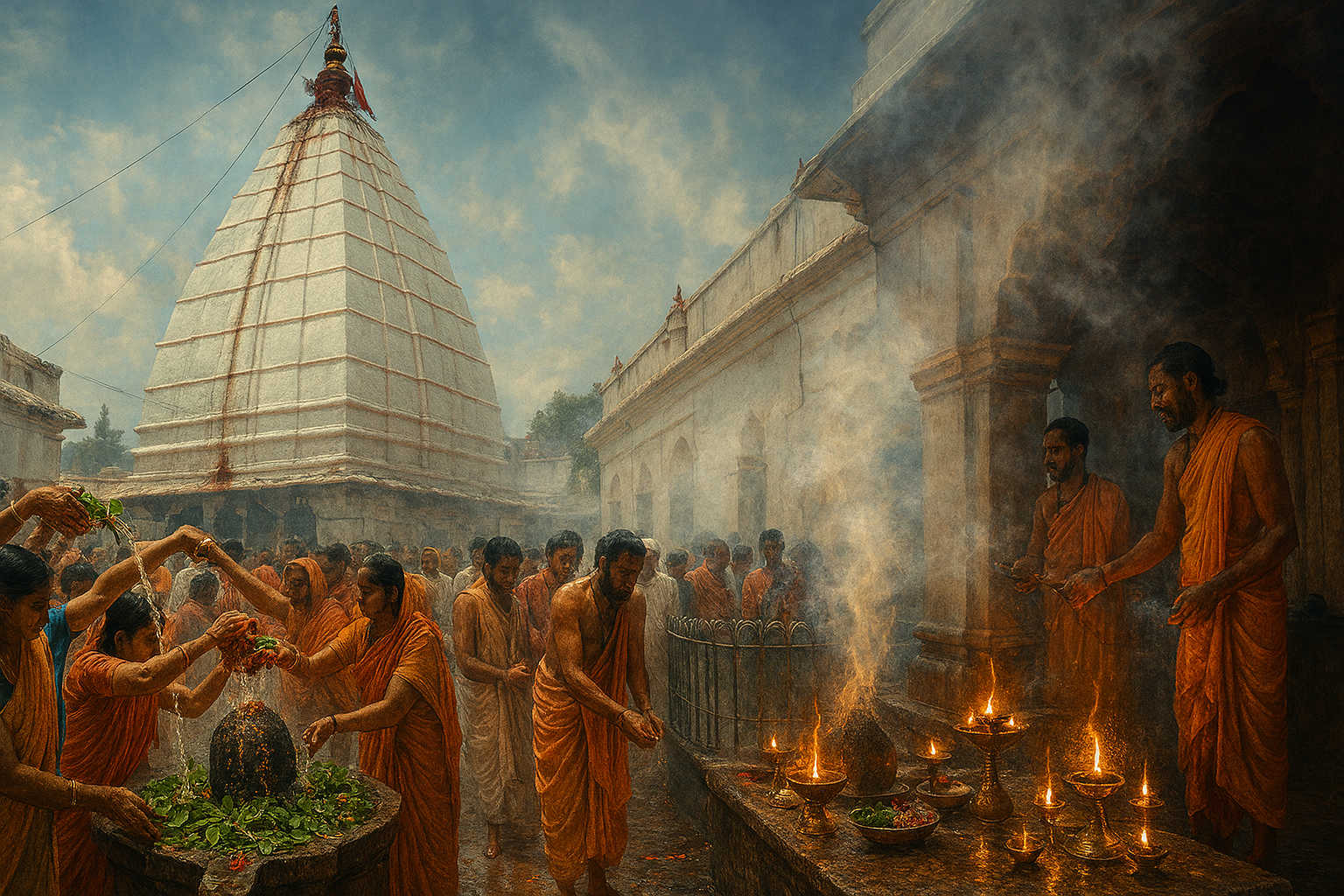
The Vaidyanath Temple complex is a sprawling area consisting of 22 temples, with the main sanctum dedicated to the Jyotirlinga of Lord Shiva. The temple’s architecture is simple yet profound, reflecting the timeless devotion of its worshippers.
-
Main Shrine: The central tower, or shikhara, rises about 72 feet high, crowned with a trident. The sacred Shiva lingam is housed in the inner sanctum.
-
Other Shrines: The complex includes temples of Parvati, Ganesha, Hanuman, and other deities, making it a complete pilgrimage hub.
-
Offerings: Devotees traditionally offer water from the holy Ganga, bilva leaves, flowers, and milk to the lingam. Carrying Ganga water to Vaidyanath has become a sacred ritual observed by millions.
Rituals and Worship
The daily worship at Vaidyanath Temple is carried out with devotion and discipline:
-
Abhishek (ritual bathing): Devotees pour water and milk over the lingam, offering prayers for health and fulfillment of wishes.
-
Bel Patra Offering: Offering the trifoliate bel leaves is considered essential, as they are dear to Shiva.
-
Healing Prayers: Many worshippers visit specifically to seek blessings for recovery from diseases or relief from personal suffering.
During special festivals, the atmosphere becomes charged with energy, with thousands of voices chanting “Baba Baidyanath” in unison.
The Shravan Mela – A Festival of Faith
The most significant celebration at Vaidyanath Temple is the Shravan Mela, held during the Hindu month of Shravan (July–August). Millions of devotees, called Kanwariyas, undertake a rigorous pilgrimage:
-
They collect holy water from the Ganges at Sultanganj, located about 108 km away.
-
Carrying the water in decorated pots suspended on bamboo poles, they walk barefoot to Deoghar.
-
The water is then poured over the Vaidyanath Jyotirlinga as an offering to Lord Shiva.
This journey is both physically demanding and spiritually uplifting, symbolizing devotion, endurance, and the quest for divine blessings.
Spiritual Importance of Vaidyanath
For devotees, Vaidyanath is not just another Jyotirlinga—it is a temple of hope and healing. Pilgrims believe that:
-
Prayers here can cure diseases and restore health.
-
Offering water to the lingam removes past sins and karmic obstacles.
-
Worshipping here ensures moksha (liberation) and relief from the cycle of birth and death.
The temple thus acts as a spiritual hospital, where Shiva’s grace heals the wounds of both body and soul.
Cultural and Historical Significance
Over centuries, kings and devotees have patronized the temple, adding to its cultural wealth. It is also a hub of traditional music, art, and local fairs during festivals. The chanting of mantras, the sound of conches, and the vibrant energy of the crowds create an atmosphere that blends devotion with cultural celebration.
Visiting Vaidyanath Temple
The temple is located in Deoghar, Jharkhand, and is accessible by rail, road, and air. The nearest major city is Patna, while Deoghar Airport connects it to other Indian metros.
-
Best Time to Visit: The Shravan month is the most spiritually charged, though it is also the busiest. For a quieter experience, October to March is ideal.
-
Nearby Attractions: Devotees also visit Basukinath Temple, another important Shiva shrine in the region, often considered part of the Vaidyanath pilgrimage.
Conclusion
The Vaidyanath Temple of Deoghar is more than a Jyotirlinga—it is a sanctuary of healing, faith, and devotion. Here, Lord Shiva manifests as the Healer Lord, reminding humanity that divine grace can cure even the deepest wounds and grant ultimate liberation.
For pilgrims who walk miles carrying holy water, or for those who simply bow their heads in prayer, Baba Baidyanath is the eternal physician who listens, heals, and blesses.