Pashupatinath – Nepal’s Sacred Shiva Temple
Nestled on the banks of the Bagmati River in Kathmandu, the Pashupatinath Temple stands as one of the most sacred shrines of Lord Shiva in the world. Revered by millions of Hindus, it is not only a religious site but also a living cultural heritage that reflects centuries of devotion, tradition, and spirituality. Declared a UNESCO World Heritage Site in 1979, Pashupatinath is considered the holiest Hindu temple in Nepal and holds immense significance for pilgrims from across the globe.
The Meaning of Pashupatinath
The name “Pashupatinath” means “Lord of all beings”—where Pashu refers to all creatures and Nath means Lord. In this form, Shiva is seen as the universal protector, guardian of life, and liberator of souls. The temple is thus not just a place of worship but a symbol of Shiva’s boundless compassion toward all living beings.
Mythological Origins
Several legends surround the origins of Pashupatinath:
-
Shiva as a Deer: According to the Shiva Purana, Lord Shiva once wandered into the forests of Nepal disguised as a deer. Fascinated by the lush greenery, he decided to stay. The gods, however, sought to bring him back to his divine abode. In the tussle, Shiva’s horn broke into four parts, which later became sacred lingams worshiped at Pashupatinath.
-
Discovery of the Shiva Lingam: Another legend states that the lingam of Pashupatinath was discovered buried in the ground by a cowherd, guided by a cow that poured milk daily at the site. Upon excavation, the radiant lingam revealed itself as Lord Pashupatinath.
These stories connect the temple to both cosmic events and the pastoral life of ancient Nepal.
History and Architecture
The temple’s origins trace back at least to the 5th century CE, though many historians believe its sacredness dates even earlier. Over centuries, kings, dynasties, and devotees have contributed to its expansion and preservation.
The temple is built in a distinctive pagoda style, with two golden roofs, intricately carved wooden rafters, and silver-plated doors. The sanctum houses the sacred Shiva lingam with four faces, symbolizing Shiva as the protector of different directions. Each face represents a divine quality:
-
Sadyojata (west): creation
-
Vamadeva (north): preservation
-
Tatpurusha (east): concealment
-
Aghora (south): destruction
The temple complex is vast, with 518 smaller shrines, ashrams, and temples spread across both banks of the Bagmati River, making it one of the largest temple precincts in Nepal.
Rituals and Spiritual Practices
Pashupatinath is a hub of spiritual activity, where daily rituals, prayers, and festivals take place with immense devotion.
-
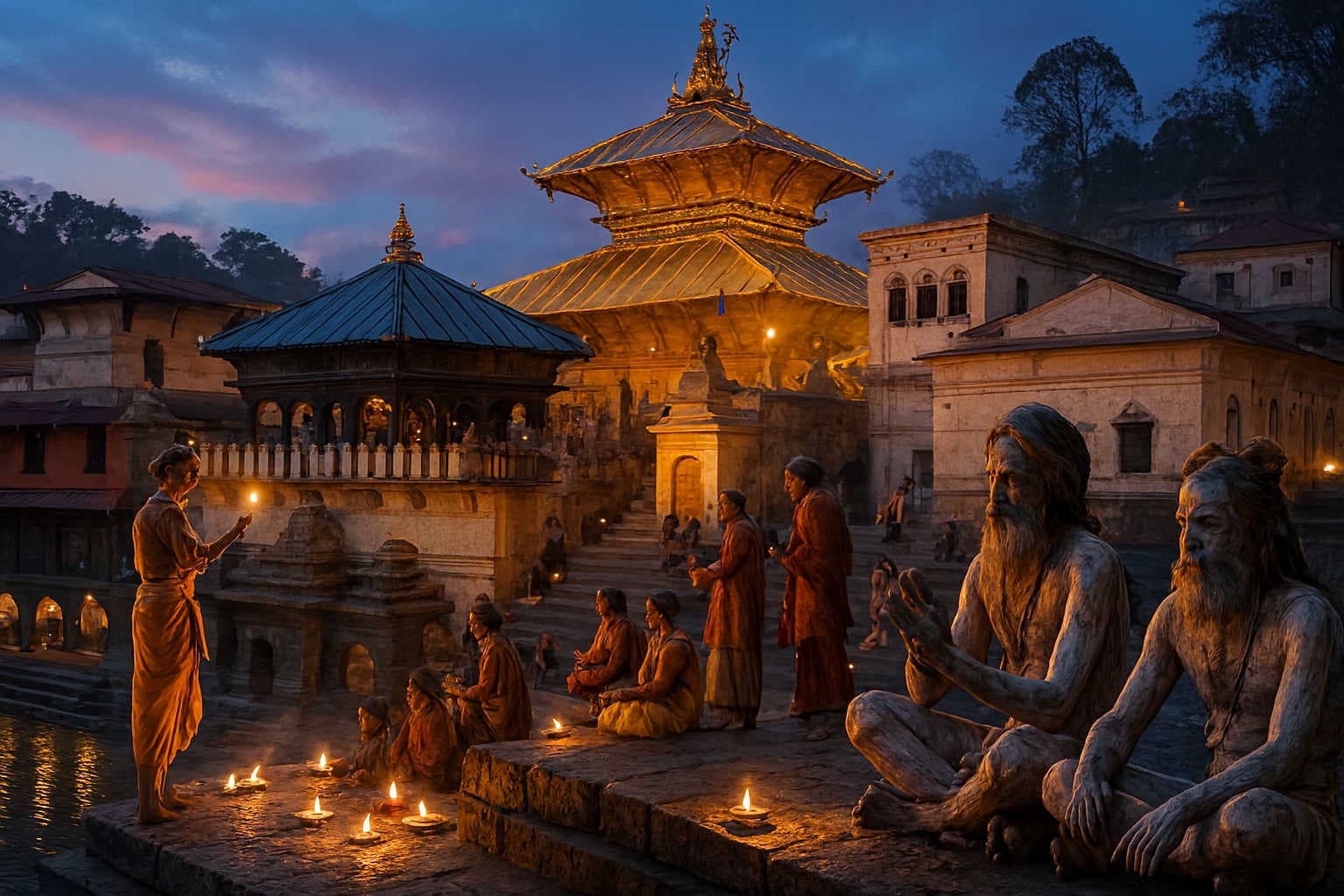
Morning and Evening Aarti: Priests perform elaborate pujas with chants, bells, and oil lamps, creating a divine atmosphere that draws devotees and tourists alike.
-
Bagmati River Ceremonies: The riverbank is lined with ghats, where devotees perform rituals for ancestors and cremation ceremonies. Just as Varanasi is associated with moksha in India, Pashupatinath offers liberation of the soul in Nepal.
-
Darshan of the Lingam: Only Hindus are allowed inside the main sanctum, where the lingam is adorned with flowers, bilva leaves, and offerings. Non-Hindu visitors, however, can admire the temple and rituals from the river’s opposite bank.
Festivals at Pashupatinath
The temple is most vibrant during Maha Shivaratri, when thousands of sadhus, ascetics, and pilgrims gather from across Nepal and India. The temple becomes a sea of devotion, with all-night chants of “Om Namah Shivaya,” bonfires, and offerings.
Other important occasions include:
-
Teej: A festival where women fast and pray for the well-being of their husbands and families.
-
Shravan Month: Dedicated to Shiva, when devotees offer continuous prayers and water to the lingam.
-
Kartik Purnima and Bala Chaturdashi: Ceremonies where devotees honor ancestors and scatter holy grains along the riverbanks.
Spiritual Importance
For Hindus, visiting Pashupatinath is considered a deeply transformative experience. The temple is not only a place of worship but also a gateway to moksha (liberation). Cremation at the Bagmati ghats is believed to free the soul from the cycle of birth and death, making it a sacred site for final rites.
The presence of thousands of sadhus—naga ascetics covered in ash, yogis in meditation, and saints engaged in discourse—adds to the spiritual energy of the temple complex.
Pashupatinath and Nepalese Culture
Beyond its religious significance, Pashupatinath is deeply intertwined with the cultural and social life of Nepal. It has been a center of art, music, and philosophy for centuries. The temple’s carvings and inscriptions showcase Nepal’s unique blend of Hindu and Himalayan traditions.
As a UNESCO World Heritage Site, it also stands as a global symbol of Nepal’s spiritual heritage and attracts scholars, photographers, and seekers worldwide.
Visiting Pashupatinath
Located just 5 km from Kathmandu’s Tribhuvan International Airport, the temple is easily accessible. The best time to visit is during Maha Shivaratri or in the serene months of November to February, when the weather is pleasant.
Visitors can explore not only the main temple but also the surrounding shrines, ghats, and bustling markets selling rudraksha beads, Shiva idols, and puja items.
Conclusion
The Pashupatinath Temple is more than a religious monument—it is the heartbeat of Nepalese spirituality. Here, the eternal flow of the Bagmati meets the timeless presence of Lord Shiva, offering devotees a sense of peace, liberation, and connection with the divine.
Whether one comes seeking moksha, cultural discovery, or simply the spiritual atmosphere of the Himalayas, Pashupatinath stands as a beacon of faith—an enduring reminder of Shiva’s grace as the Lord of all beings.