Nataraja Temple – The Dancing Lord’s Domain
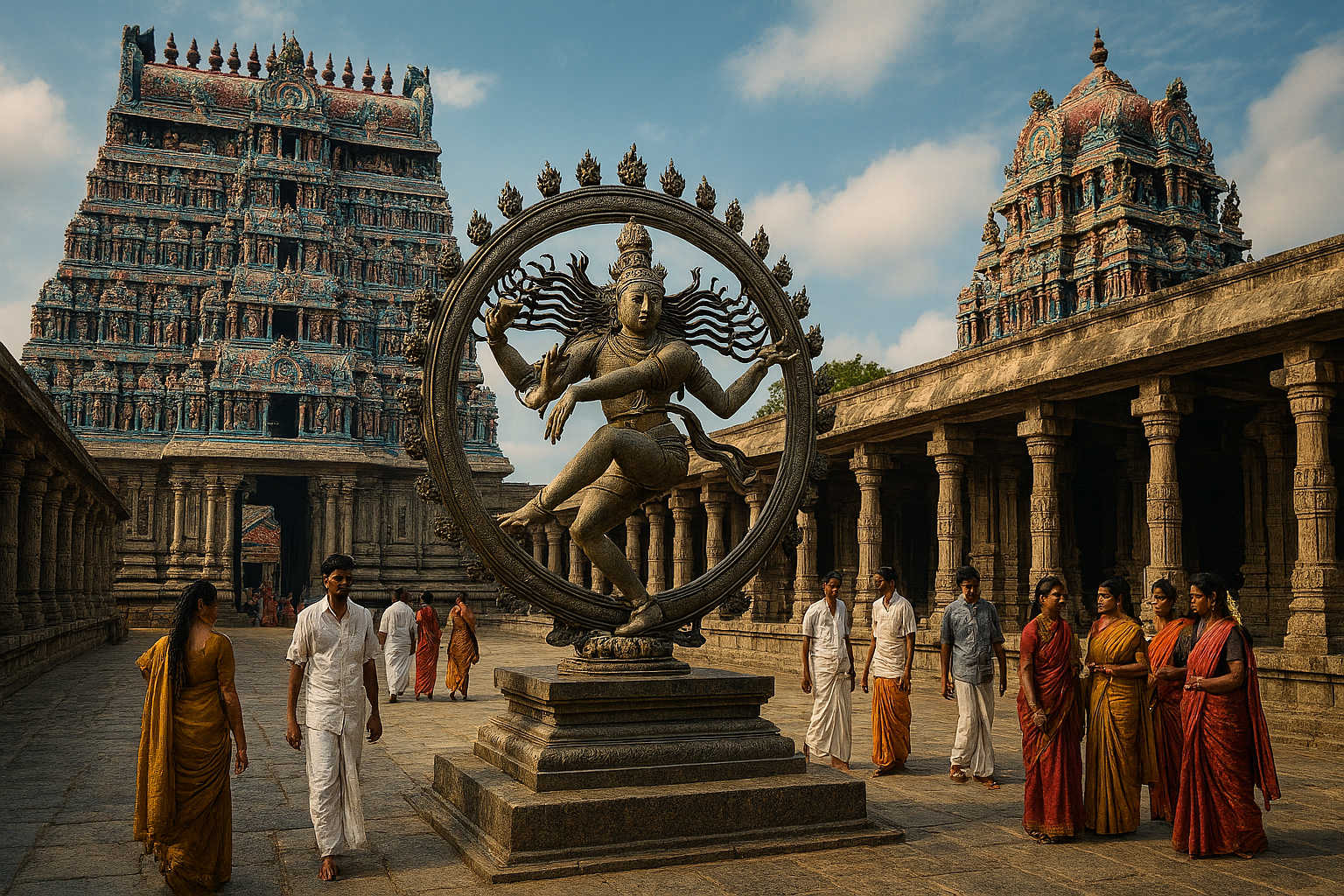
In the spiritual heart of Tamil Nadu lies the Nataraja Temple, a magnificent shrine dedicated to Lord Shiva as the cosmic dancer (Nataraja). Situated in Chidambaram, this temple is celebrated as the ultimate expression of Shaivite devotion and philosophy, where art, spirituality, and cosmic symbolism converge. Known as the Temple of the Cosmic Dance, it is also one of the revered Pancha Bhoota Sthalams, representing the element Akasha (ether).
A visit to the Nataraja Temple offers devotees and visitors alike an immersion into the rich spiritual heritage of South India, where each pillar, sculpture, and ritual carries profound symbolic meaning.
The Cosmic Dance of Shiva
At the core of the temple is Lord Shiva in the form of Nataraja, performing the Ananda Tandava, or the Dance of Bliss. This dance encapsulates the eternal rhythm of the universe, representing the cycles of creation, preservation, destruction, concealment, and blessing.
Shiva’s four hands communicate universal truths:
-
Damaru (drum): Signifying the cosmic creation.
-
Agni (fire): Symbolizing destruction and transformation.
-
Abhaya mudra: Assurance of protection to devotees.
-
Uplifted foot: Indicating liberation and grace.
This dynamic representation is not just artistic but also a profound spiritual statement: the universe itself is a manifestation of Shiva’s rhythm and energy.
Historical Background
The origins of the Nataraja Temple are ancient, with references in Tamil Sangam literature and the Tevaram hymns of the Nayanmar saints. The temple in its present grandeur was constructed and expanded during the Chola dynasty (9th–13th centuries CE), a period renowned for its mastery of Dravidian temple architecture and devotion to Lord Shiva.
Over centuries, the temple became a center for:
-
Shaivite learning and philosophy.
-
Cultural performances, including Bharatanatyam.
-
Pilgrimages attracting devotees from across India.
The temple’s design and rituals reflect a deep understanding of the universe and human spirituality, blending theology with daily life.
Temple Architecture
The Nataraja Temple is a classic example of Dravidian architecture:
-
Gopurams (Gateway Towers): The towering spires adorned with intricate carvings are visible from afar, welcoming pilgrims into a divine space.
-
Chit Sabha (Sanctum): The golden-roofed sanctum houses the idol of Nataraja, symbolizing the union of matter and spirit.
-
Natya Mandapam (Dance Hall): Dedicated to ritual performances and classical dances, the hall is surrounded by sculpted pillars depicting Shiva’s cosmic acts.
-
Sabha Mandapam: Features 108 intricately carved pillars, narrating stories of Shiva, his devotees, and his cosmic exploits.
-
Sacred Courtyards and Tanks: The temple layout represents cosmic order, allowing devotees to circumambulate while contemplating spiritual truths.
The architecture itself embodies the philosophy of Shiva as both creator and preserver, integrating art, devotion, and cosmic symbolism.
Legends and Mythology
Numerous legends enhance the temple’s spiritual significance:
-
Shiva and Ravana: As per legend, Ravana attempted to lift Mount Kailash but was humbled by Shiva’s cosmic dance at Chidambaram, highlighting divine supremacy.
-
Akasha Bhoota: The temple represents the ether element, reminding devotees of the subtle, omnipresent nature of divinity.
-
Liberation Through Dance: Shiva’s dance is believed to dissolve ignorance, ego, and worldly attachments, guiding devotees toward liberation (moksha).
These stories underline the temple’s role as a gateway to spiritual insight.
Rituals and Worship
Devotional practices at the Nataraja Temple adhere to ancient Shaiva Agama traditions:
-
Abhishekam: The sacred bathing of Nataraja with milk, water, honey, and holy ash.
-
Alankaram: Daily decoration with flowers, jewels, and sacred garments.
-
Aarti: Performed multiple times a day, illuminating the deity with lamps while devotees chant mantras.
-
Meditation and Japa: Pilgrims often meditate within the temple complex or chant the Maha Mrityunjaya Mantra for blessings.
Participation in these rituals is believed to cleanse the mind, purify the soul, and deepen spiritual understanding.
Festivals at Nataraja Temple
The temple celebrates several grand festivals that draw devotees in large numbers:
-
Maha Shivaratri: Devotees fast, chant, and participate in all-night worship, celebrating Shiva’s cosmic power.
-
Arudra Darshan: Marks Shiva’s cosmic dance, celebrated in the Tamil month of Margazhi (December–January), with elaborate decorations and rituals.
-
Navaratri: Features devotional music, dance performances, and cultural gatherings.
These festivals merge devotion with art, reflecting the temple’s dual role as a spiritual and cultural hub.
Spiritual Significance
The Nataraja Temple is not just a pilgrimage site—it is a cosmic classroom:
-
The dance of Shiva symbolizes the interplay of creation and destruction.
-
Devotees learn the transient nature of life and the path to liberation.
-
The temple encourages contemplation, meditation, and appreciation of the universe’s rhythmic harmony.
Scholars and devotees alike recognize the temple as a living embodiment of cosmic principles.
Cultural and Educational Role
Chidambaram Nataraja Temple has historically fostered:
-
Classical Arts: Bharatanatyam and other temple dances originated here, inspired by Nataraja’s dance.
-
Spiritual Learning: The temple was a center for studying Shaiva Agamas, philosophy, and Tamil devotional literature.
-
Community Life: Festivals and daily rituals foster social cohesion, blending culture with spirituality.
This enduring legacy ensures the temple remains a hub for both religious devotion and cultural education.
Conclusion
The Nataraja Temple in Chidambaram is a unique confluence of spirituality, art, and philosophy. Lord Shiva’s cosmic dance here represents the eternal rhythm of the universe, guiding devotees toward self-realization and liberation.
Visiting the temple offers more than darshan—it is an immersion into South India’s Shaivite tradition, Dravidian architecture, and cosmic symbolism. For pilgrims, scholars, and travelers, the Nataraja Temple is a timeless sanctuary where the universe’s dance unfolds in every step, pillar, and chant, inspiring devotion, contemplation, and awe.