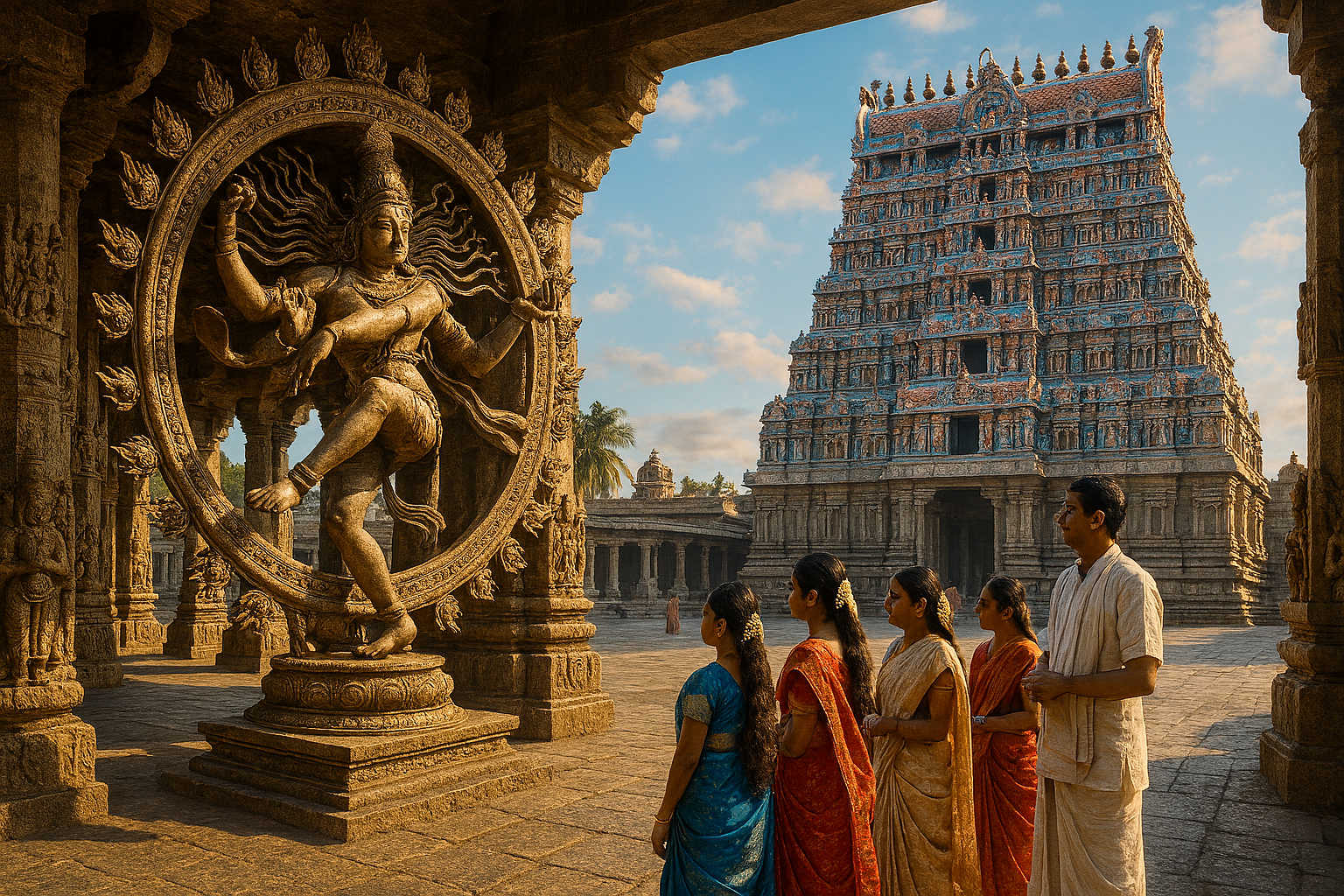
Chidambaram – The Temple of Cosmic Dance
In the heart of Tamil Nadu, nestled amidst serene landscapes and sacred traditions, stands the Chidambaram Nataraja Temple, a world-renowned shrine dedicated to Lord Shiva in his cosmic dancer form. Revered as the Temple of Cosmic Dance, it is one of the five Pancha Bhoota Sthalams, representing the element of Akasha (ether). Chidambaram is not just a temple—it is a confluence of spirituality, art, architecture, and philosophy, drawing devotees, scholars, and tourists from across the globe.
The Cosmic Dance of Lord Shiva
The temple enshrines Lord Shiva as Nataraja, the supreme cosmic dancer, performing the Ananda Tandava (Dance of Bliss). This dance represents the eternal cycle of creation, preservation, and destruction. Each movement of Nataraja’s four arms has symbolic meaning:
-
One hand holds the damaru (drum), symbolizing creation.
-
Another hand holds Agni (fire), representing destruction and transformation.
-
One hand gestures abhaya mudra, assuring protection.
-
Another points towards the uplifted foot, indicating liberation.
Under Nataraja’s rhythmic cosmic dance, the universe is continuously renewed, and devotees find spiritual solace and inspiration in this dynamic depiction.
Historical Background
The Chidambaram Temple has its origins in ancient Tamil literature, mentioned in Tevaram hymns by the Nayanmar saints. Its present architectural grandeur was developed over several centuries, particularly during the Chola dynasty (9th–13th centuries). The Cholas, known for their devotion to Shiva and mastery of Dravidian architecture, expanded the temple complex, adding massive gopurams (gateway towers), intricately carved halls, and sacred courtyards.
Today, it stands as one of the most important centers of Shaivism in South India, blending theology, philosophy, and art in one divine space.
Architecture and Layout
Chidambaram Temple exemplifies Dravidian architecture, with its massive stone structures, towering gopurams, and detailed carvings.
-
Gopurams: The temple has five major gopurams, each representing one of the five elements of nature. The tallest gopuram rises majestically above the town, visible from afar.
-
Golden Roof (Chit Sabha): The sanctum where Lord Nataraja resides has a golden roof, reflecting the light in a divine aura.
-
Pillared Halls: The Sabha Mandapam and Nritta Sabha contain 108 sculpted pillars, each depicting tales from Shaiva mythology and episodes of Shiva’s cosmic dance.
-
Sacred Courtyards: Multiple enclosures, or prakarams, allow devotees to circumambulate the deity while admiring the architectural and artistic brilliance.
The temple’s layout symbolizes the universe, with each section representing cosmic principles, inviting devotees to experience spirituality through geometry, art, and ritual.
Legends of Chidambaram
Several legends enrich the temple’s mystical aura:
-
Lord Shiva and Ravana: According to lore, Ravana, the mighty king of Lanka, sought to lift Mount Kailash but was humbled by Shiva’s cosmic dance at Chidambaram. This tale signifies the supremacy of divine wisdom over pride and power.
-
The Dance of Liberation: Another legend narrates how Shiva’s Ananda Tandava here grants liberation (moksha) to devotees, symbolizing the eternal interplay of life and death.
-
Akasha Element: Chidambaram is the only Pancha Bhoota Sthalam representing ether, reminding devotees of the intangible yet essential nature of cosmic space and consciousness.
Rituals and Worship
Chidambaram Temple maintains strict and ancient Shaiva rituals, following traditions outlined in Agama texts:
-
Abhishekam: The ceremonial bathing of Nataraja with water, milk, honey, and sandalwood paste.
-
Alankaram: Daily decoration of the deity with flowers, jewels, and sacred garments.
-
Aarti: Light offerings performed several times daily, accompanied by devotional chants.
-
Special Sevas: During Margazhi, Maha Shivaratri, and Arudra Darshan, the temple witnesses grand rituals, drawing thousands of devotees.
Devotees often believe that witnessing Nataraja’s darshan, coupled with ritual participation, purifies the soul and fosters spiritual awakening.
Festivals at Chidambaram
Chidambaram comes alive during its major festivals:
-
Maha Shivaratri: The most celebrated festival, where the temple remains open through the night with prayers, chanting, and ceremonial dance performances.
-
Arudra Darshan: Marks Shiva’s cosmic dance, celebrated in the Tamil month of Margazhi (December–January). Devotees from across India participate in this festival, witnessing the deity adorned in unique alankarams.
-
Navaratri: The temple sees cultural programs, devotional music, and traditional dance, enhancing its spiritual and artistic appeal.
These festivals reflect the deep interconnection of devotion, art, and community life.
Spiritual Significance
Chidambaram Temple holds unique spiritual significance:
-
Path to Liberation: The cosmic dance of Nataraja is believed to dissolve the ego, guiding devotees toward moksha.
-
Symbol of Balance: The temple embodies the balance between creation and destruction, reflecting the cycles of the universe.
-
Art and Devotion: The sculpted pillars and halls inspire contemplation, merging aesthetic beauty with spiritual experience.
For philosophers and practitioners of Shaivism, Chidambaram is not merely a temple—it is a living, breathing representation of cosmic principles.
Cultural and Educational Importance
Chidambaram Temple has also historically been a center for:
-
Classical Arts: Traditional Bharatanatyam dance originated in temples like Chidambaram, where performers depicted Shiva’s cosmic tales.
-
Sanskrit and Tamil Learning: The temple maintained ancient schools of Vedic and philosophical study.
-
Community Gathering: Festivals and daily rituals foster social cohesion, blending spirituality with culture.
Thus, the temple is a hub for both religious and cultural enrichment.
Conclusion
The Chidambaram Nataraja Temple is more than a religious site; it is a sanctuary where art, philosophy, and devotion converge. Lord Shiva’s cosmic dance here reminds devotees of the eternal rhythm of life, the balance of creation and destruction, and the ultimate path to liberation.
A visit to Chidambaram offers not just darshan but an immersive experience into South India’s spiritual heritage, the brilliance of Dravidian architecture, and the profound symbolism of Shiva’s Ananda Tandava. For seekers, scholars, and devotees alike, Chidambaram stands as a timeless beacon of cosmic energy and devotion.