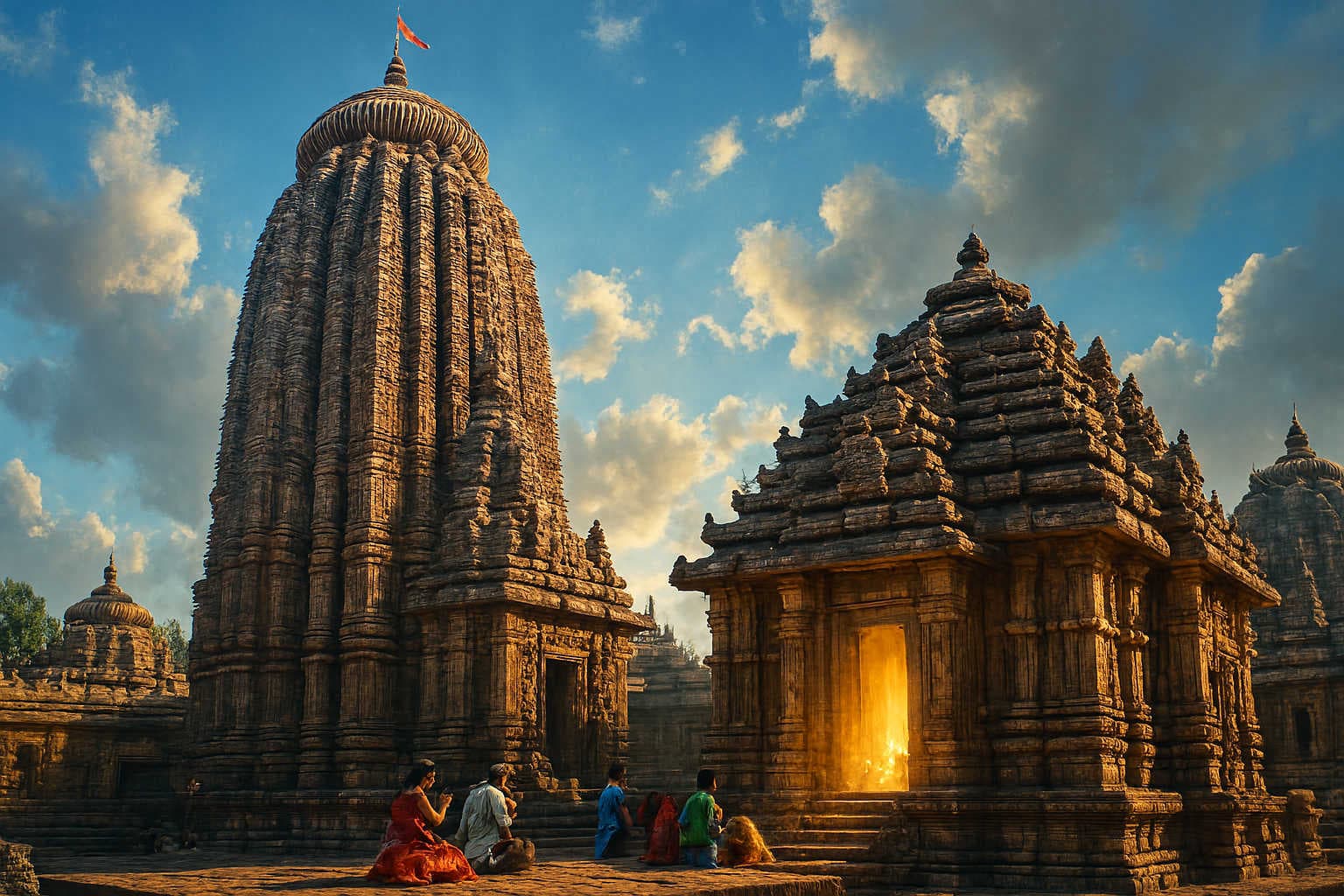
Lingaraj Temple – The Grand Shiva Shrine of Odisha
The state of Odisha is a land of temples, each narrating stories of devotion, architecture, and timeless spirituality. Among them, the Lingaraj Temple in Bhubaneswar, often called the “Temple City of India,” stands as the crown jewel. Dedicated primarily to Lord Shiva, Lingaraj is not only the largest temple in Bhubaneswar but also one of the finest examples of Kalinga architecture, representing centuries of devotion and craftsmanship.
For devotees and travelers alike, Lingaraj Temple is more than a religious monument—it is a living testimony to the sacred legacy of Shaivism in eastern India.
Historical Background
The origins of Lingaraj Temple date back to the 7th century CE, but it was expanded into its grand form in the 11th century CE under the rule of the Somavamsi dynasty. Later, the Ganga dynasty contributed further embellishments. The temple seamlessly combines architectural brilliance with deep-rooted spirituality, symbolizing the syncretic traditions of Odisha, where Shaivism and Vaishnavism flourished together.
Interestingly, while Lingaraj is dedicated to Shiva, the deity here is worshipped as Harihara, a combined form of Shiva and Vishnu. This unique feature reflects the cultural inclusiveness of the temple.
The Presiding Deity – Lingaraj
At the heart of the temple lies the Linga, known as the Swayambhu (self-manifested) form of Shiva. Rising about 8 feet in height, it embodies both Shiva and Vishnu. Devotees believe that worshipping at this shrine grants not only liberation from sins but also blessings of prosperity and spiritual elevation.
The Linga is bathed daily with water, milk, sandalwood, and flowers, while thousands of pilgrims throng the temple to witness these rituals.
Architectural Grandeur
The Lingaraj Temple is a masterpiece of Kalinga architecture, renowned for its vertical elegance and intricate stone carvings. The complex is spread across a vast courtyard with four main components:
-
Vimana (Sanctum Sanctorum): The towering spire rises nearly 180 feet, dominating the Bhubaneswar skyline. Its curvilinear shape and ornate carvings display the mastery of Odisha’s artisans.
-
Jagamohana (Assembly Hall): A beautifully designed hall where devotees gather, showcasing massive pillars and arched windows.
-
Natamandira (Hall of Dance): Added during the Ganga dynasty, this hall was used for ritual dances and cultural performances.
-
Bhoga Mandapa (Hall of Offerings): This section is used to prepare and present offerings to the deity.
The temple complex houses over 50 smaller shrines, dedicated to various deities, including Parvati, Ganesha, and Vishnu, creating a sacred ecosystem of worship.
Legends and Mythology
According to local legends, the Lingaraj Temple was established at the spot where Lord Shiva revealed himself as a cosmic pillar of light, representing infinity. Another legend ties it to the river Bindu Sagar, located nearby, where it is believed that drops from every holy river in India have mingled, making its waters especially sacred.
The temple’s syncretic deity, Harihara, also symbolizes the harmony between Shaivism and Vaishnavism, uniting two of Hinduism’s major traditions.
Festivals at Lingaraj Temple
Festivals are the lifeblood of Lingaraj Temple, bringing together thousands of devotees in joyous devotion.
-
Shivaratri: The grandest celebration, when the temple stays open all night, with devotees offering bel leaves, chanting mantras, and lighting lamps. The deity is adorned in grand alankarams (decorations), and the spiritual energy is palpable.
-
Chandan Yatra: Celebrated in summer, deities are taken out in processions and smeared with sandalwood paste to provide relief from the heat.
-
Ratha Yatra of Lord Lingaraj: Similar to Puri’s famous Rath Yatra, the Lingaraj deity is taken on a grand chariot to the Bindu Sagar tank, where rituals are performed.
These festivals highlight the temple’s continuing role as a vibrant center of worship and community life.
The Sacred Bindu Sagar Tank
Located just north of the temple, the Bindu Sagar tank is a vital part of the Lingaraj pilgrimage. Pilgrims bathe in its waters before entering the temple, as it is believed to purify the body and soul. During certain festivals, the temple deities are ceremonially brought to the tank, emphasizing its spiritual importance.
Pilgrimage Experience
A visit to Lingaraj Temple is an unforgettable journey:
-
The soaring spire visible from afar creates awe as one approaches the temple.
-
The rhythmic chants of priests and devotees fill the air with divine energy.
-
The fragrance of flowers, incense, and camphor creates a deeply spiritual atmosphere.
-
Every stone carving, from floral motifs to mythological scenes, speaks of Odisha’s rich heritage.
Non-Hindus are not allowed inside the sanctum but can view the temple from an elevated platform nearby, ensuring they too can admire its beauty.
Cultural and Spiritual Significance
The Lingaraj Temple is not only a center of Shaivite worship but also a cultural beacon. It exemplifies Odisha’s tradition of blending art, spirituality, and community. The temple has inspired countless poets, saints, and travelers over the centuries.
For Shaivites, it is one of the holiest places to seek Shiva’s blessings. For historians and art lovers, it is a living museum of medieval Indian architecture. For the people of Odisha, it is the spiritual heart of their cultural identity.
Conclusion
The Lingaraj Temple of Bhubaneswar is far more than a monument—it is a vibrant, living shrine where spirituality and artistry converge. Its soaring tower, sacred legends, and lively festivals make it not only the pride of Odisha but also a cornerstone of India’s temple heritage.
For every pilgrim who bows before the self-manifested Linga, the temple offers a profound experience of divinity, connecting the devotee with the eternal presence of Shiva, the cosmic lord.
A journey to Lingaraj Temple is thus not just a visit—it is a step into the timeless rhythm of devotion, history, and the divine spirit of Odisha.