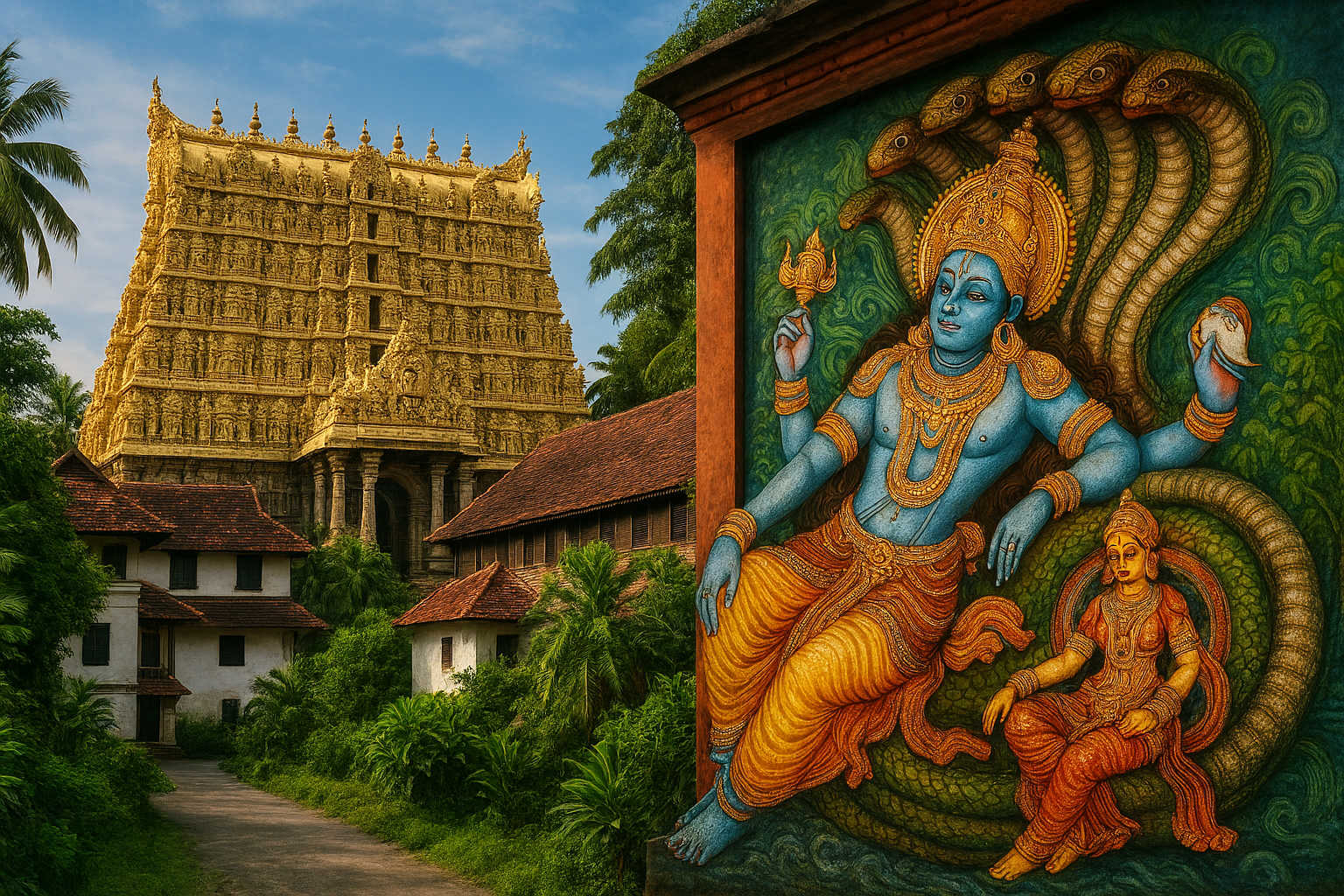
Thiruvananthapuram – The Lord of the Serpent Bed
The city of Thiruvananthapuram, the capital of Kerala, is not only a bustling modern metropolis but also one of the most ancient and spiritually significant cities in India. Its name, derived from the Malayalam words Thiru-Anantha-Puram, translates to “The Sacred City of Lord Ananta,” a direct reference to Lord Vishnu reclining on the serpent Ananta (Adishesha). At the heart of the city stands the iconic Padmanabhaswamy Temple, one of the holiest shrines of Vaishnavism, where the deity is worshipped as Ananta Padmanabha – Vishnu resting on the serpent bed in cosmic slumber.
The Mythological Background
According to Hindu mythology, Lord Vishnu assumes various forms to maintain balance in the universe. In the form of Ananta Padmanabha, he reclines majestically on the serpent Adishesha, floating on the cosmic ocean of existence. From his navel emerges a lotus, upon which sits Lord Brahma, the creator. This imagery represents the eternal cycle of preservation and creation, with Vishnu as the preserver of the cosmos.
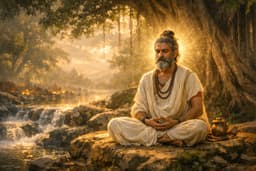
Legends also mention that sage Divakara Muni, a great devotee of Vishnu, once performed penance seeking the Lord’s darshan. Vishnu appeared before him as a mischievous child but vanished into the forest when scolded. The sage followed him and discovered his divine form reclining on Ananta. Overwhelmed, the sage prayed that the Lord remain there permanently – and thus, the Padmanabhaswamy Temple was established.
The Sacred Temple of Padmanabhaswamy
The Padmanabhaswamy Temple is the spiritual nucleus of Thiruvananthapuram. With its towering gopuram (gateway tower), intricate carvings, and grand sanctum, it is an architectural and spiritual marvel.
-
Deity: The presiding deity is Ananta Padmanabha, depicted reclining on the great serpent Ananta. The idol is nearly 18 feet long and viewed through three separate doors – the head and chest, the midsection with the lotus from which Brahma emerges, and the feet.
-
Architecture: Built in the Dravidian style, the temple’s golden gopuram dominates the skyline. Inside, the sanctum glows with lamps, murals, and granite sculptures that narrate stories from the epics.
-
Rituals: Traditional rituals are performed in strict adherence to Tantric and Vedic practices, preserving centuries-old traditions.
The temple is unique in that its entry is restricted to Hindus, upholding ancient customs, while still standing as a symbol of Kerala’s cultural and spiritual identity.
Treasures of the Temple
The Padmanabhaswamy Temple came into international limelight in the last decade when its secret vaults were opened. Inside were discovered treasures – gold coins, jewels, ornaments, and ancient artifacts – worth billions of dollars. This revelation led to the temple being called the world’s richest shrine.
For devotees, however, the true wealth of the temple is not its material riches but the divine presence of Lord Padmanabha. The treasures are seen as offerings accumulated over centuries by kings, saints, and devotees.
Thiruvananthapuram – The Sacred City
The city itself reflects its name and origin. Thiruvananthapuram is dotted with temples, traditional festivals, and cultural institutions that revolve around devotion to Lord Ananta Padmanabha.
The Travancore Royal Family, traditionally considered custodians of the temple, continue to play an important role in its management. They regard themselves not as rulers but as servants of Lord Padmanabha, who is seen as the eternal king of Travancore. This unique philosophy has shaped the history, governance, and cultural life of the region.
Festivals and Celebrations
The temple calendar is filled with festivals that draw thousands of devotees:
-
Alpasi and Painkuni Festivals: Conducted twice a year, these festivals involve grand processions, rituals, and cultural programs. The idol is taken out in a golden chariot, accompanied by music and chanting.
-
Vaikuntha Ekadashi: Considered one of the most auspicious days, when devotees believe that the gates of Vaikuntha (Vishnu’s celestial abode) are opened.
-
Lakshadeepam: A spectacular festival held once every six years, when the temple is illuminated with one hundred thousand oil lamps, creating a surreal and divine ambiance.
These celebrations keep alive Kerala’s deep-rooted devotional traditions.
The Symbolism of Lord on the Serpent Bed
The image of Lord Vishnu reclining on Ananta is rich in symbolism:
-
Ananta (Endlessness): The serpent represents infinity, highlighting Vishnu’s eternal nature.
-
Cosmic Ocean: The Lord resting on waters signifies peace amidst chaos.
-
Lotus from the Navel: Symbolizes creation and the continuity of life.
-
Reclining Posture: Represents preservation and assurance that the cosmos is in balance.
Devotees believe that meditating upon this form brings peace, prosperity, and spiritual wisdom.
Beyond the Temple – Spiritual Thiruvananthapuram
While the Padmanabhaswamy Temple is the heart, Thiruvananthapuram also offers other sacred and cultural experiences:
-
Attukal Bhagavathy Temple, often called the “Sabarimala of Women,” famous for its Pongala festival.
-
Vellayani Lake and Kovalam Beach, where the natural beauty of Kerala blends with its spiritual atmosphere.
-
Ayurvedic Centers and Kalari Martial Arts that showcase the holistic traditions of Kerala.
Thus, the city balances spirituality with culture, tradition with modernity.
Conclusion
Thiruvananthapuram is not just Kerala’s political capital but also its spiritual heart, defined by the eternal presence of Lord Ananta Padmanabha. The city takes its very identity from the deity who reclines on the serpent bed, embodying timelessness, preservation, and cosmic harmony.
A pilgrimage to Thiruvananthapuram is more than just temple darshan – it is an immersion into centuries of history, mythology, architecture, and devotion. The sight of Lord Vishnu in his majestic reclining form reminds devotees that amidst the chaos of life, divine order and peace prevail. Truly, the Lord of the Serpent Bed continues to watch over the land and its people, binding them in faith and heritage.