Bhu Varaha Temple in Tirumala
Nestled in the sacred Tirumala hills, adjacent to the world-famous Tirumala Balaji Temple, lies a lesser-known yet equally significant shrine – the Bhu Varaha Swamy Temple. Dedicated to Lord Vishnu’s Varaha Avatar, this ancient temple holds immense mythological and spiritual importance. While millions of devotees throng the main Balaji temple every year, the Bhu Varaha Temple quietly stands as a guardian of tradition, reminding visitors of the cosmic balance and divine protection that Lord Varaha represents.
The Varaha Avatar of Vishnu
In Hindu mythology, Lord Vishnu is believed to incarnate on Earth to restore dharma and protect the universe. Among his ten avatars (Dashavatara), the Varaha Avatar – the divine boar – plays a pivotal role. According to legend, when the demon Hiranyaksha dragged the Earth (Bhudevi) into the cosmic ocean, Vishnu assumed the form of a mighty boar to rescue her. With immense strength, he fought the demon, defeated him, and lifted the Earth on his tusks, restoring balance to the cosmos.
The Bhu Varaha Temple commemorates this glorious deed, with Lord Varaha enshrined alongside his consort, Goddess Bhudevi.
Location and Significance
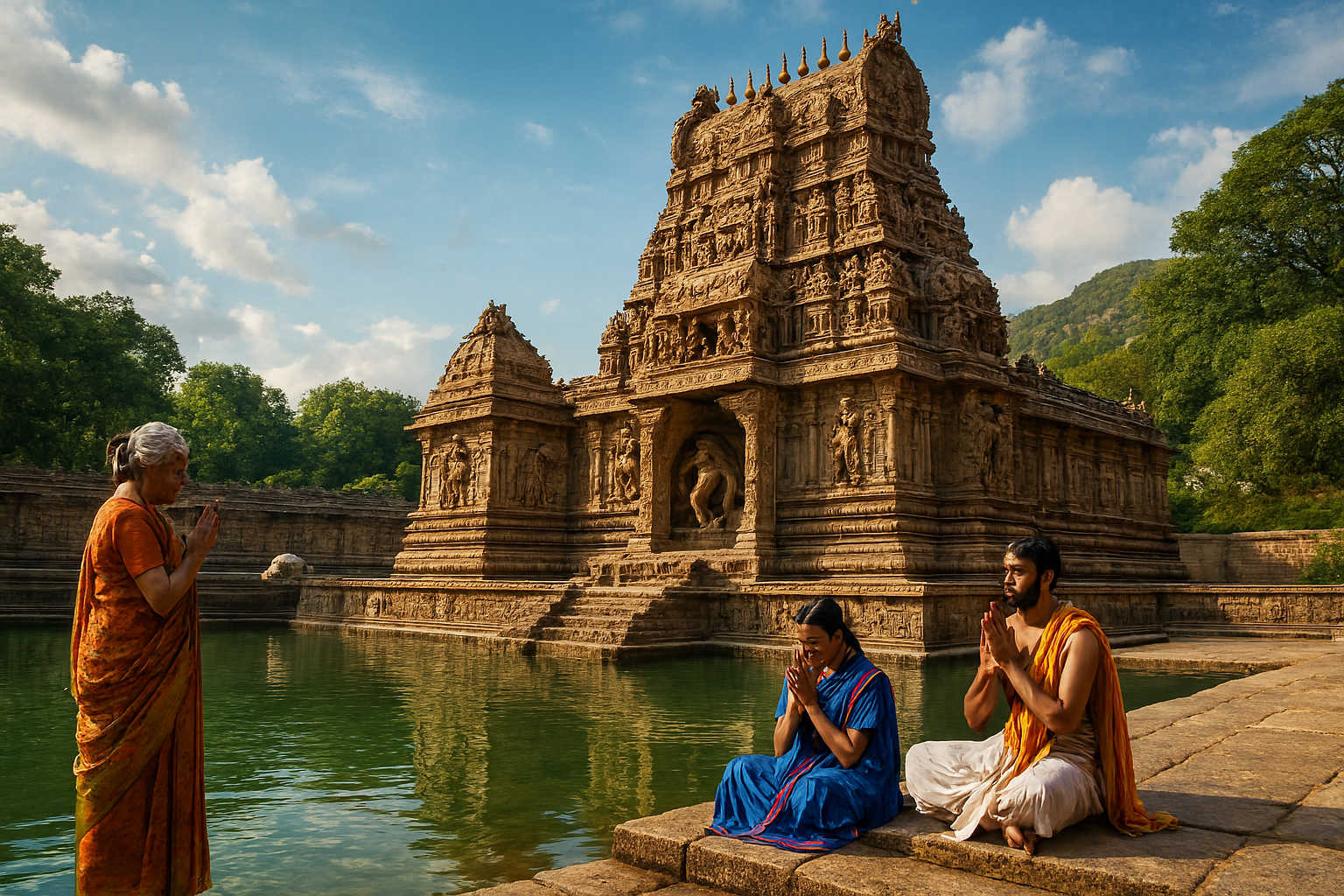
The Bhu Varaha Temple is located on the northern banks of Swami Pushkarini, the sacred temple tank near the Tirumala Venkateswara Temple. Pilgrims traditionally believe that darshan at the Varaha Swamy Temple should be done before visiting Lord Venkateswara (Balaji). This sequence signifies gratitude to the deity who restored the Earth itself, without whom no other form of worship would be possible.
It is also believed that Lord Venkateswara himself instructed devotees to first seek blessings at Varaha Swamy Temple, making it an inseparable part of the Tirumala pilgrimage.
Legends Associated with the Temple
-
Varaha’s Boon to Venkateswara:
According to local legend, when Lord Vishnu incarnated as Venkateswara and resided in Tirumala, he sought permission from Varaha Swamy to stay on the sacred hills. Lord Varaha agreed, but only on the condition that the first offering (naivedyam) of the day and the first darshan be reserved for him. This tradition continues to this day. -
Connection with Swami Pushkarini:
The temple’s proximity to Swami Pushkarini is also symbolic. The waters of the tank are believed to have been sanctified by Varaha himself, and devotees often take a dip here before entering either temple. -
Bhudevi’s Presence:
The deity here is worshipped along with Goddess Bhudevi, symbolizing the eternal union of the divine preserver and the Earth.
Architecture of the Temple
The Bhu Varaha Swamy Temple is modest in size compared to the grand Tirumala shrine but holds immense antiquity.
-
Dravidian Style: Built in traditional South Indian Dravidian architecture, the temple has a simple gopuram (tower) and sanctum.
-
Main Idol: The idol of Lord Varaha Swamy is large and powerful, depicted with a boar’s face and a human body, seated with Bhudevi on his lap.
-
Carvings and Mandapa: Intricate carvings of divine beings, sages, and mythical creatures adorn the temple mandapa, reminding devotees of the cosmic tales of Vishnu.
-
Sacred Tank View: The temple opens towards the serene Swami Pushkarini, where the reflection of the shrine enhances its divine aura.
The temple exudes an ancient charm, offering a peaceful contrast to the bustling Tirumala Balaji complex.
Rituals and Worship
The daily rituals of the Bhu Varaha Temple are conducted with great reverence:
-
Suprabhata Seva (early morning awakening of the Lord).
-
Naivedyam – the first food offering of the day before Venkateswara’s temple.
-
Special Archanas during auspicious occasions like Varaha Jayanti, Vaikuntha Ekadashi, and Rathasapthami.
Devotees believe that prayers here are especially powerful for overcoming obstacles, gaining protection from negativity, and seeking blessings for land and property, as Varaha symbolizes Earth itself.
Festivals at Bhu Varaha Temple
While the Tirumala main temple hosts grand celebrations, the Bhu Varaha Temple has its own significant events:
-
Varaha Jayanti: Celebrated in the month of Bhadrapada, marking the appearance of the Varaha Avatar.
-
Annual Brahmotsavam: A smaller version of the Tirumala Brahmotsavam is observed here with rituals and processions.
-
Deepavali and Vaikuntha Ekadashi: These festivals see special pujas and a surge of devotees seeking Lord Varaha’s blessings.
During these times, the temple glows with lamps, chants, and cultural performances, carrying forward centuries of devotion.
Spiritual Importance in Tirumala Pilgrimage
For pilgrims, visiting the Bhu Varaha Swamy Temple is not optional but considered essential. Without Varaha’s blessings, darshan of Balaji is regarded as incomplete. Many devotees follow the traditional sequence:
-
Bathing in Swami Pushkarini.
-
Offering prayers at Varaha Swamy Temple.
-
Proceeding to the Tirumala Balaji Temple.
This ritual flow is believed to bring complete spiritual fulfillment and divine grace.
The Silent Guardian of Tirumala
Despite its importance, the Bhu Varaha Temple often remains overshadowed by the grandeur of the main Balaji shrine. Yet, for those who seek a deeper spiritual experience, it offers a more intimate, serene connection with the divine. The temple is like a silent guardian, reminding devotees that even before the magnificent form of Venkateswara, the cosmic protector Varaha laid the foundation for balance and life on Earth.
Conclusion
The Bhu Varaha Temple in Tirumala is more than a secondary shrine – it is the cornerstone of Tirumala’s sacred geography and mythology. By honoring Lord Varaha first, devotees acknowledge the divine act of rescuing Earth and setting the stage for all life and devotion to thrive.
Every visit to Tirumala becomes more meaningful when one pauses at the humble yet powerful Bhu Varaha Swamy Temple, bowing before the eternal preserver who, in the form of a boar, lifted the world back to safety. In its quiet presence, pilgrims find both protection and a reminder of the eternal truth – that the Earth itself is divine, and to worship it is to worship Vishnu.