Padmanabhaswamy Temple – The World’s Richest Shrine
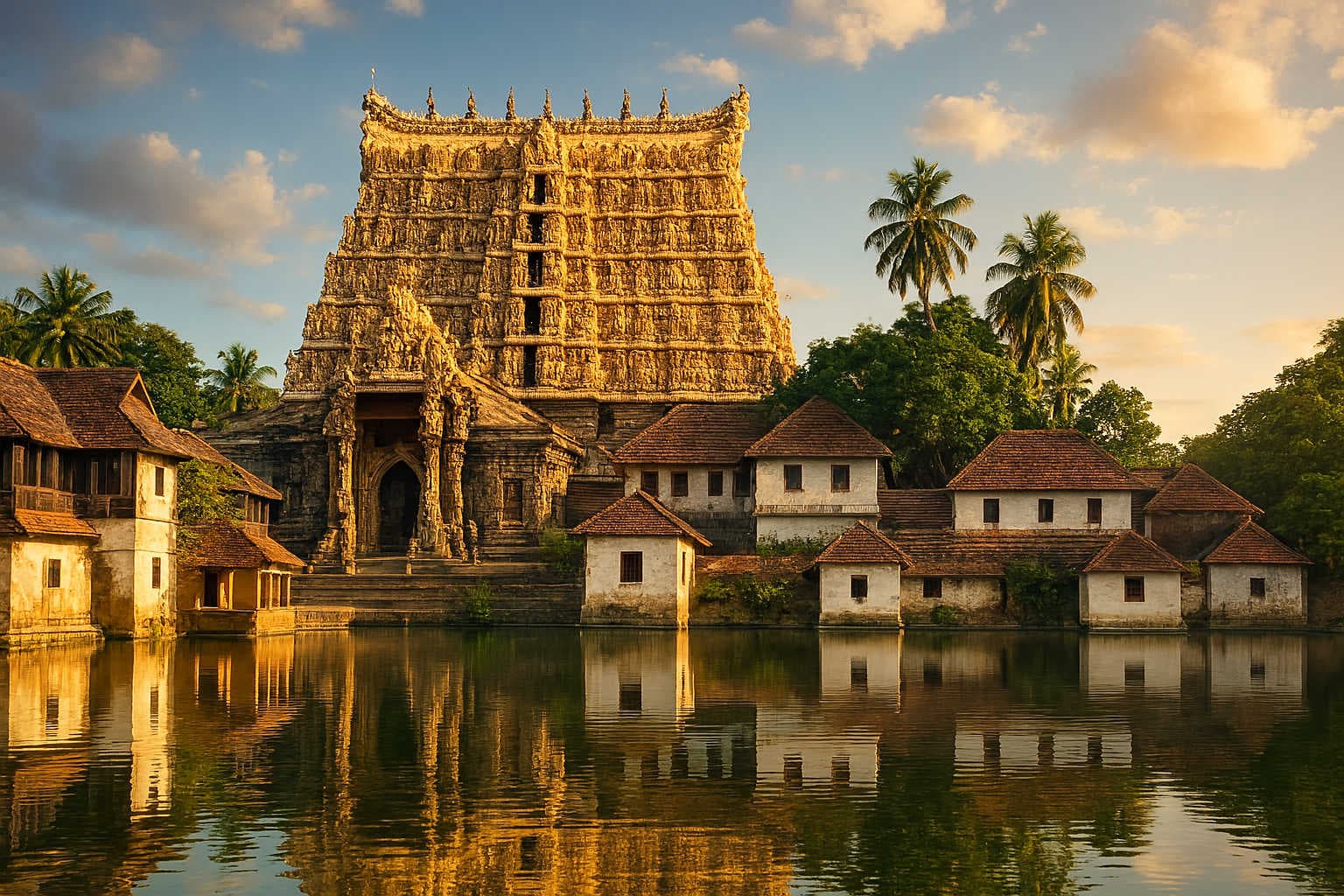
In the heart of Thiruvananthapuram, Kerala’s capital city, stands the awe-inspiring Padmanabhaswamy Temple, a spiritual marvel and one of the most enigmatic temples in the world. Dedicated to Lord Vishnu, the temple is globally renowned not only for its architectural grandeur and devotion but also for being recognized as the world’s richest shrine. With treasures worth billions discovered in its hidden vaults, Padmanabhaswamy has captured the fascination of devotees, historians, and curious travelers alike.
The Deity – Vishnu in Anantashayana
The presiding deity of the temple is Lord Vishnu in his cosmic form – lying on the serpent Ananta (Adi Shesha) in the posture called Anantashayana. The idol is over 18 feet long, and remarkably, it can be viewed through three separate doors:
-
The first door reveals the head and chest of Vishnu.
-
The second shows his hands resting on the lotus and his divine consort, Goddess Lakshmi.
-
The third reveals the feet of the Lord.
This unique darshan symbolizes the boundless and incomprehensible nature of Vishnu, where no single view can encompass his entirety.
History and Origins
The origins of the Padmanabhaswamy Temple are shrouded in legend and history. It is believed that the temple has existed since antiquity, with references dating back to the Sangam period (circa 500 BCE – 300 CE). Ancient texts like the Puranas mention a shrine to Vishnu at this location.
The temple rose to prominence under the patronage of the Travancore royal family, who considered themselves servants of Lord Padmanabhaswamy. In 1750, Marthanda Varma, the ruler of Travancore, dedicated his kingdom to the deity in an act known as Thrippadidanam (donating the kingdom at the Lord’s feet). Since then, the kings ruled as the Padmanabha Dasa (servant of Padmanabha), emphasizing the temple’s divine sovereignty.
Architectural Grandeur
The temple is a stunning example of Dravidian architecture, with influences unique to Kerala:
-
The Gopuram (Gateway Tower): Rising 100 feet high, it is adorned with intricate carvings depicting deities, celestial beings, and mythological stories.
-
Mandapams and Corridors: The temple has expansive pillared corridors with granite sculptures of gods, sages, and dancers.
-
Golden Idol and Murals: Inside, the sanctum houses golden and stone carvings, along with murals that narrate episodes from the Ramayana and Mahabharata.
-
Sacred Tank (Padma Theertham): Located near the temple, this lotus-filled tank is considered highly auspicious for ritual purification.
The sheer artistry of the temple reflects the devotion and craftsmanship of generations who contributed to its construction.
The Hidden Treasures of Padmanabhaswamy
Padmanabhaswamy Temple shot to global fame in 2011, when its underground vaults were opened under a Supreme Court order. What was found astonished the world:
-
Vaults revealed gold coins, precious gems, diamond-studded ornaments, antique jewelry, and golden idols worth billions.
-
One of the vaults, Vault B, remains unopened, surrounded by mystery and legend, with many believing it is divinely protected.
Estimates suggest that the temple’s treasure makes it the richest place of worship on Earth, surpassing all other global religious shrines. However, the temple continues to maintain that this wealth belongs to the deity, not for human use, highlighting the principle of divine guardianship.
Rituals and Worship
Despite its fame and fortune, Padmanabhaswamy Temple remains primarily a place of devotion. The rituals are conducted according to ancient Tantric traditions.
-
Nirmalyam (early morning opening ritual).
-
Abhishekam (holy bathing of the deity with sacred items like milk, honey, and sandalwood).
-
Usha Puja, Ucha Puja, Deeparadhana at different times of the day.
-
Vishnu Sahasranama chanting and recitations from Vedic scriptures.
Only Hindus are allowed entry into the temple, and strict dress codes apply: men must wear a dhoti without a shirt, while women wear saris or traditional attire.
Festivals at Padmanabhaswamy
The temple is vibrant with festivals that attract thousands of devotees each year:
-
Alpasi and Painkuni Festivals – Biannual celebrations marked with processions of the deity atop golden and silver palanquins carried by elephants.
-
Laksha Deepam – Held once every six years, this festival lights up the temple with one lakh oil lamps, creating a breathtaking vision of divine radiance.
-
Vaikuntha Ekadashi – A day dedicated to Lord Vishnu, celebrated with grandeur, when devotees believe the gates of heaven open.
These festivals combine rituals, music, cultural performances, and deep devotion, making Padmanabhaswamy a spiritual and cultural nucleus.
The Royal Connection
The Travancore royal family continues to play a ceremonial role in the temple. Even though political power has shifted, the rulers still regard themselves as humble servants of Lord Padmanabhaswamy. Their presence during rituals and festivals underscores the enduring bond between the deity and the dynasty.
This spiritual relationship also reflects a governance model where divine authority is acknowledged above human rule, setting a unique example in history.
Mystery and Spiritual Aura
The temple’s fame is not just due to its wealth but also its aura of mystery. Stories abound about the unopened Vault B, said to be sealed by mystical powers and guarded by serpents. Many believe that opening it would unleash calamities, while others argue it contains treasures beyond imagination.
For devotees, however, the temple’s true treasure is not gold but the divine presence of Lord Padmanabhaswamy, whose grace is priceless.
Pilgrimage Experience
Visiting Padmanabhaswamy is a transformative experience:
-
Devotees often bathe in the Padma Theertham tank before entering.
-
The sight of Vishnu in reclining posture, spread across the three doors, leaves a profound impression of vastness and divinity.
-
The temple’s serene chants, fragrance of sandalwood, and oil lamps create a timeless atmosphere where material wealth pales before spiritual richness.
Conclusion
The Padmanabhaswamy Temple is far more than the world’s richest shrine – it is a sacred space where history, devotion, art, and mystery converge. For centuries, it has stood as a testimony to Kerala’s spiritual legacy, reminding humanity that divine wealth is to be revered, not possessed.
To bow before Lord Vishnu here is to feel the eternal truth – that the greatest treasure lies not in gold, but in the infinite grace of the Divine.