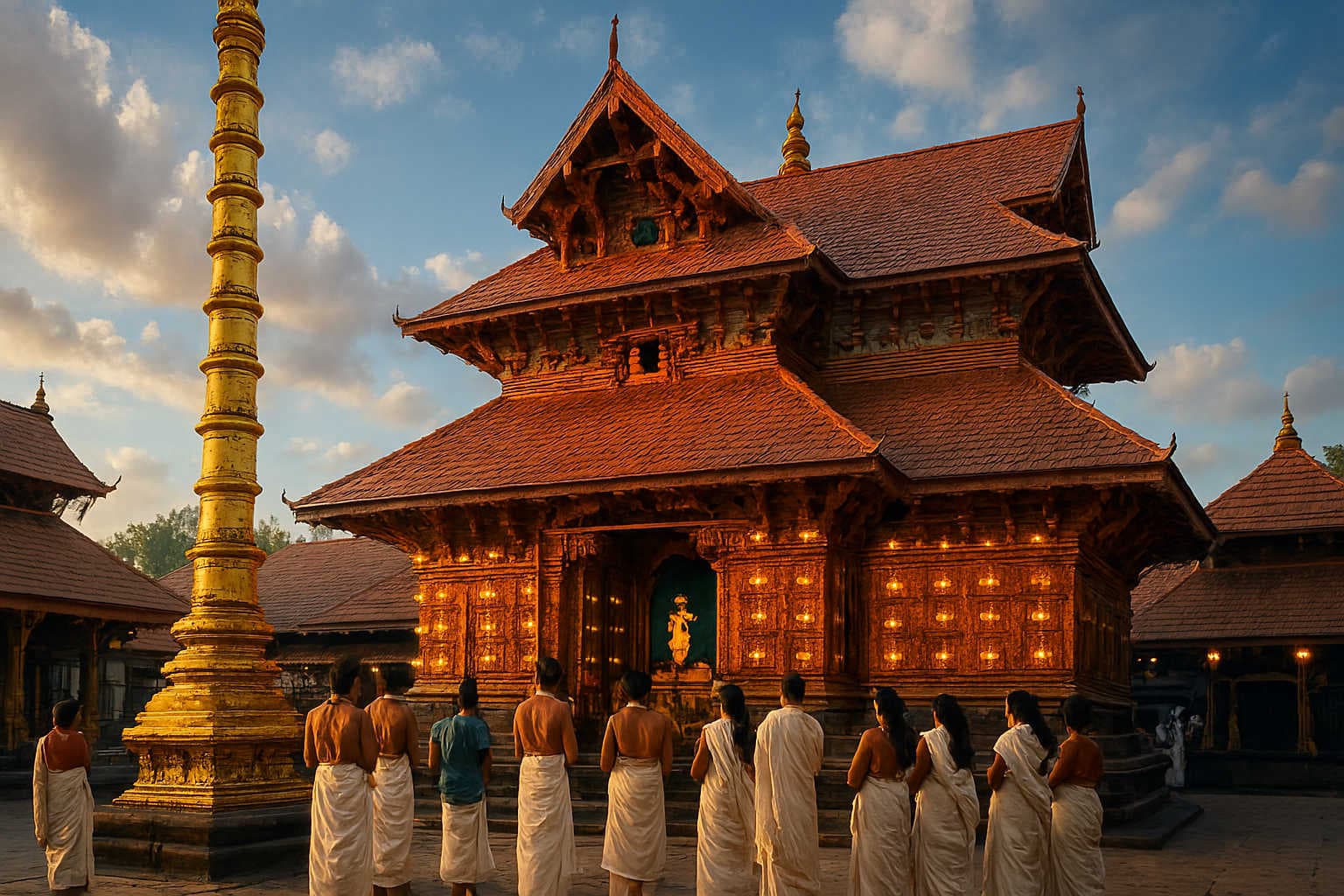
Guruvayur Temple – Krishna of Kerala
Amidst the lush green landscapes and backwaters of Kerala lies one of India’s most revered pilgrimage sites – the Guruvayur Temple, dedicated to Lord Krishna. Known affectionately as Guruvayurappan, the deity here is worshipped as the embodiment of Krishna in his enchanting child form. For centuries, this temple has been the spiritual heartbeat of Kerala, earning the title “Dwarka of the South.”
The Legend of Guruvayur
The origins of Guruvayur Temple are deeply rooted in mythology. According to tradition, the idol of Lord Krishna here is believed to have been worshipped by Brahma himself before being passed down to the earth.
During the time of Lord Krishna’s departure from Dwarka, the idol was rescued by Vayu (the wind god) and Brihaspati (the guru of the devas), who brought it to Kerala. They installed the idol at the present site, thus giving the shrine its name: Guru (Brihaspati) and Vayu (the wind god) together became “Guruvayur.”
The deity is worshipped as Balakrishna, the divine child holding butter, radiating innocence and joy while also embodying supreme cosmic energy.
The Idol of Guruvayurappan
The sanctum houses the striking four-armed idol of Lord Krishna, holding the conch (Panchajanya), discus (Sudarshana), mace (Kaumodaki), and lotus. Despite his childlike charm, the deity symbolizes supreme divinity.
What makes the idol unique is its composition – it is said to be made of a rare stone called Pathalanjana Shila, believed to have mystical healing properties. Devotees believe that even a glimpse (darshan) of Guruvayurappan can heal ailments and purify the soul.
The Temple Architecture
The Guruvayur Temple reflects the simple yet majestic Kerala style of architecture:
-
Chuttambalam – The rectangular structure housing the sanctum, surrounded by corridors with oil lamps glowing.
-
Sreekovil (Sanctum) – The innermost chamber where the idol resides, accessible only to priests.
-
Dwajasthambam (Flagpost) – A golden pillar rising in front of the sanctum, symbolizing divine presence.
-
Deepastambham (Lamp Tower) – A tall pillar with multiple tiers of oil lamps, lit in the evenings, creating a mesmerizing aura.
The temple’s traditional wooden carvings, murals, and lamps create a sacred atmosphere that blends devotion with Kerala’s cultural essence.
Guruvayur in Bhakti Tradition
For Vaishnavites and devotees of Krishna, Guruvayur is a spiritual sanctuary where the Lord is both a playful child and the preserver of the universe. The temple is mentioned in devotional literature such as the Narayaneeyam, composed by Melpathur Narayana Bhattathiri, who dedicated his hymns to Guruvayurappan while seeking relief from illness. His verses immortalized the temple in classical Sanskrit devotion.
Rituals and Worship
The Guruvayur Temple follows an elaborate system of daily worship:
-
Nirmalyam (early morning offering when the sanctum opens).
-
Usha Puja, Ucha Puja, and Deeparadhana (main rituals performed through the day).
-
Alankaram – The deity is adorned in different styles, from Balakrishna to Vishnu.
-
Krishnanattam – A traditional dance-drama narrating the life of Krishna, performed inside the temple.
One of the most significant offerings here is the Thulabharam, where devotees offer items such as bananas, sugar, or even gold equivalent to their body weight, symbolizing surrender to the Lord.
Festivals of Guruvayur
The temple is alive with festivals that bring together thousands of devotees:
-
Ekadasi Festival – The most sacred day, commemorating the victory of devotion. Devotees fast, chant hymns, and participate in processions.
-
Chembai Sangeetholsavam – A grand music festival held annually in memory of Carnatic legend Chembai Vaidyanatha Bhagavatar, who was a devoted worshipper of Guruvayurappan.
-
Ulsavam (Annual Festival) – A 10-day celebration featuring processions of the deity on elephants, fireworks, music, and cultural events.
-
Krishna Janmashtami – Celebrated with special pujas, recitations, and devotional programs.
Each festival transforms Guruvayur into a sea of devotion, filled with chants of “Krishna, Krishna” echoing across the temple.
Elephants of Guruvayur
A unique aspect of the temple is the Punnathur Kotta, an elephant sanctuary associated with Guruvayur. Devotees often donate elephants to the temple as offerings to the deity. Today, the sanctuary houses dozens of elephants, used during processions and festivals.
The elephants, adorned in golden caparisons and ornaments, carrying the idol during festivals, are an iconic sight that symbolizes Kerala’s devotional heritage.
Social and Spiritual Role
Guruvayur Temple is not merely a place of worship but also a hub of community service and cultural preservation. The temple supports educational institutions, hospitals, and charity initiatives. It also preserves Kerala’s unique art forms like Krishnanattam and Carnatic music, keeping tradition alive for future generations.
Pilgrimage Experience
For devotees, visiting Guruvayur is a deeply personal spiritual journey:
-
Men traditionally wear a mundu (dhoti), while women wear saris or salwar. Modern attire is restricted inside.
-
Devotees often undertake fasting or simple diets before darshan to purify themselves.
-
The queues can be long, but the moment one steps into the sanctum and beholds Guruvayurappan, time seems to pause. The serenity of his childlike form fills hearts with peace and joy.
Many consider this darshan as one of the most fulfilling experiences of their lives.
Conclusion
The Guruvayur Temple of Kerala is not just a shrine; it is a living embodiment of devotion, tradition, and culture. To stand before Guruvayurappan, the child Krishna radiating compassion, is to feel the divine presence that unites millions of hearts in faith.
For centuries, devotees have come here with prayers, tears, and hopes, and left with solace. In every lamp lit, every chant sung, and every offering made, Guruvayur continues to reaffirm its title as the Dwarka of the South – a divine refuge where Lord Krishna’s grace flows endlessly.