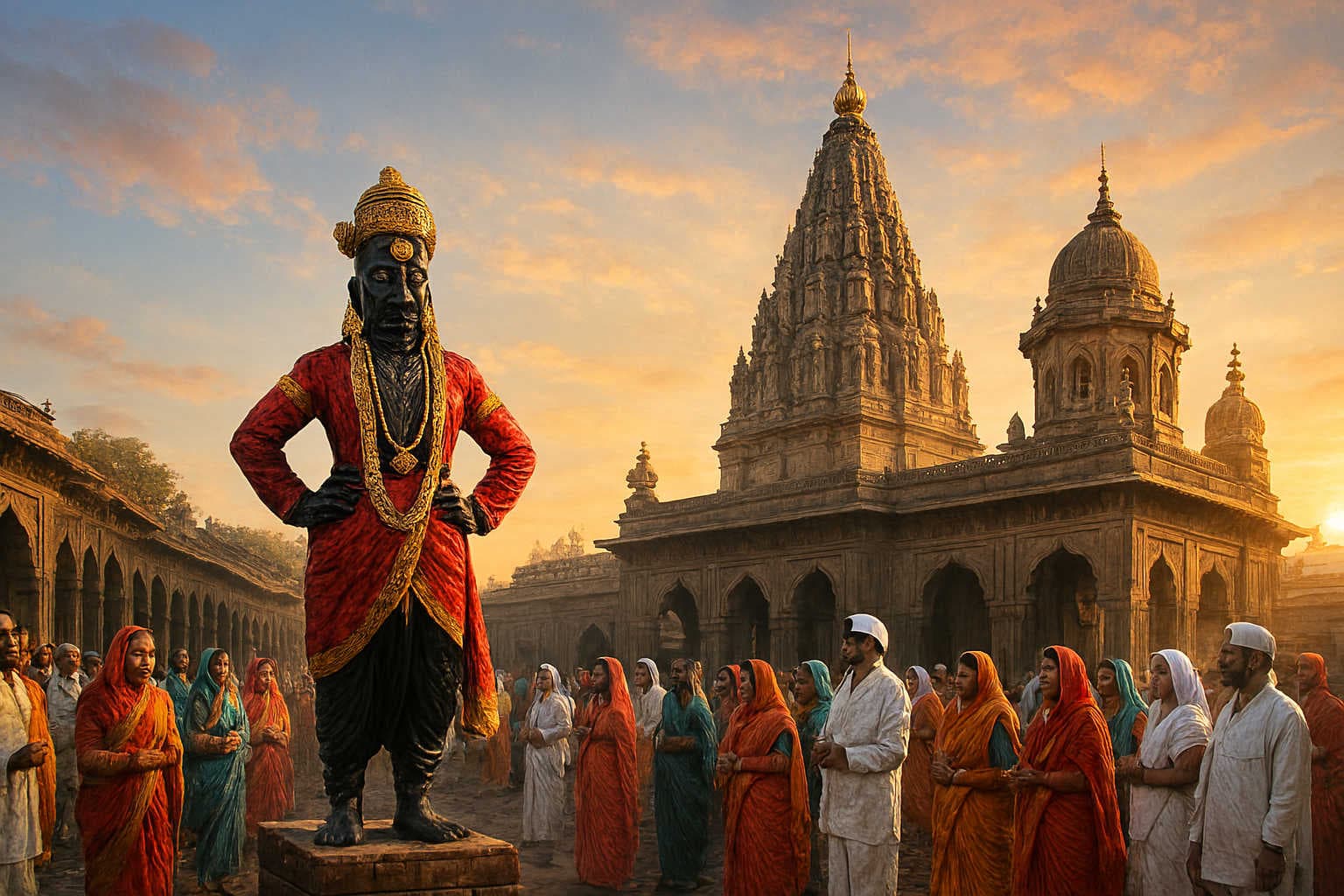
Pandharpur – Vithoba and Rukmini’s Temple
On the banks of the holy Chandrabhaga River in Maharashtra lies Pandharpur, one of the most sacred pilgrimage centers of India. Known as the Dakshin Kashi (the Kashi of the South), Pandharpur is home to the famous Vithoba (Vitthal) and Rukmini Temple, a vibrant hub of devotion and spirituality. The temple and its traditions are deeply connected with the Varkari movement and the Bhakti saints of Maharashtra, making it a living embodiment of love, humility, and surrender to God.
Who is Lord Vithoba?
Lord Vithoba, also called Vitthal or Panduranga, is worshipped as a form of Lord Krishna/Vishnu. The most iconic image of Vithoba shows him standing on a brick, hands on his waist, smiling compassionately at his devotees. This posture symbolizes his readiness to listen and respond to the calls of his followers.
According to legend, Vithoba appeared in Pandharpur for his devotee Pundalik, who was so devoted to serving his parents that he asked Krishna to wait on a brick until he completed his service. The Lord obliged, and since then, Vithoba has been worshipped in this form. Alongside him is Goddess Rukmini, revered as his eternal consort.
The Vithoba and Rukmini Temple
The Vithoba Temple in Pandharpur is one of the most visited shrines in Maharashtra.
-
Architecture – The temple’s origin goes back to the 12th century, though it has been renovated multiple times. Built in stone, it has a tall shikhara (spire), pillared halls, and intricately carved doorways. The temple complex is always filled with chants of “Vitthal Vitthal Jai Hari Vitthal.”
-
Sanctum (Garbha Griha) – The sanctum houses the black stone idol of Lord Vithoba, about 3.5 feet tall, standing on a brick. Devotees can touch the feet of the idol, a rare privilege in Hindu temples. Next to him stands the idol of Rukmini Devi, embodying divine grace and devotion.
-
Chandrabhaga River – Pilgrims take a holy dip in this crescent-shaped river before visiting the temple, as it is believed to purify body and soul.
The Wari Pilgrimage
What makes Pandharpur unique is the centuries-old tradition of the Wari Yatra, one of the largest and oldest religious pilgrimages in the world.
-
The Journey – Every year, in the Hindu month of Ashadha (June–July) and Kartik (October–November), millions of devotees called Varkaris (those who follow the path of devotion) walk hundreds of kilometers from their towns and villages to reach Pandharpur.
-
Palkhis of Saints – The palanquins (palkhis) carrying the symbolic sandals of revered saints like Sant Dnyaneshwar and Sant Tukaram are central to the procession. Pilgrims walk in disciplined rows, singing abhangs (devotional hymns), playing cymbals and drums, and chanting Vitthal’s name.
-
Spirit of Bhakti – The Wari embodies equality, humility, and devotion. Rich and poor, young and old, men and women walk side by side, breaking all social barriers. It is a moving spectacle of collective faith.
The Varkari Saints and Bhakti Movement
Pandharpur is inseparable from the Bhakti movement of Maharashtra, which emphasized devotion over rituals and caste distinctions. Saints like Dnyaneshwar, Tukaram, Namdev, Eknath, and Chokhamela composed simple yet profound abhangs dedicated to Vithoba, which continue to inspire millions.
Their teachings focused on love, humility, compassion, and surrender to God. Pandharpur became the heart of this devotional revolution, where spirituality was no longer limited to priests or scholars but open to everyone.
Festivals at Pandharpur
While the temple is alive with devotion throughout the year, four festivals are especially significant:
-
Ashadhi Ekadashi – The largest celebration when the Wari Yatra culminates in Pandharpur, attracting millions of pilgrims.
-
Kartik Ekadashi – Another important Wari season marked by devotional singing and rituals.
-
Magh and Chaitra Ekadashi – These too draw thousands of devotees, maintaining the rhythm of devotion year-round.
During these festivals, the temple and town resonate with bhajans, abhangs, and kirtans, creating an atmosphere of divine bliss.
Pandharpur’s Spiritual Atmosphere
Unlike many pilgrimage sites dominated by grandeur, Pandharpur’s charm lies in its simplicity and inclusiveness. The atmosphere is filled with music, singing, and a sense of family-like belonging among devotees. People walk for days, sleep under the open sky, and share food and stories, all in the name of Vitthal.
The image of millions chanting together – “Vitthal Vitthal Jai Hari Vitthal” – as they walk towards the temple is unforgettable, a living river of devotion flowing through Maharashtra.
Legends of Rukmini Devi
The temple is also associated with Goddess Rukmini, who is believed to have once left Krishna in anger and performed penance here. A temple dedicated to her stands close to Vithoba’s shrine, symbolizing the eternal union of divine love and companionship.
Devotees often visit both shrines together, offering prayers for marital harmony and family well-being.
Conclusion
The Vithoba and Rukmini Temple at Pandharpur is not just a temple but the beating heart of Maharashtra’s devotional spirit. It represents the living tradition of the Varkaris, the wisdom of the Bhakti saints, and the timeless love between God and his devotees.
For millions who walk to Pandharpur every year, the journey itself is worship, the chanting itself is prayer, and the darshan of Vitthal is the highest blessing. Pandharpur is where devotion becomes a way of life, and the Lord stands patiently on a brick, waiting to embrace his devotees with open arms.