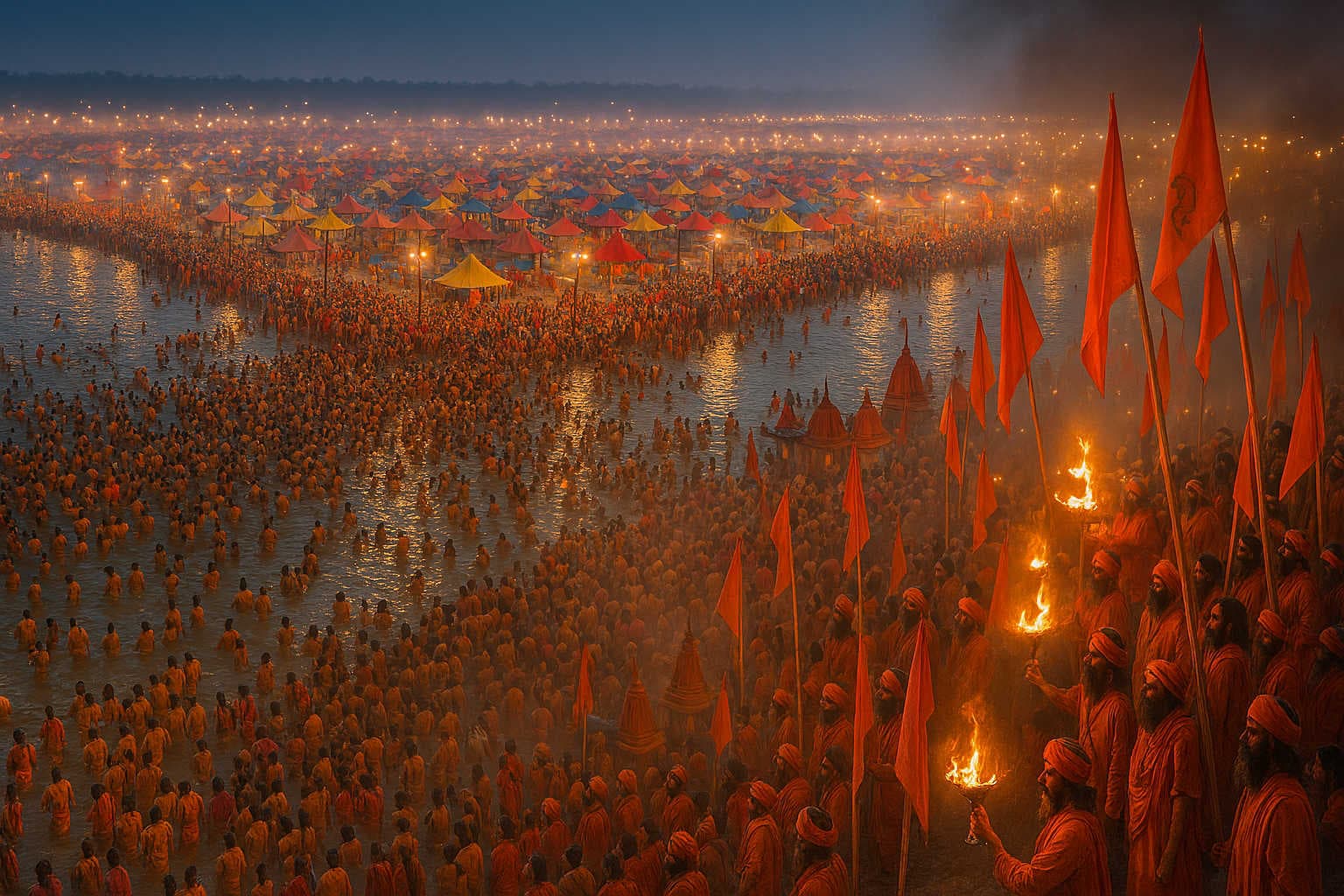
Kumbh Mela – The World's Largest Gathering
The Kumbh Mela is more than just a festival; it is the largest spiritual gathering in the world, where millions of devotees, saints, and seekers come together in an ocean of faith. Held at sacred river confluences across India, the Kumbh is a celebration of Hindu tradition, mythology, and the timeless bond between rivers and spirituality. Recognized by UNESCO as an Intangible Cultural Heritage of Humanity, it symbolizes the collective expression of faith at an unparalleled scale.
Mythological Origins of Kumbh Mela
The roots of the Kumbh Mela lie in the Samudra Manthan (churning of the ocean) described in Hindu scriptures. According to legend, gods and demons churned the cosmic ocean to obtain amrita, the nectar of immortality. As the nectar emerged, a divine conflict ensued, and a few drops fell at four earthly sites—Prayagraj, Haridwar, Ujjain, and Nashik. These places became sacred, and bathing in the rivers at these locations during astrologically significant times is believed to cleanse sins and grant moksha.
Thus, the Kumbh is not just a festival but a re-enactment of cosmic events, where earth and heaven align.
Where and When is Kumbh Held?
The Kumbh Mela rotates among the four sacred sites:
-
Prayagraj (Allahabad) – Confluence of Ganga, Yamuna, and Saraswati.
-
Haridwar – Banks of the Ganga as it descends from the Himalayas.
-
Ujjain – On the banks of the Shipra River.
-
Nashik – On the Godavari River.
There are four types of Kumbh:
-
Maha Kumbh – Once in 144 years at Prayagraj.
-
Purna Kumbh – Every 12 years at each site.
-
Ardh Kumbh – Every 6 years at Haridwar and Prayagraj.
-
Magh Mela – An annual fair at Prayagraj, seen as a smaller Kumbh.
The exact timing is determined by astrological positions of Jupiter, the Sun, and the Moon.
The Sacred Bath (Shahi Snan)
The highlight of the Kumbh Mela is the Shahi Snan (Royal Bath), when devotees take a dip in the holy river at auspicious moments. This act is believed to wash away lifetimes of sins, purify the soul, and pave the way to salvation. The spectacle of millions entering the river together is both humbling and awe-inspiring.
The first bath is traditionally led by the Naga Sadhus, ascetic warriors covered in ash, who march in processions with music, chants, and flags before plunging into the sacred waters.
The Akharas – Guardians of Tradition
A unique feature of the Kumbh is the presence of Akharas, monastic orders of sadhus and ascetics who preserve spiritual traditions. Each Akhara has its own history, philosophy, and practices. During the Mela, they set up elaborate camps where devotees can receive blessings, hear discourses, and witness rituals.
The Akharas also play a ceremonial role in the Shahi Snan, where their grand processions reflect centuries-old traditions of spiritual discipline and devotion.
Cultural and Spiritual Significance
The Kumbh Mela is not only a pilgrimage but also a festival of knowledge, culture, and exchange. Saints, scholars, and spiritual leaders deliver discourses on dharma, philosophy, and social issues. Pilgrims experience satsangs, bhajans, and kirtans, enriching their spiritual lives.
For many, the Mela is also an opportunity to renounce worldly ties and embrace the ascetic life, symbolizing the eternal cycle of detachment and devotion.
Scale of the Gathering
The Kumbh Mela is unmatched in scale. Tens of millions participate, with the Maha Kumbh at Prayagraj witnessing nearly 120 million people over its duration. The temporary city built on riverbanks includes tents, roads, sanitation facilities, and security, making it a marvel of organization.
Despite its magnitude, the atmosphere is remarkably peaceful, a testament to the unifying power of faith.
Global Recognition
In 2017, UNESCO recognized the Kumbh Mela as part of the Intangible Cultural Heritage of Humanity, highlighting its significance as a cultural and spiritual phenomenon. People from around the world, including researchers, photographers, and seekers, flock to witness this unparalleled confluence of humanity and divinity.
Modern Relevance
While rooted in ancient traditions, the Kumbh has evolved with modern times. Technology plays a major role in managing logistics, communication, and safety for millions of pilgrims. Yet, at its heart, the Kumbh remains unchanged—a reminder of humanity’s longing for the eternal and the sacred.
In an age of division, the Kumbh serves as a powerful example of unity in diversity, where people from every walk of life gather as equals before the divine.
Conclusion
The Kumbh Mela is not merely the world’s largest gathering; it is the soul of Indian spirituality made visible. It is where myth and faith meet, where rivers become living deities, and where millions rediscover their spiritual roots.
To witness the Kumbh is to experience humanity at its most devoted and collective—a celebration of life, faith, and eternity. As the rivers flow, so does the timeless spirit of Sanatan Dharma, carrying the message of purification and unity to generations yet to come.