River Saraswati – The Hidden and Mystical Flow
Among the sacred rivers of India, three names are often repeated in scriptures—Ganga, Yamuna, and Saraswati. While the Ganga and Yamuna flow visibly across the plains, the Saraswati has always been shrouded in mystery. Described in the Rigveda as the “mother of rivers,” Saraswati is believed to have once been a mighty river nourishing the land and its people. Yet today, her presence is not seen on the surface; she is said to flow invisibly, underground, surfacing only in the sacred imagination of devotees and the faith of millions.
The story of Saraswati is one of history, mythology, spirituality, and science blending together, making her one of the most fascinating rivers of Indian tradition.
Saraswati in the Vedas
The earliest references to the Saraswati River are found in the Rigveda, where she is praised as a goddess of speech, learning, and wisdom, as well as a mighty river. The hymns describe her as flowing “from the mountains to the ocean,” nourishing civilizations along her banks. She was considered the holiest among rivers, superior even to Ganga and Yamuna.
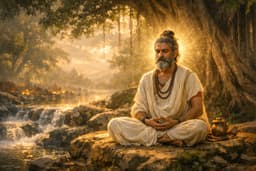
The Vedic people revered Saraswati not only as a physical river but also as a spiritual force—a current of knowledge and purity guiding human life.
Mythological Significance
According to Hindu mythology, Saraswati is not just a river but also a goddess—the consort of Brahma, the creator of the universe. She embodies wisdom, music, learning, and eloquence. As a river, she is said to have once flowed visibly, but with time, she chose to retreat underground.
One of the most significant myths is her connection to the Triveni Sangam at Prayagraj (Allahabad). Here, the Ganga and Yamuna meet visibly, while Saraswati is believed to merge with them invisibly beneath the surface. This confluence is regarded as the holiest in India, drawing millions of pilgrims during the Kumbh Mela.
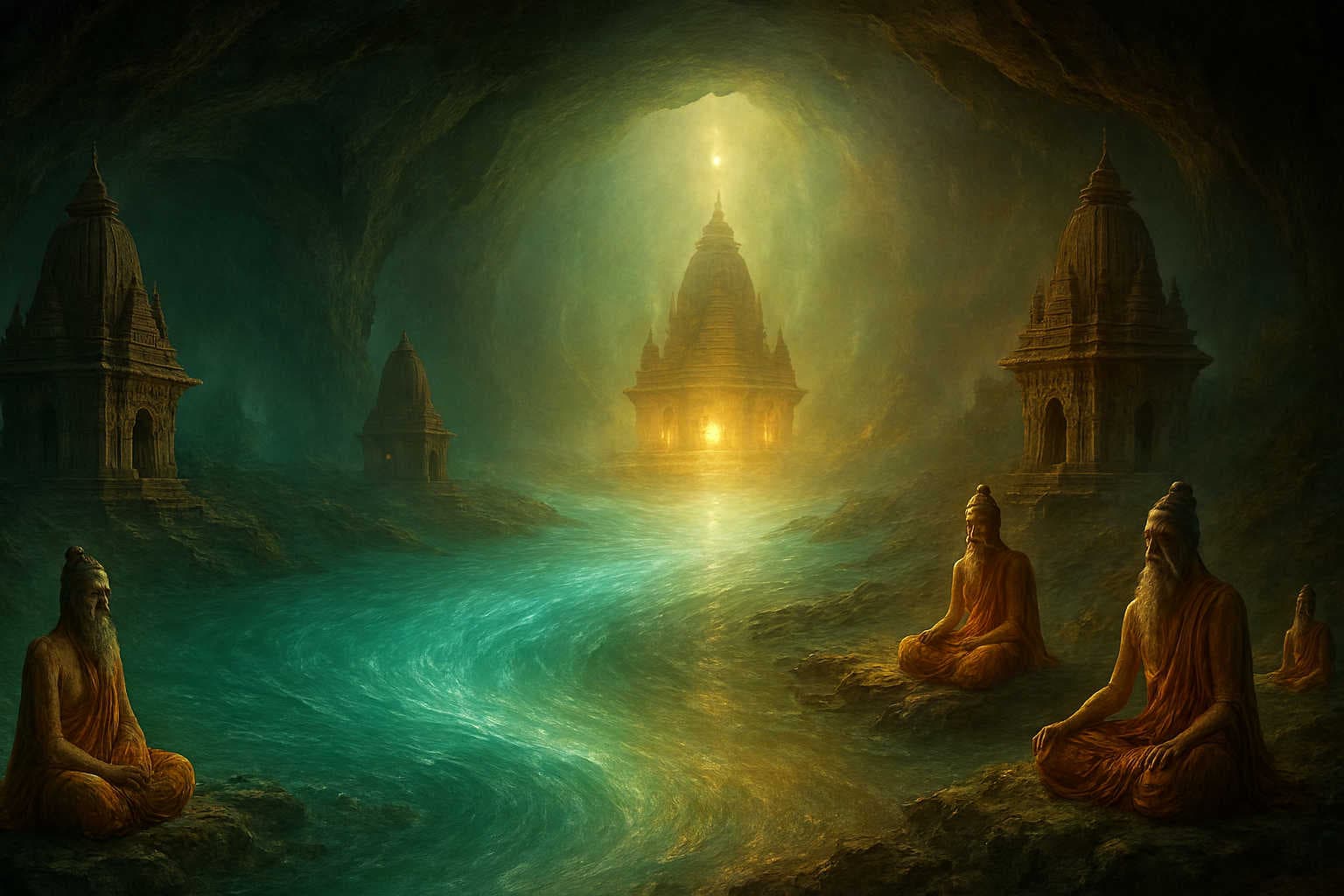
The hidden nature of Saraswati adds to her mystical aura—unseen yet present, silent yet powerful.
The Disappearance of Saraswati
Historians and geologists have long debated the existence and disappearance of the Saraswati River. Ancient texts describe her as a mighty river that eventually dried up due to geological shifts, tectonic changes, and the diversion of tributaries. Some scholars link her decline to the collapse of the Indus Valley Civilization, which is believed to have flourished along her banks.
Modern satellite imagery and studies by the Geological Survey of India suggest traces of dried riverbeds in regions of Haryana, Rajasthan, and Gujarat, supporting the belief that Saraswati once flowed strongly before vanishing underground.
Spiritual Beliefs Around Saraswati
For devotees, Saraswati is never absent. Though invisible, she is eternally present, especially at the Triveni Sangam. Pilgrims believe that bathing at the confluence of Ganga, Yamuna, and Saraswati washes away sins and grants spiritual liberation.
The river is also invoked in prayers and rituals, particularly in Saraswati Puja during Vasant Panchami, where she is worshipped as the goddess of knowledge and the hidden current of divine wisdom.
Saraswati as the River of Knowledge
The dual identity of Saraswati—as both river and goddess—makes her unique. As a river, she once sustained civilizations with water and fertile soil. As a goddess, she continues to sustain humanity with wisdom, learning, and creativity. This connection between the visible and invisible, the physical and spiritual, is central to understanding her importance in Indian culture.
Her hidden flow represents the unseen forces that guide life—faith, knowledge, and inner strength. Just as the river flows underground, wisdom too lies beneath the surface, waiting to be discovered by seekers.
Scientific Evidence and Research
In recent decades, archaeologists and scientists have made discoveries suggesting that the Saraswati may not be just a myth. Satellite studies reveal paleochannels—dried riverbeds—that align with descriptions of the Saraswati in Vedic texts. Excavations in regions like Kalibangan and Lothal suggest that flourishing settlements once existed along her banks.
This convergence of science and tradition strengthens the belief that Saraswati was once a mighty river that continues to live on spiritually and symbolically.
Pilgrimage and Faith
Even without a visible flow, Saraswati remains an integral part of India’s sacred geography. The Triveni Sangam at Prayagraj is considered the holiest pilgrimage site because of her presence. Pilgrims take a dip here believing that Saraswati’s hidden waters mingle with Ganga and Yamuna, making the confluence supremely purifying.
During the Kumbh Mela, millions gather to experience this union of visible and invisible rivers, celebrating the eternal power of faith over physical reality.
Conclusion
The River Saraswati may no longer flow on the surface, but her legacy continues in the scriptures, traditions, and hearts of devotees. She is the river of wisdom, the unseen goddess of speech and learning, and the mystical current that unites India’s spiritual consciousness.
To remember Saraswati is to acknowledge that not everything sacred needs to be visible. Just as her waters flow silently beneath the earth, so too does divine knowledge flow quietly within, waiting to be realized.
The hidden river thus teaches us that faith transcends sight, and that the mystical is often more powerful than the visible. Saraswati, the mother of wisdom, continues to inspire and guide, eternally flowing in both the land and the soul.