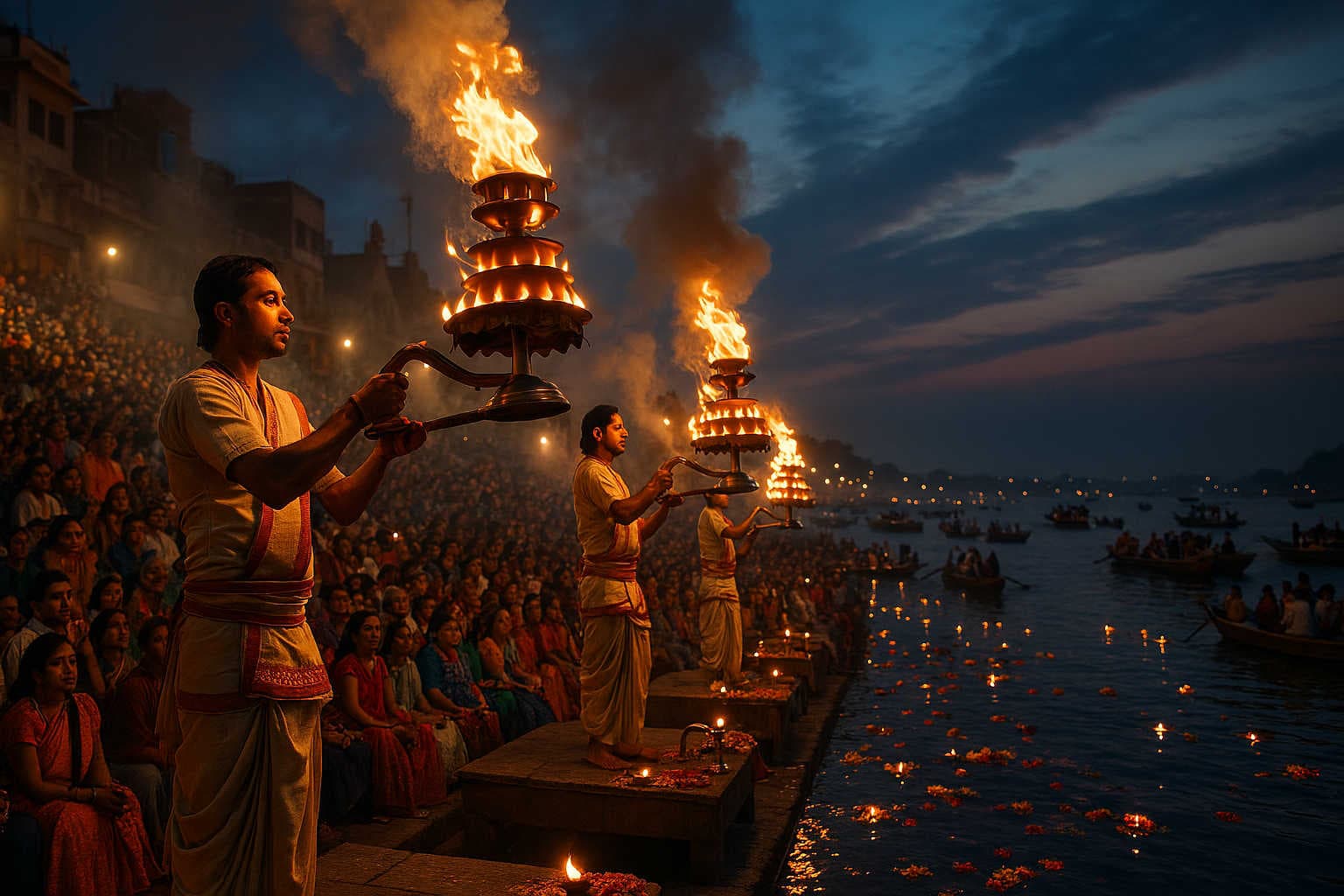
Ganga Aarti – The Divine Light Ceremony
The river Ganga, flowing through the plains of North India, is revered not only as a river but as a goddess, mother, and lifeline of the nation. Among the many ways in which she is worshipped, none is as enchanting and spiritually uplifting as the Ganga Aarti, a ritual of lights performed every evening on her banks. This ceremony is a dazzling blend of devotion, music, fire, and faith, drawing thousands of pilgrims and tourists alike.
The Ganga Aarti is more than just a ritual; it is a profound expression of reverence toward the river that sustains life and offers spiritual liberation.
Origins and Significance
The tradition of offering aarti—a ritual of waving lighted lamps before the deity—has deep roots in Hindu worship. The Ganga Aarti, specifically, honors Mother Ganga, believed to have descended from heaven to purify the earth. Performing the aarti is an acknowledgment of her divine presence and a way of expressing gratitude for her blessings.
According to Hindu scriptures, bathing in the Ganga cleanses sins, and participating in or even witnessing the aarti brings spiritual merit. It symbolizes the eternal cycle of life, where light triumphs over darkness, and the river carries prayers to the divine.
Where is Ganga Aarti Performed?
While the Ganga Aarti is performed in several towns along the river, the most renowned locations are:
-
Dashashwamedh Ghat, Varanasi – The most famous and grand spectacle, attracting thousands every evening.
-
Assi Ghat, Varanasi – Known for a more intimate and spiritual experience.
-
Har Ki Pauri, Haridwar – A historic site where the river flows through the holy city of Haridwar.
-
Triveni Ghat, Rishikesh – A serene setting where the aarti is accompanied by soulful bhajans.
Each location carries its own flavor, but all share the same devotion to the sacred river.
The Ritual Process
The Ganga Aarti is a highly choreographed ritual, usually performed by a group of young priests trained in Vedic traditions. The ceremony begins at sunset and unfolds in several steps:
-
Preparation – Priests dress in saffron or white robes, tying silk sashes around their waists. The stage is set with brass lamps, conch shells, incense sticks, and offerings.
-
Invocation – The ritual starts with chanting of mantras and blowing of conch shells, creating a spiritual vibration.
-
Lighting of Lamps – Large multi-tiered brass lamps are lit, and the priests move them in graceful, synchronized patterns—circular, upward, and sideways—symbolizing offerings of light to the river.
-
Offerings – Flowers, rice, camphor, and incense are offered to the river, accompanied by the rhythmic ringing of bells and claps from the audience.
-
Bhajans and Chants – Devotional songs fill the air, inviting the audience to join in the worship.
-
Conclusion – Small diyas (oil lamps) placed on leaf boats are floated onto the river, creating a mesmerizing spectacle of flickering lights across the water.
The entire ritual lasts around 45 minutes but leaves an impression that lingers forever.
Symbolism of the Aarti
Every element of the Ganga Aarti carries deep symbolic meaning:
-
The lamps represent the removal of darkness and ignorance.
-
The conch shell symbolizes purity and the sound of creation.
-
Flowers and incense embody beauty, fragrance, and devotion.
-
The river herself is the eternal witness, carrying the prayers of millions.
Together, they create a ritual that connects the physical with the divine, the temporal with the eternal.
The Atmosphere
The Ganga Aarti is not merely a ritual—it is an experience. As twilight falls, the ghats come alive with chanting, the smell of incense, the sound of bells, and the glow of fire. Devotees, sadhus, travelers, and families gather on the steps or watch from boats floating gently on the river. The synchronized movements of the priests, the reflection of flames on the water, and the collective devotion create an atmosphere that is both mystical and unforgettable.
For many, it is a reminder of India’s timeless spiritual traditions, where devotion is expressed through beauty and rhythm.
Best Time to Witness the Aarti
The Ganga Aarti is performed every evening, but the experience is especially powerful during:
-
Festivals like Dev Deepawali, Kartik Purnima, and Ganga Dussehra, when thousands of lamps illuminate the ghats.
-
Winter months, when the clear skies and crisp air enhance the visual spectacle.
-
Early arrival, about an hour before, is recommended to secure a good spot, especially at Dashashwamedh Ghat in Varanasi.
Why the Ganga Aarti is Special
Unlike many rituals performed inside temples, the Ganga Aarti happens under the open sky, in direct communion with nature. The river becomes the deity, and the entire community participates in worship. It is inclusive, vibrant, and deeply moving, uniting people across faiths and nationalities in a shared spiritual moment.
For some, it is a religious duty; for others, a cultural performance. Yet for everyone, it is a reminder of the sacredness of water, light, and life itself.
Conclusion
The Ganga Aarti is not just a ceremony; it is a celebration of faith, nature, and humanity’s eternal relationship with the divine. To witness it is to experience the soul of India—where spirituality flows as endlessly as the Ganga herself.
Whether one is a believer, a seeker, or simply a traveler, the Ganga Aarti leaves a memory etched in light, sound, and devotion—a reminder that the sacred lives on, every evening, on the banks of the holy river.