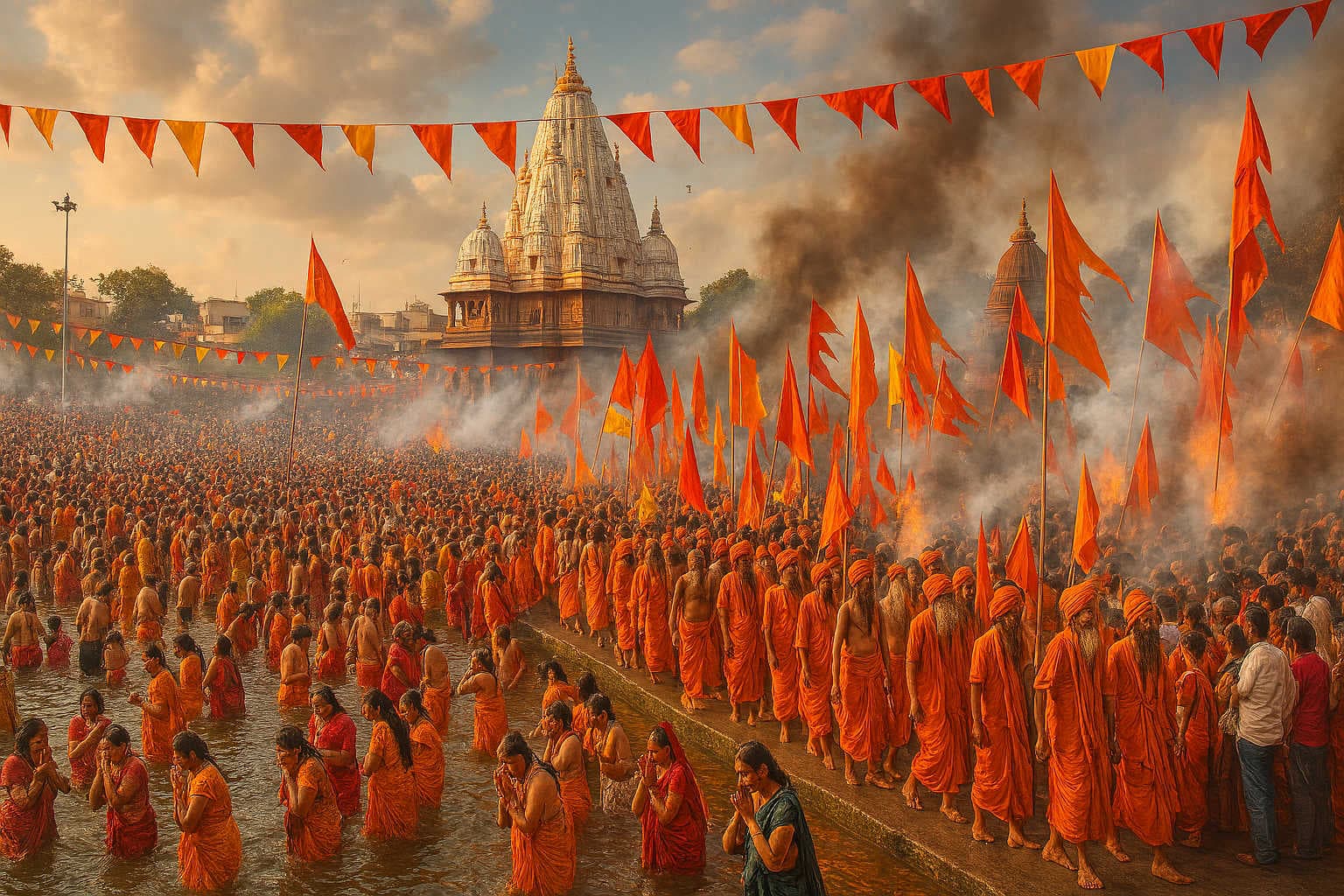
Ujjain – The Eternal Kumbh City
Ujjain, an ancient city in the heart of Madhya Pradesh, is one of the seven sacred cities (Sapta Puri) in Hindu tradition and holds immense spiritual significance. Located on the banks of the Shipra River, Ujjain is not only revered for its deep mythological roots but also as the site of one of the largest spiritual gatherings in the world – the Kumbh Mela, known here as Simhastha.
Steeped in history and devotion, Ujjain is a city where the past and present blend seamlessly, making it a must-visit for pilgrims, seekers, and travelers interested in India’s cultural heritage.
Ujjain in Hindu Mythology
Ujjain’s spiritual glory can be traced back to ancient scriptures like the Mahabharata, Ramayana, and various Puranas. Known in earlier times as Avanti, the city was once a center of learning and astronomy. It is closely associated with Lord Shiva and is home to Mahakaleshwar Jyotirlinga, one of the 12 sacred Jyotirlingas of Shiva.
Legend has it that when the Devas and Asuras churned the ocean (Samudra Manthan) for nectar of immortality (Amrit), drops of this nectar fell at four places – Prayagraj, Haridwar, Nashik, and Ujjain. These spots became the sites for the Kumbh Mela, celebrated in a 12-year cycle. At Ujjain, the event is called Simhastha Kumbh Mela and is one of the most spiritually charged experiences in the world.
Mahakaleshwar Temple – The Soul of Ujjain
At the heart of Ujjain lies the Mahakaleshwar Temple, one of the most revered Jyotirlingas of Lord Shiva. This temple is unique because the lingam here is ‘Swayambhu’ (self-manifested) and faces south, earning it the name Dakshinamurti, which is rare among Jyotirlingas.
The temple is famous for the Bhasma Aarti, a ritual where the Shiva lingam is worshipped with sacred ash at dawn. Witnessing this aarti is considered highly auspicious, and devotees believe it grants liberation from the cycle of birth and death.
Simhastha Kumbh Mela – The Grand Gathering
The Kumbh Mela in Ujjain, known as Simhastha, is celebrated once every 12 years when Jupiter enters the sign of Leo (Simha Rashi) and the Sun is in Aries. This astronomical alignment is considered highly auspicious, and during this period, millions of devotees, saints, and sadhus converge on Ujjain to bathe in the holy Shipra River.
The ritual bath is believed to cleanse one of all sins and lead to spiritual liberation. The event is marked by spectacular processions of Akharas (monastic groups), especially the Naga Sadhus, who march with grandeur, chanting mantras, playing drums, and carrying religious flags.
The Simhastha is not just a religious gathering; it is a spiritual and cultural festival featuring discourses by spiritual leaders, devotional music, Vedic rituals, and a unique atmosphere of faith and devotion.
The Sacred Shipra River
The Shipra River holds immense importance in Hinduism. Bathing in its waters during the Kumbh is believed to wash away all sins. Apart from its religious significance, the ghats along the river create a picturesque setting, especially during aarti ceremonies when thousands of lamps float on the water, illuminating the night with divine light.
Other Sacred Spots in Ujjain
Beyond the Mahakaleshwar Temple, Ujjain is dotted with several other holy places that attract pilgrims:
-
Kal Bhairav Temple – Dedicated to Kal Bhairav, a fierce manifestation of Shiva, this temple is unique as devotees offer liquor to the deity.
-
Harsiddhi Temple – One of the 51 Shakti Peethas, associated with Goddess Parvati.
-
Ram Ghat – The most prominent bathing ghat on the Shipra, especially during the Simhastha.
-
Sandipani Ashram – Associated with Guru Sandipani, where Lord Krishna and Sudama are believed to have studied.
Spiritual and Cultural Heritage
Ujjain is not just about temples and rituals. It has been a center of learning, astronomy, and art since ancient times. The great scholar Kalidasa lived here, and Ujjain finds mention in his works. The city also houses the Jantar Mantar (Vedh Shala), an ancient observatory built by Maharaja Jai Singh II, which highlights its historical importance in Indian astronomy.
Festivals in Ujjain
Apart from the Simhastha Kumbh Mela, Ujjain celebrates:
-
Mahashivratri – A grand celebration at the Mahakaleshwar Temple with thousands of devotees.
-
Nag Panchami – Honoring the serpent deities.
-
Diwali and Holi – Celebrated with traditional fervor along the ghats.
Best Time to Visit Ujjain
The ideal time to visit is between October and March, when the weather is pleasant. If you wish to witness the Simhastha Kumbh Mela, check the 12-year cycle dates. The last one was held in 2016, and the next is expected in 2028.
How to Reach Ujjain
-
By Air: The nearest airport is Indore (55 km), connected to major cities.
-
By Train: Ujjain Junction has direct trains from Delhi, Mumbai, and other cities.
-
By Road: Well-connected by highways from Indore, Bhopal, and other Madhya Pradesh cities.
Conclusion
Ujjain is a city that radiates spirituality from every corner. From the Mahakaleshwar Jyotirlinga to the holy dip in Shipra during the Simhastha, the experience of Ujjain is beyond mere sightseeing—it is a journey into the depths of faith and devotion. Whether you are a pilgrim seeking liberation or a traveler eager to explore India’s cultural richness, Ujjain welcomes you with its eternal charm.