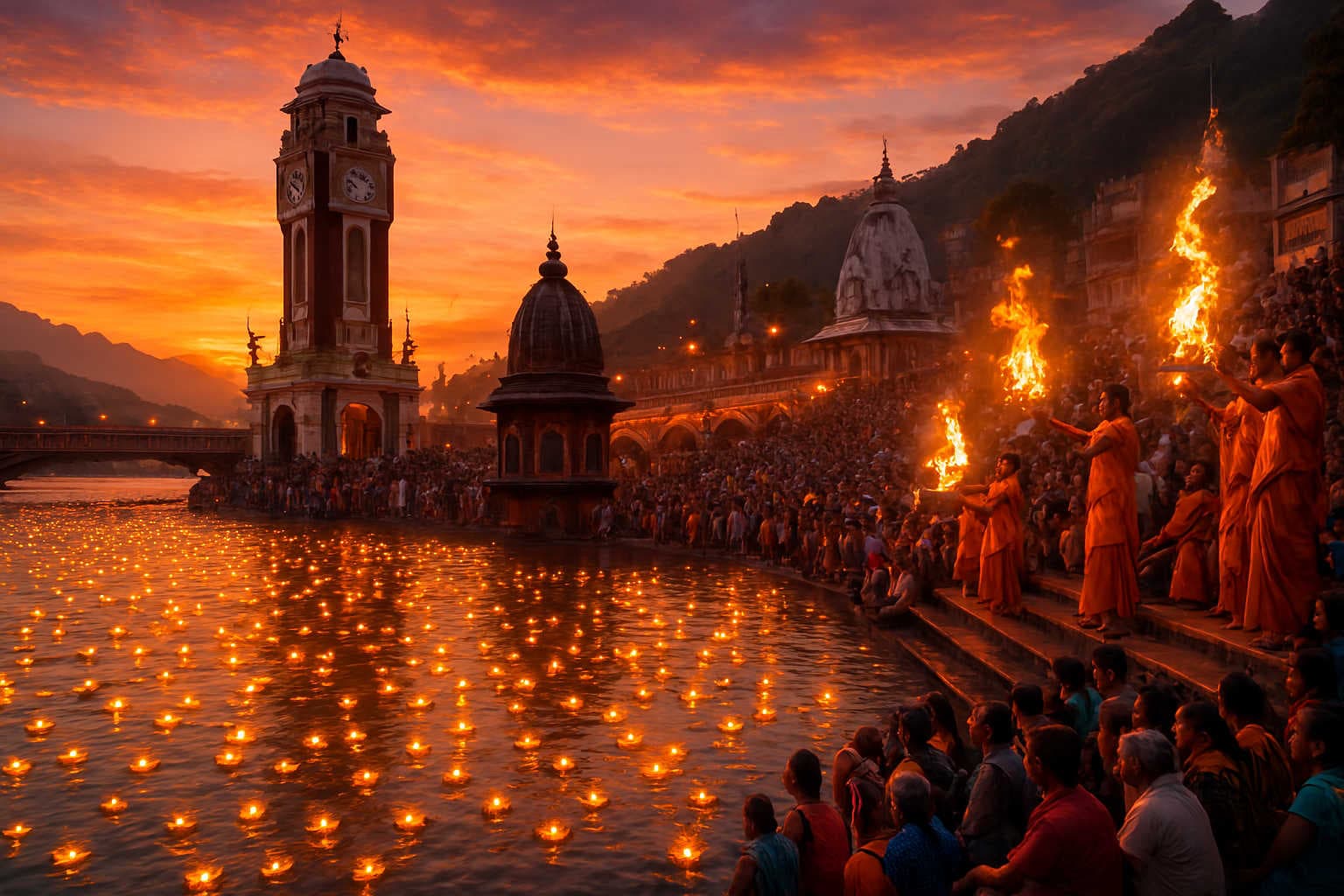
Haridwar – Gateway to the Himalayas
Haridwar, located in the state of Uttarakhand, is one of the seven holiest places in Hinduism, often referred to as Sapta Puri. Its name means “Gateway to God”, and rightly so, because it serves as the entry point to the Himalayas and the starting point for the Char Dham Yatra – Badrinath, Kedarnath, Gangotri, and Yamunotri. Haridwar is a city where spirituality flows with the sacred waters of the Ganga, attracting millions of pilgrims and travelers from across the globe.
Significance of Haridwar in Hinduism
Haridwar holds a prominent place in Hindu beliefs because it is situated where the Ganga River leaves the mountains and enters the plains. This makes it a prime location for spiritual purification. The city is mentioned in ancient scriptures such as the Puranas, Ramayana, and Mahabharata.
The very name Haridwar means “Gateway to Hari (Vishnu)”, while some also call it Hardwar, meaning “Gateway to Hara (Shiva)”. Both interpretations are correct, as the city is sacred to devotees of Lord Shiva and Lord Vishnu alike.
Legends and Mythology
According to Hindu mythology, Haridwar is one of the four places where drops of Amrit (nectar of immortality) spilled during the Samudra Manthan (churning of the ocean). The other three are Prayagraj, Ujjain, and Nashik. This is why Haridwar is one of the main venues for the Kumbh Mela, the largest religious gathering on Earth, held every 12 years.
Another legend says that King Bhagiratha performed penance here to bring Ganga to Earth for the salvation of his ancestors. It is also believed that Lord Vishnu left his footprint on the famous ghat Har Ki Pauri, which remains the most sacred spot in the city.
Har Ki Pauri – The Heart of Haridwar
The most iconic landmark of Haridwar is Har Ki Pauri, meaning “Steps of Lord Shiva”. This ghat, built by King Vikramaditya in the 1st century BCE, is the focal point of spiritual activities. Thousands of devotees gather here every day to take a holy dip in the Ganga, believing it washes away sins and paves the way to moksha (liberation).
In the evening, Har Ki Pauri becomes magical during the Ganga Aarti. Hundreds of priests chant Vedic hymns while offering lamps to the river, and thousands of diyas (oil lamps) float on the water, creating a mesmerizing sight. The sound of bells, the fragrance of incense, and the collective devotion make this experience unforgettable.
Kumbh Mela and Ardh Kumbh
Haridwar is one of the main sites of the Kumbh Mela, held every 12 years, and the Ardh Kumbh, held every 6 years. Millions of pilgrims, saints, and sadhus converge here to take a dip in the holy Ganga. The sight of Naga sadhus and akharas (spiritual groups) performing rituals is a unique cultural and spiritual experience that attracts people from around the world.
Other Spiritual Attractions in Haridwar
Haridwar is dotted with numerous temples and ashrams that offer a serene environment for meditation and worship. Some must-visit places include:
-
Chandi Devi Temple – Perched on Neel Parvat, dedicated to Goddess Chandi.
-
Mansa Devi Temple – Located atop Bilwa Parvat, known for fulfilling wishes.
-
Maya Devi Temple – One of the Shakti Peethas, dedicated to Goddess Maya.
-
Bharat Mata Mandir – A unique temple dedicated to Mother India.
-
Shantikunj – A spiritual and social reform center promoting Vedic wisdom.
Yoga and Ayurveda in Haridwar
Haridwar is also a major center for yoga, meditation, and Ayurveda. Many ashrams and wellness centers offer programs for holistic healing, detoxification, and spiritual awakening. Institutions like Patanjali Yogpeeth, founded by Baba Ramdev, have made Haridwar a global hub for alternative medicine and traditional healing practices.
Culture and Festivals
Apart from Kumbh Mela, Haridwar celebrates festivals like Diwali, Makar Sankranti, and Kanwar Yatra with grandeur. During these times, the city lights up with diyas, and the streets buzz with devotional songs and processions.
Best Time to Visit Haridwar
The best time to visit Haridwar is from October to March, when the weather is pleasant. Summers can be hot, while monsoons make the river swell, though the lush greenery adds charm. For the ultimate experience, plan your trip during Magh Mela or Kumbh Mela (as per the Hindu calendar).
How to Reach Haridwar
-
By Air: The nearest airport is Jolly Grant Airport, Dehradun (about 35 km away).
-
By Train: Haridwar is well-connected by rail to major Indian cities.
-
By Road: Regular buses and taxis operate from Delhi, Dehradun, and Rishikesh.
Modern Haridwar – A Spiritual City with a Modern Touch
While deeply rooted in tradition, Haridwar is also evolving with modern facilities for tourists. Hotels, guesthouses, and homestays cater to pilgrims and travelers alike. The city maintains a delicate balance between spirituality and modernization.
Conclusion
Haridwar is not just a city—it is a gateway to the divine Himalayas, a place where faith meets the flowing waters of the Ganga. Whether you come to take a holy dip, witness the grand Ganga Aarti, explore its ancient temples, or immerse yourself in yoga and Ayurveda, Haridwar promises a spiritual experience that lingers in the heart forever.