Prayagraj – The Confluence of Ganga, Yamuna, Saraswati
Prayagraj, formerly known as Allahabad, is one of the most sacred cities in India, revered for hosting the Triveni Sangam—the confluence of three holy rivers: Ganga, Yamuna, and Saraswati. This union is not just a geographical phenomenon but a deeply spiritual event that has shaped the religious and cultural fabric of India for centuries.
Situated in the state of Uttar Pradesh, Prayagraj is considered a city of immense sanctity and historical significance. From the Rigveda to modern Hindu traditions, the confluence at Prayagraj has been glorified as a place of immense spiritual power, where sins are washed away and liberation is assured.
The Sacred Triveni Sangam
The highlight of Prayagraj is the Triveni Sangam, where:
-
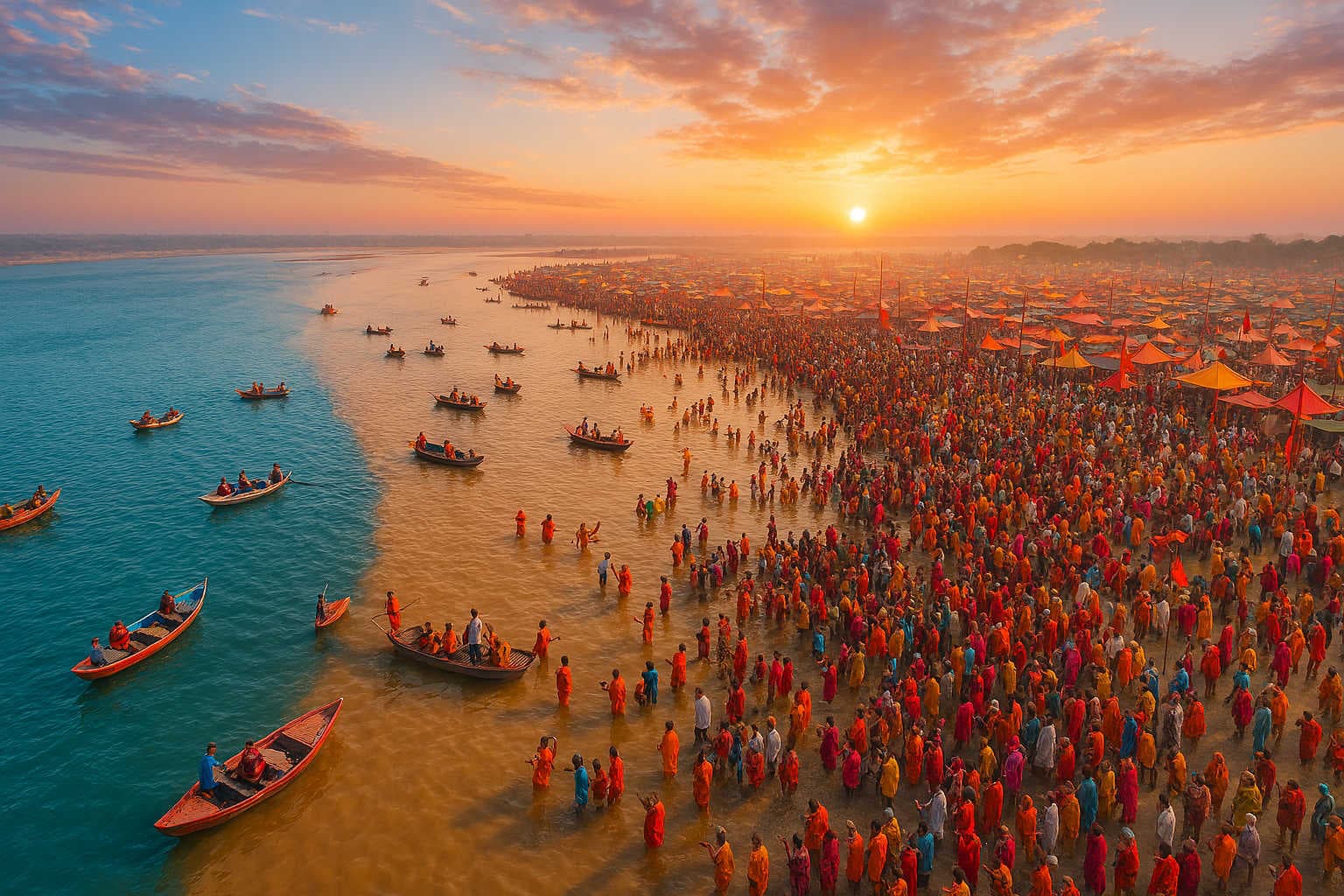
Ganga flows in a slightly greenish tone.
-
Yamuna is darker and blue.
-
Saraswati, the mystical river, is believed to be invisible, flowing underground.
This unique meeting of rivers is mentioned in several Hindu scriptures. According to the Puranas, taking a holy dip in the Sangam during auspicious occasions washes away sins and grants moksha (liberation). It is said that even the gods and sages come to bathe here in an unseen form.
Why Prayagraj is Considered So Holy
The name Prayagraj comes from ‘Prayag’, meaning the foremost of confluences. It is regarded as Tirtha Raj, the king of all pilgrimage centers in Hinduism. This sanctity is explained in texts like the Padma Purana and Skanda Purana, where the Sangam is described as a gateway to heaven for devotees who bathe here with faith.
According to Hindu belief, Brahma performed the first yajna (sacrificial ritual) at this very spot, making it one of the oldest sacred sites in the world.
The Mythical Saraswati
While the Ganga and Yamuna are visible, Saraswati remains hidden. Ancient texts mention Saraswati as a mighty river flowing through the Vedic land. Though it disappeared due to geological changes, spiritual belief holds that it continues to flow beneath the Sangam, merging with the other two rivers at Prayagraj. This mystical presence enhances the sanctity of the place.
The Kumbh Mela – A Grand Celebration
Prayagraj is globally famous for hosting the Kumbh Mela, the largest human gathering on Earth. Held once every 12 years, it draws millions of pilgrims, saints, and tourists who come to bathe in the Triveni Sangam. The Kumbh is rooted in the legend of the Amrit Manthan (churning of the ocean), when drops of nectar fell at four places—Prayagraj, Haridwar, Ujjain, and Nashik.
During the Kumbh, the Sangam transforms into a city of tents, with colorful akhadas (saintly orders), spiritual discourses, devotional music, and a divine atmosphere. The aerial view of countless devotees performing Snan (ritual bath) is breathtaking and symbolic of India's spiritual strength.
Historical and Cultural Significance
Prayagraj has been an important center for learning, governance, and culture throughout history:
-
It was a major Vedic learning hub in ancient times.
-
Mughal Emperor Akbar built the famous Allahabad Fort near the Sangam in the 16th century.
-
The city played a vital role in India’s freedom movement, being associated with leaders like Motilal Nehru and Jawaharlal Nehru.
Its strategic location at the confluence also made it a center for trade, administration, and cultural exchange in various historical periods.
Spiritual Practices at the Sangam
Every day, thousands of devotees gather at the Sangam for ritual baths. Special occasions like Makar Sankranti, Magh Mela, and Kumbh Mela witness an overwhelming influx of pilgrims. Other spiritual activities include:
-
Pind Daan for ancestors.
-
Deep Daan—offering lamps to the river.
-
Boat rides to experience the confluence closely.
Priests perform pujas and chant Vedic mantras, adding to the divine ambiance of the Sangam.
Modern Prayagraj – A Blend of Tradition and Progress
Despite modernization, Prayagraj retains its spiritual essence. The city boasts:
-
Temples like Hanuman Mandir, Akshayavat Tree, and Lete Hue Hanuman.
-
Ghats for rituals and spiritual gatherings.
-
Educational institutions like Allahabad University, a historic learning center.
Government initiatives have improved connectivity, cleanliness, and infrastructure, making Prayagraj a major spiritual tourism destination.
Best Time to Visit
The ideal time to visit Prayagraj is during winter (October to March), especially during Magh Mela or Kumbh Mela. Summers can be extremely hot, while monsoons bring heavy rainfall.
Interesting Facts About Prayagraj
-
It is one of the Sapta Moksha Puri—seven cities that grant liberation.
-
The Akshayavat Tree near the Sangam is believed to be immortal.
-
Prayagraj has hosted 13 Maha Kumbh Melas in recorded history.
Conclusion
Prayagraj is more than a city—it is a spiritual powerhouse, where faith merges with history, and rivers with divinity. The Triveni Sangam remains an eternal symbol of India’s religious heritage, attracting millions to its holy waters for purification and peace. Whether you seek moksha, cultural insight, or spiritual solace, Prayagraj offers an experience that resonates deeply with the soul.