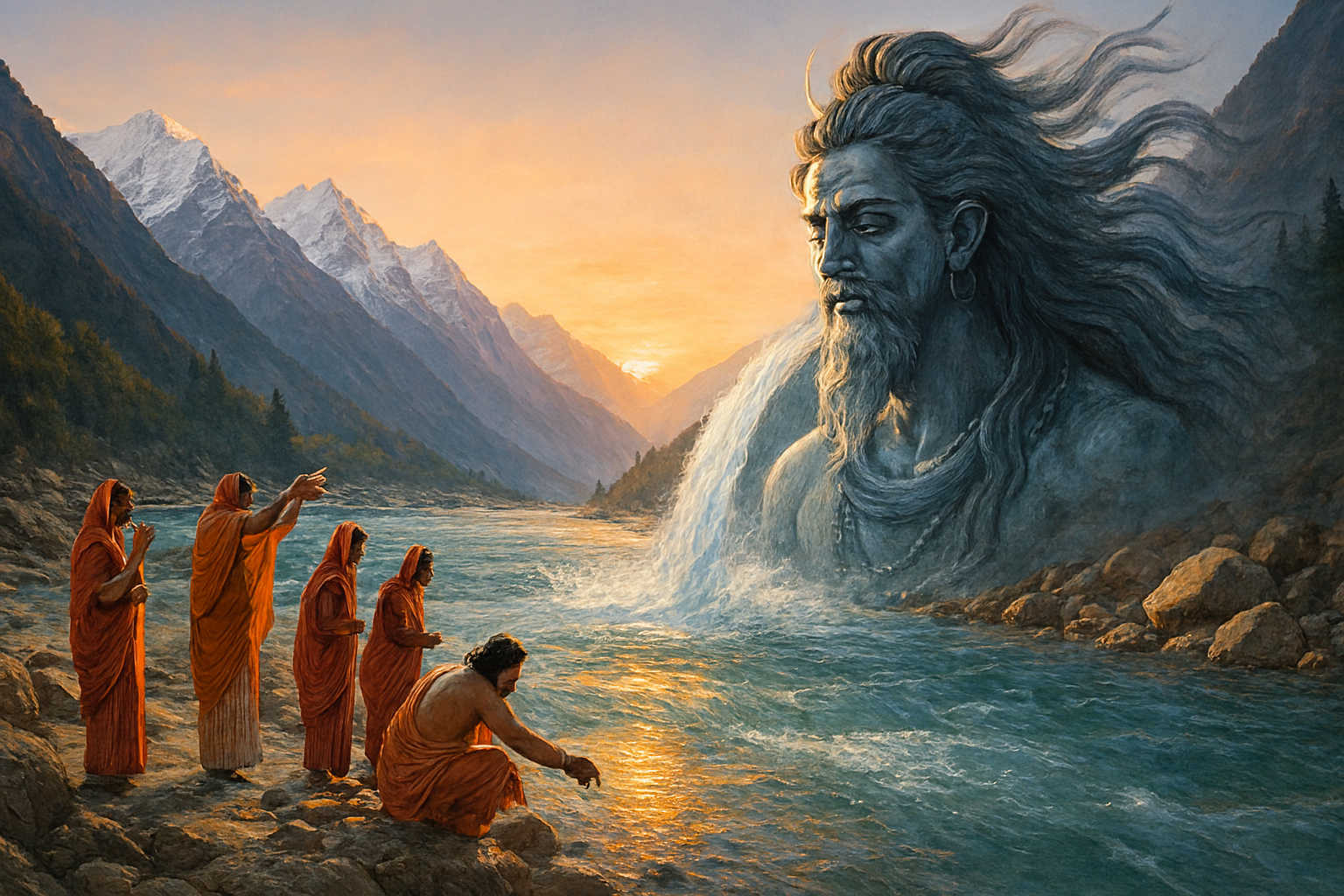
River Ganga – From Shiva's Hair to Earth
The River Ganga, also known as the Ganges, is not just a river in India—it is a symbol of purity, life, and divinity. Flowing for over 2,500 kilometers across the plains of India, the Ganga is considered the holiest river in Hinduism. Millions of devotees worship her as Ganga Mata (Mother Ganga), believing that her waters purify sins and grant liberation. But beyond the river’s physical presence lies an ancient legend of how Ganga descended from heaven and flowed to Earth through Lord Shiva's hair.
The Mythical Origin of Ganga
According to Hindu scriptures, Ganga originally flowed in the heavens as a celestial river. Her descent to Earth is associated with a great act of devotion by King Bhagiratha, which gave rise to the phrase “Bhagirath Prayatna”, meaning extraordinary effort.
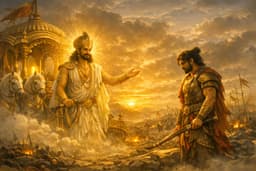
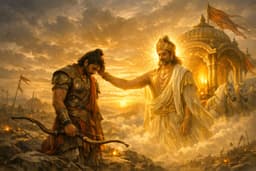
The story begins with King Sagara, an ancestor of Bhagiratha, who performed a great sacrifice and sent his 60,000 sons to fetch the sacrificial horse. During their search, they accused Sage Kapila of stealing it. Enraged by the false accusation, the sage burned all of them to ashes. To free their souls, their descendant Bhagiratha prayed to Ganga to descend from heaven and wash away their sins with her holy waters.
Why Did Ganga Need to Flow Through Shiva’s Hair?
When Ganga agreed to descend, her mighty force could have destroyed the Earth. To prevent this catastrophe, Bhagiratha prayed to Lord Shiva. Shiva compassionately decided to break Ganga’s fall by capturing her in his matted locks (jata) and gently releasing her in streams. This act made Lord Shiva Gangaadhar, the bearer of Ganga.
From Shiva’s hair, the river flowed down the Himalayas, reaching the plains of India and finally the Bay of Bengal. This divine descent is celebrated in Hindu tradition as a symbol of humility, power, and grace.
Ganga in Hindu Scriptures
The story of Ganga’s descent is found in several texts:
-
Ramayana: Narrates Bhagiratha’s penance and Ganga’s descent.
-
Mahabharata: Describes Ganga as the mother of Bhishma.
-
Puranas: Skanda Purana, Vishnu Purana, and Bhagavata Purana glorify her sanctity.
In these scriptures, Ganga is personified as a goddess who embodies purity and compassion. She is often depicted riding a crocodile, holding a water pot, and wearing a white sari.
Spiritual Significance of the Ganga
For Hindus, Ganga is not just water—she is Amrit (nectar). Bathing in her waters during holy festivals like Kumbh Mela is believed to cleanse all sins. Pilgrims immerse the ashes of their loved ones in the river, believing it helps their souls attain moksha (liberation).
Ganga is also worshipped during Ganga Dussehra, a festival celebrating her descent. The Ganga Aarti performed every evening at ghats in Varanasi, Haridwar, and Rishikesh draws thousands of devotees and travelers from across the world.
The Journey of the Ganga
The river originates from the Gangotri Glacier in the Himalayas, at an altitude of about 4,100 meters. The actual source is the Bhagirathi River, named after the legendary king. At Devprayag, it meets the Alaknanda River, and from there, it is officially called Ganga.
The river flows through major pilgrimage cities like:
-
Haridwar: Where Ganga enters the plains.
-
Rishikesh: Famous for yoga and spirituality.
-
Varanasi (Kashi): The spiritual capital of India, where life and death merge with devotion.
Finally, it empties into the Bay of Bengal, forming the Sundarbans delta, the largest in the world.
Ganga in Other Religions
While primarily sacred to Hindus, Ganga holds significance in Buddhism and Jainism too. Ancient Buddhist texts mention her as a sacred river, and Jain Tirthankaras revered her purity.
Ecological and Cultural Importance
The Ganga sustains millions of people across North India. Its waters irrigate vast fields, quench the thirst of cities, and power cultural traditions. However, modern challenges like pollution threaten its sanctity, prompting initiatives like the Namami Gange Project for cleaning the river.
Ganga in Art and Architecture
From temples on her banks to poetry and music, Ganga has inspired Indian culture for centuries. Ancient stone carvings at Mahabalipuram depict her descent, while countless hymns praise her divine grace.
Interesting Facts About Ganga
-
Length: Over 2,500 km, flowing through India and Bangladesh.
-
One of the Most Sacred Rivers: Millions take a dip in her waters daily.
-
Celebrated in Festivals: Ganga Dussehra, Makar Sankranti, and Kumbh Mela.
-
Linked to Moksha: Ash immersion rituals are believed to grant liberation.
Conclusion
The story of River Ganga is more than mythology—it reflects devotion, faith, and nature’s grace. Her journey from Lord Shiva’s hair to Earth symbolizes the union of the divine with humanity. For millions, Ganga remains a lifeline of spirituality and survival, flowing eternally to nurture life and wash away the impurities of the soul.