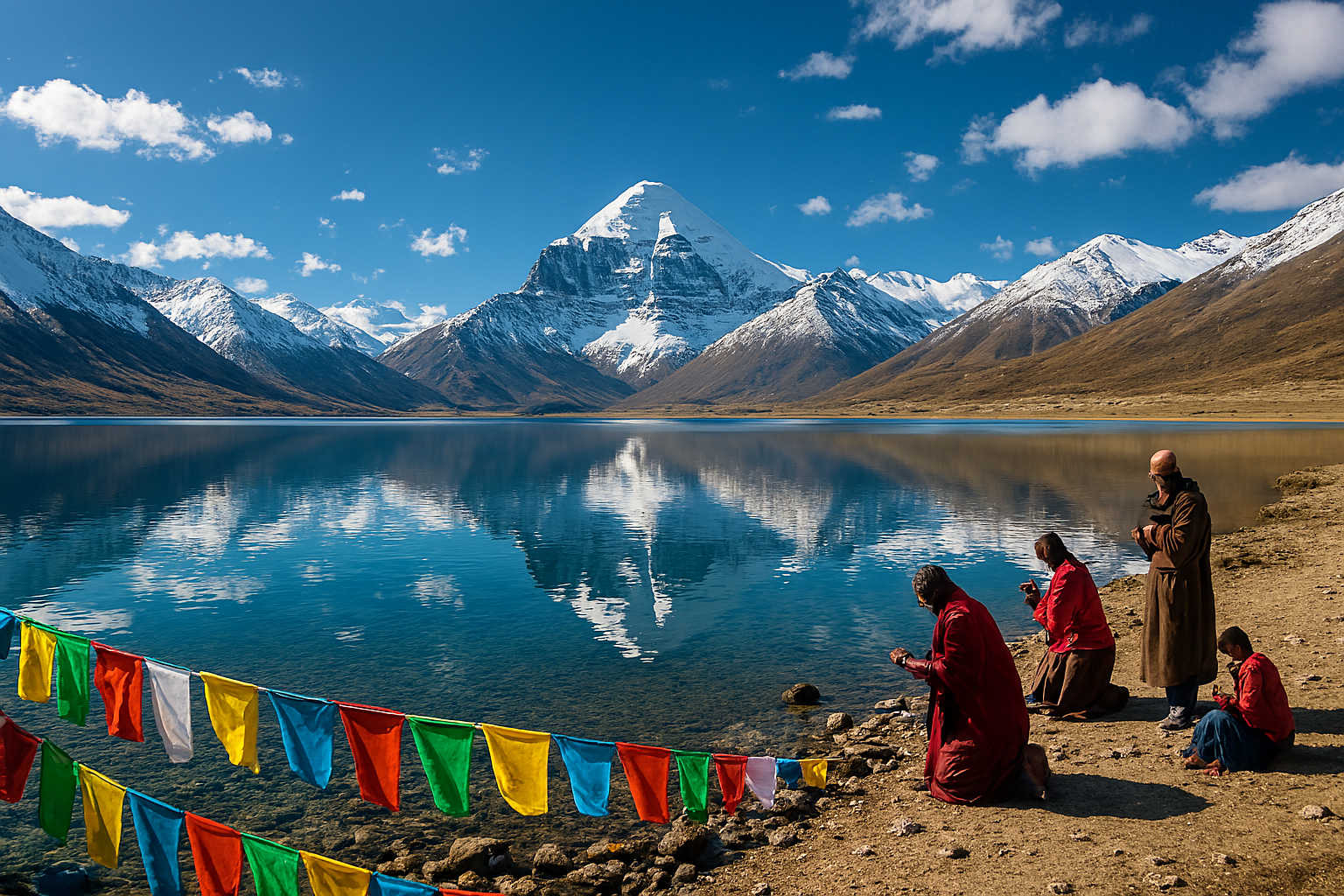
Mansarovar – The Sacred Lake of the Gods
Nestled in the remote Tibetan Plateau, at an altitude of 4,590 meters (15,060 ft), lies Lake Mansarovar, one of the most sacred water bodies in the world. Situated near the holy Mount Kailash, this shimmering blue lake is more than just a natural wonder—it is a spiritual icon, revered by Hindus, Buddhists, Jains, and Bon followers. Its name, Mansarovar, comes from two Sanskrit words: Manas (mind) and Sarovar (lake), meaning “Lake of the Mind”.
Why is Mansarovar Sacred?
According to Hindu mythology, Lord Brahma, the creator of the universe, first imagined this lake in his mind before manifesting it on Earth. Thus, it is believed that anyone who takes a dip in its pristine waters is purified of sins and attains moksha (liberation). For devout Hindus, drinking its water is considered as sacred as bathing in the Ganges.
In Buddhism, Lake Mansarovar is associated with purity and spiritual awakening. It is said that Buddha himself visited this holy lake, and Buddhist texts describe it as a place of deep meditation.
For Jains, this is the site where their first Tirthankara, Rishabhdev, attained spiritual enlightenment. Followers of Bon religion also consider it the spiritual seat of power.
Legends Surrounding Mansarovar
Hindu scriptures, especially the Skanda Purana, describe Lake Mansarovar as a divine creation. The lake is believed to be the earthly representation of Anavatapta, a legendary lake in heaven.
A popular belief is that the Trinity of Brahma, Vishnu, and Shiva blesses this region. While Kailash is the abode of Shiva, Mansarovar reflects the purity of Brahma's creation, and the flowing rivers from here represent Vishnu’s life-sustaining energy.
Some legends even claim that celestial beings descend to this lake to bathe, especially during the full moon night of summer, when the water shines like molten silver.
The Mystical Beauty of Mansarovar
Imagine a vast turquoise lake with an area of nearly 320 square kilometers, encircled by majestic snow-clad peaks, with Mount Kailash towering to its north. On a clear day, the lake’s crystal waters reflect the surrounding mountains, creating an ethereal scene that feels straight out of a divine painting.
Close to Mansarovar lies Rakshas Tal, a nearby lake associated with demonic forces in mythology. While Mansarovar symbolizes purity and good, Rakshas Tal is said to represent darkness and negativity—a cosmic balance of energies.
Spiritual Practices and Rituals
For devotees, the journey to Kailash Mansarovar Yatra is incomplete without visiting Lake Mansarovar. Rituals performed here include:
-
Snana (Holy Bath): Bathing in the icy waters is believed to cleanse the soul and remove past karma.
-
Achamana (Sipping the Water): Drinking its water is said to grant divine blessings.
-
Circumambulation: Pilgrims perform a circumambulation of the lake (about 88 km), either on foot or by vehicle, while chanting mantras.
Many devotees also meditate near its shores, believing that the serene environment accelerates spiritual progress.
Mansarovar in Different Faiths
-
Hinduism: A dip ensures moksha and spiritual cleansing.
-
Buddhism: Seen as a symbol of purity and enlightenment; an important pilgrimage site for Tibetan Buddhists.
-
Jainism: The first Tirthankara attained salvation here.
-
Bon Religion: Considered a sacred site linked to their founder.
This convergence of multiple religions makes Mansarovar a unique global spiritual center.
Geographical and Scientific Significance
Lake Mansarovar is a freshwater lake, a rarity at such high altitude. It sits near the sources of four great Asian rivers—the Indus, Sutlej, Brahmaputra, and Karnali. This geographic feature reinforces its role as a life-giving lake in both mythology and science.
The lake freezes in winter and melts during summer, revealing its clear blue waters. It is considered one of the highest freshwater lakes in the world, adding to its geographical importance.
Challenges of Visiting Mansarovar
Reaching Mansarovar is no easy task. Pilgrims face:
-
Extreme Altitude: Over 15,000 ft, with risk of altitude sickness.
-
Remote Location: Located in Tibet, requiring international permits and organized tours.
-
Harsh Climate: Temperatures can drop below freezing even in summer.
Yet, every year, thousands undertake the Kailash Mansarovar Yatra, braving these challenges for spiritual fulfillment.
Best Time to Visit
The ideal time to visit Mansarovar is May to September, when the weather is relatively stable, and the lake is not frozen. During full moon nights, the lake shines spectacularly, creating a magical experience for pilgrims.
Interesting Facts About Mansarovar
-
Freshwater Lake at High Altitude: Most lakes at this elevation are saline, but Mansarovar is pure freshwater.
-
Linked to Rakshas Tal: Represents good vs. evil balance.
-
Source of Major Rivers: Four of Asia’s great rivers originate nearby.
-
Sacred Across Religions: Revered by Hindus, Buddhists, Jains, and Bon followers.
Conclusion
Mansarovar is not just a lake—it is a sacred embodiment of divine energy, a symbol of purity, and a spiritual destination that inspires awe and devotion. Its mystical beauty, combined with profound religious significance, makes it one of the most cherished pilgrimage spots on Earth.
A journey to Mansarovar is more than travel—it is a pilgrimage of the soul, a step closer to moksha, peace, and eternal bliss.