Mount Kailash – The Mythical Home of Shiva
High in the remote Tibetan Himalayas, at an altitude of 6,638 meters (21,778 feet), stands the majestic Mount Kailash, revered as the abode of Lord Shiva. Known as Kailash Parvat in Sanskrit, this snow-clad peak is not just a mountain—it is a spiritual icon worshipped by Hindus, Buddhists, Jains, and followers of Bon faith. Despite being one of the most sacred spots on Earth, no one has ever climbed Mount Kailash, and it remains an enigma wrapped in legends, faith, and mysticism.
Why is Mount Kailash Sacred?
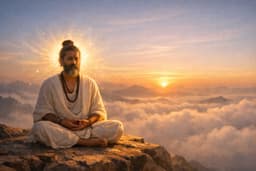
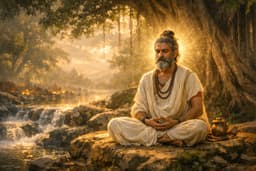
In Hindu tradition, Mount Kailash is believed to be the home of Lord Shiva and Goddess Parvati. Here, Shiva is said to sit in eternal meditation, spreading peace and cosmic energy across the universe. The mountain is often called the axis mundi—the center of the world, connecting heaven and earth.
For Buddhists, Mount Kailash is regarded as the dwelling of Demchok, a deity representing supreme bliss. Jains believe it to be the site where their first Tirthankara, Rishabhdev, attained liberation. For the ancient Bon religion of Tibet, it is the spiritual seat of their founder, Tonpa Shenrab.
This makes Mount Kailash a unique confluence of multiple faiths and cultures, all agreeing on its divine power.
Legends and Mythology
Mount Kailash is featured in numerous scriptures and legends. According to the Shiva Purana, Kailash is where Lord Shiva resides with his consort Parvati, along with Nandi the bull and countless ganas (celestial attendants). The peak represents spiritual enlightenment and ultimate liberation (moksha).
A fascinating belief is that Mount Kailash is the center of cosmic energy. It is said to be aligned with several other sacred sites around the globe, forming a mystical energy grid. Some even claim that the mountain radiates powerful vibrations that influence consciousness.
The Unclimbed Peak
What makes Mount Kailash even more mysterious is that no one has ever climbed it. Unlike other peaks in the Himalayas, Kailash is considered inviolable and sacred, so climbing is strictly prohibited. Legends say that those who tried to scale it faced strange occurrences—mysterious weather changes, sudden aging, or even death.
In 1926, a renowned mountaineer expressed his desire to climb the peak, only to receive warnings from local lamas that it would be an act of sacrilege. Since then, Mount Kailash remains unconquered, standing as a symbol of purity and divinity.
Kailash Mansarovar Yatra – The Sacred Pilgrimage
One of the most significant pilgrimages associated with Mount Kailash is the Kailash Mansarovar Yatra. Devotees undertake this arduous journey to seek spiritual merit and liberation.
-
Mansarovar Lake: Situated near Kailash, Lake Mansarovar is considered the most sacred lake in Hinduism. Bathing in its icy waters is believed to cleanse sins of many lifetimes.
-
Parikrama (Circumambulation): Pilgrims perform a 52 km trek around Mount Kailash, known as the Kora or Parikrama. Completing this circuit is said to grant moksha and immense blessings.
For many, even seeing Mount Kailash from a distance is equivalent to a lifetime of spiritual reward.
Mystical Geography and Science
Mount Kailash is a pyramid-shaped peak, rising sharply from the Tibetan plateau. It is part of the Trans-Himalayan range and lies close to the sources of four major rivers of Asia—Indus, Sutlej, Brahmaputra, and Karnali—a fact that deepens its spiritual symbolism as the source of life.
Scientists have noted that the mountain appears perfectly symmetrical, sparking theories about its possible geological uniqueness. Some even suggest it is a man-made pyramid of antiquity, though this remains speculative.
Challenges of the Yatra
The journey to Kailash is physically demanding and mentally challenging. Pilgrims face:
-
High altitude (above 15,000 ft)
-
Oxygen deficiency
-
Extreme cold temperatures
-
Remote terrain requiring weeks of trekking
Despite these hardships, thousands of devotees undertake the yatra every year, driven by faith and devotion.
Best Time to Visit
The ideal time for the Kailash Mansarovar Yatra is between May and September, when the weather is relatively stable, and mountain passes are open. During winter, heavy snow blocks all access routes.
Spiritual Significance
Hindus believe that a single circumambulation of Mount Kailash cleanses sins of one lifetime. Performing 108 parikramas is said to grant nirvana. For Buddhists, it represents the path to enlightenment. For Jains and Bons, it is a symbol of liberation and purity.
Even today, pilgrims experience a profound sense of peace and transformation in the presence of this sacred mountain. Many report feeling mystical energy, unexplainable calmness, and heightened awareness.
Interesting Facts
-
Unclimbed Peak: No one has ever scaled Mount Kailash.
-
Magnetic Compass Mystery: Some explorers claim their compasses malfunction near the mountain.
-
Source of Four Rivers: Indus, Sutlej, Brahmaputra, and Karnali originate from this region.
-
Shape of a Pyramid: Its near-perfect symmetry adds to its enigma.
Conclusion
Mount Kailash is more than just a mountain—it is a living symbol of divinity, a place where myth, faith, and mystery converge. Whether you view it through the lens of religion, culture, or science, Kailash remains an unsolved spiritual riddle that continues to inspire awe.
Undertaking the Kailash Mansarovar Yatra is not just a journey of the body but a pilgrimage of the soul—a quest for purity, liberation, and eternal peace.