Yamunotri – The Birthplace of River Yamuna
Nestled in the lap of the majestic Garhwal Himalayas lies Yamunotri, the sacred source of the Yamuna River, one of the holiest rivers in India. Situated at an altitude of 3,293 meters (10,804 feet) in Uttarkashi district of Uttarakhand, Yamunotri is the starting point of the revered Char Dham Yatra. This serene destination is not just a pilgrimage site but also a breathtaking experience for nature lovers and spiritual seekers alike.
The Legend of Goddess Yamuna
According to Hindu mythology, Yamuna is the daughter of Surya (Sun God) and the sister of Yama (God of Death). It is believed that bathing in the waters of Yamuna absolves sins and protects devotees from untimely death, owing to the divine blessing of her brother Yama. The sacred river flows from the icy peaks of Bandarpunch Parvat, and the temple at Yamunotri is dedicated to Goddess Yamuna.
The spiritual significance of Yamunotri is profound—devotees believe that by offering prayers here, they secure blessings for a long and healthy life.
The Physical Source – Champasar Glacier
While the actual origin of the Yamuna River is the Champasar Glacier, located at an altitude of around 4,421 meters near Kalind Parvat, the trek to this point is extremely challenging. Therefore, pilgrims visit the Yamunotri Temple and nearby thermal springs to pay homage to the river goddess. The river emerges as a trickle from the glacier before gaining strength as it flows downward, nourishing the plains of northern India.
The Yamunotri Temple – An Architectural Gem
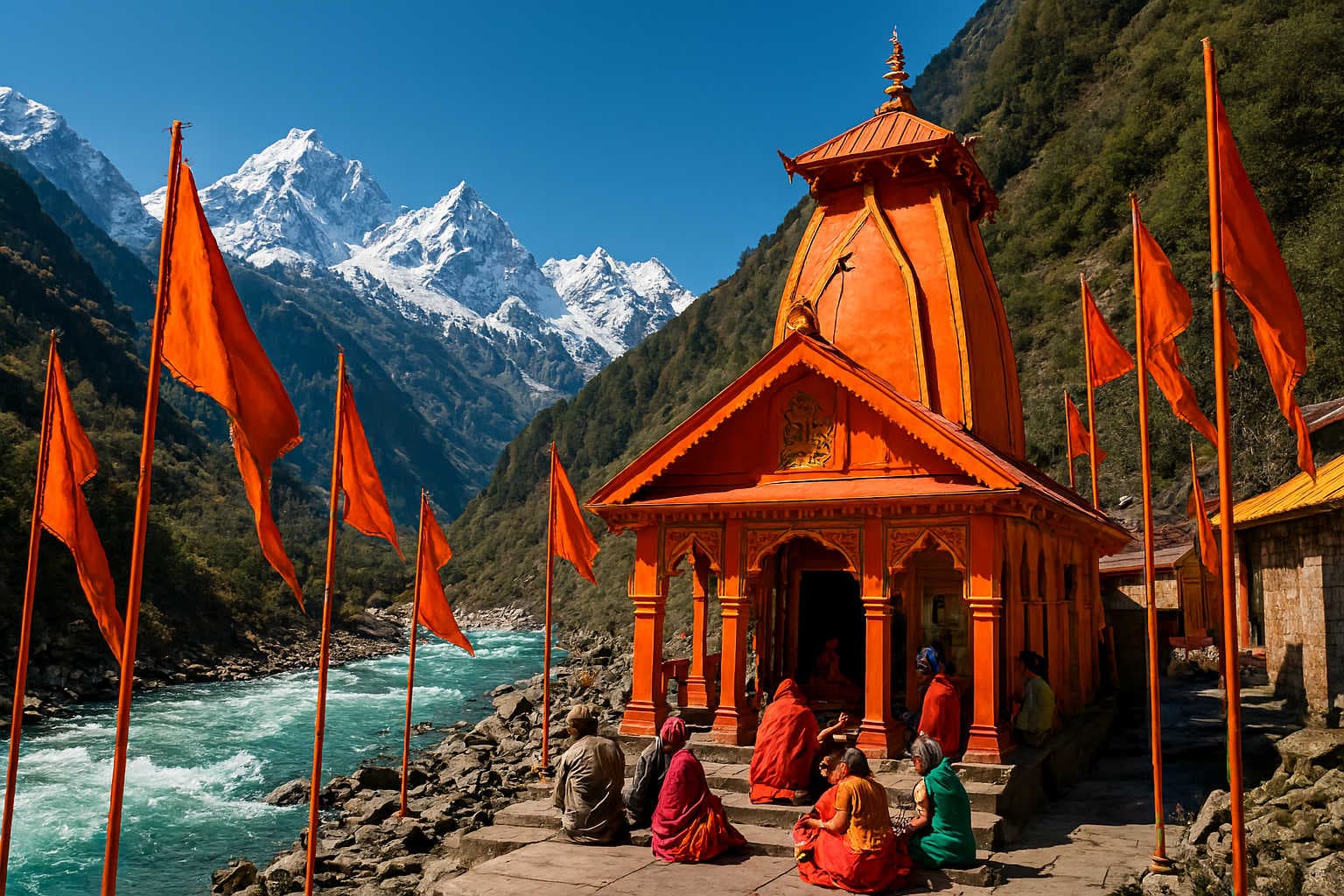
The Yamunotri Temple was originally constructed by Maharaja Pratap Shah of Tehri Garhwal in the 19th century. Built in traditional Garhwali style, the temple features bright yellow and red colors, symbolizing devotion and purity. Inside the sanctum lies the idol of Goddess Yamuna, crafted in black marble, alongside a white idol of Goddess Ganga.
The temple remains open only for six months a year, from Akshaya Tritiya (April/May) to Diwali (October/November). During winter, the idol of Goddess Yamuna is moved to Kharsali village, where rituals continue until the temple reopens.
Sacred Hot Springs – Surya Kund and Gauri Kund
One of the unique attractions of Yamunotri is its thermal springs, known as Surya Kund and Gauri Kund, located near the temple. Surya Kund is a boiling hot spring where devotees tie rice and potatoes in cloth and dip them in the water. These cooked offerings, called prasad, are later consumed as blessings. Gauri Kund, on the other hand, is a cooler spring used for holy dips.
Spiritual Significance and Rituals
Yamunotri is more than a temple; it is a symbol of faith. Devotees perform rituals such as:
-
Snan (Holy Bath): Bathing in the Yamuna or hot springs is believed to purify the soul.
-
Puja to Goddess Yamuna: Offerings of flowers, diyas (lamps), and prasad are made at the temple.
-
Ganga-Yamuna Puja: Since both rivers are sisters, devotees often honor them together.
The serenity of the Himalayan environment enhances the spiritual experience, making every prayer more profound.
Opening and Closing Ceremonies
The temple opens on Akshaya Tritiya, a highly auspicious day, and closes on Bhai Dooj, just after Diwali. The opening ceremony is marked by chanting of Vedic hymns and special pujas, while the closing involves the ceremonial transfer of the idol to Kharsali.
How to Reach Yamunotri
-
By Air: Nearest airport is Jolly Grant Airport (Dehradun), about 210 km away.
-
By Train: Nearest railway station is Rishikesh, around 202 km away.
-
By Road: The last motorable point is Janki Chatti. From here, Yamunotri is a 6 km trek through stunning landscapes. Ponies, palanquins, and even helicopter services are available for those unable to trek.
The Scenic Trek to Yamunotri
The trek from Janki Chatti to Yamunotri is an experience in itself. Passing through lush valleys, waterfalls, and snow patches, the path offers a blend of natural beauty and divine energy. Along the route, small tea stalls and resting points cater to pilgrims. The mesmerizing view of Bandarpunch Peak, often snow-covered, adds to the spiritual journey.
Best Time to Visit Yamunotri
The best time to visit is during May–June and September–October. The monsoon season (July–August) brings heavy rainfall and landslides, making travel risky. Winters witness heavy snowfall, and the temple remains closed.
Nearby Attractions
-
Kharsali: The winter seat of Goddess Yamuna, known for its ancient Shani temple.
-
Hanuman Chatti: A picturesque spot where the rivers Hanuman Ganga and Yamuna meet.
-
Saptarishi Kund: A serene lake located at a higher altitude, considered sacred by devotees.
-
Janki Chatti: Known for its hot water springs and beautiful surroundings.
Festivals and Celebrations
-
Akshaya Tritiya: Marks the opening of Yamunotri Temple.
-
Bhai Dooj: Celebrated when the temple closes for the winter.
-
Yamuna Jayanti: The birth anniversary of Goddess Yamuna, celebrated with great devotion.
Accommodation and Facilities
There are budget guesthouses, dharamshalas, and a few mid-range hotels in Janki Chatti and Barkot. Pilgrims are advised to book accommodations in advance during peak Char Dham season. Vegetarian meals are served at most places, maintaining the sanctity of the pilgrimage.
The Divine Experience
Standing before the Yamunotri Temple, with the mighty Himalayas towering above and the gurgling Yamuna flowing beside, fills the heart with peace and devotion. It’s a journey that combines physical endurance with spiritual awakening, leaving devotees with an everlasting sense of fulfillment.
Conclusion
Yamunotri is not just the origin of the Yamuna River; it is the origin of faith for countless devotees. Its untouched natural beauty, coupled with its spiritual aura, makes it an unmissable destination for anyone seeking solace in the lap of the Himalayas.