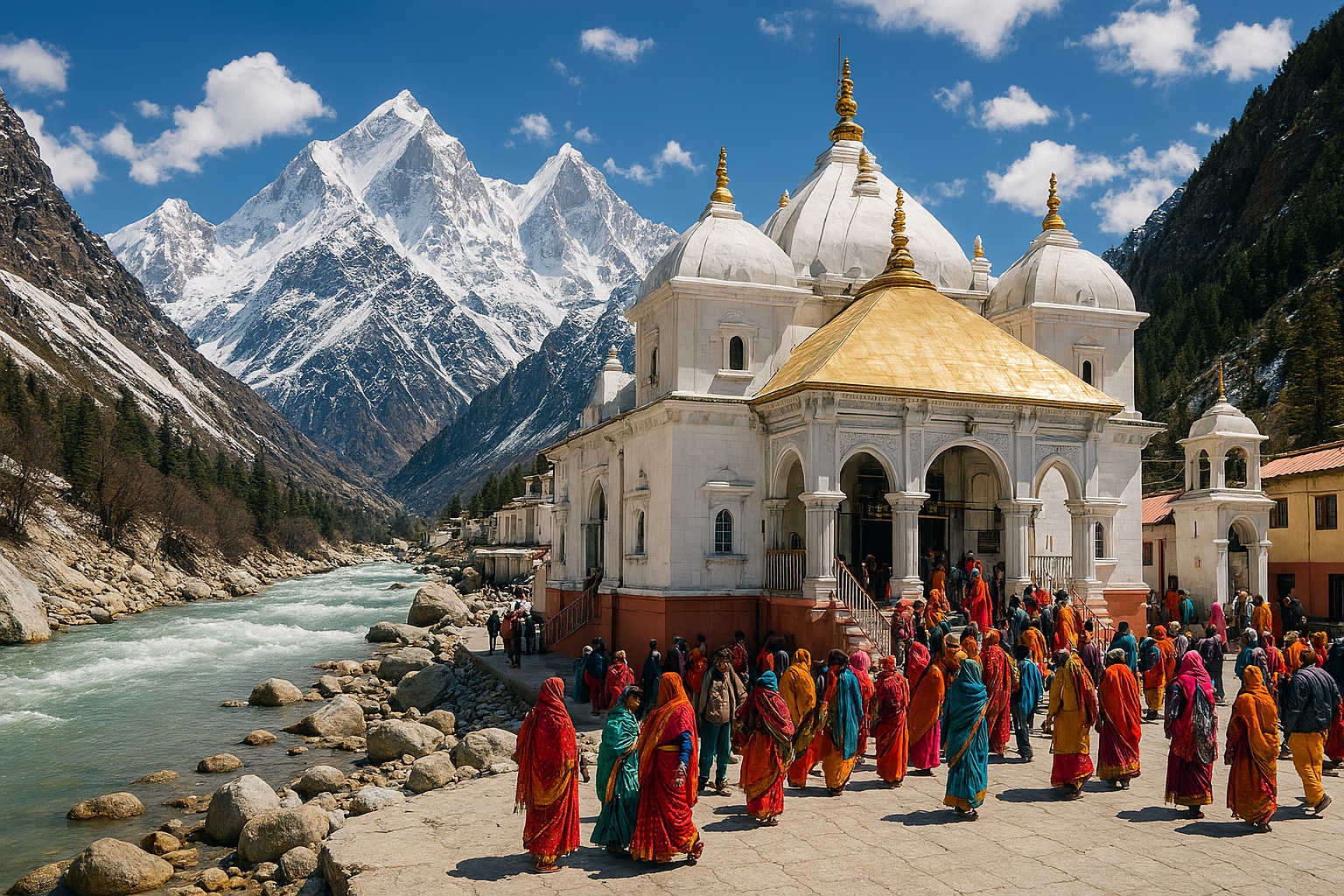
Gangotri – Source of River Ganga
High in the Garhwal Himalayas, where the mountains kiss the sky and glaciers feed mighty rivers, lies Gangotri, the origin point of the holiest river in India—the Ganga. Perched at an altitude of 3,100 meters (10,200 feet) in Uttarkashi district of Uttarakhand, Gangotri is one of the Char Dhams and a significant pilgrimage site for Hindus. Every year, thousands of devotees undertake this spiritual journey to pay homage at the Gangotri Temple and witness the sacred river’s source.
The Legend of Ganga’s Descent
According to Hindu mythology, the Ganga was originally a celestial river flowing in the heavens. King Bhagiratha, a descendant of King Sagara, performed severe penance to bring Ganga to Earth to purify the ashes of his ancestors who were cursed by Sage Kapila. Pleased with his devotion, Ganga agreed to descend but with such immense force that it could have shattered the Earth. To prevent this, Lord Shiva caught Ganga in his matted locks, releasing her gently onto the Himalayan slopes. This divine descent is celebrated as Ganga Avataran, and Gangotri is considered the spot where Goddess Ganga first touched the Earth.
The Sacred Bhagirathi River
At Gangotri, the river is called Bhagirathi in honor of King Bhagiratha’s penance. The confluence at Devprayag, where Bhagirathi meets Alaknanda, marks the beginning of the river officially known as Ganga. The Gaumukh Glacier, located about 18 km from Gangotri, is the actual physical source of the river. Trekkers and pilgrims alike undertake this adventurous yet spiritual trek to witness the origin of the holy waters.
History of Gangotri Temple
The Gangotri Temple was constructed by the Gorkha General Amar Singh Thapa in the early 18th century. Built in pristine white granite, the temple exudes simplicity and serenity against the backdrop of snow-clad peaks. The temple’s sanctum houses the idol of Goddess Ganga, which is worshipped daily during the open season.
During winter, when heavy snowfall makes the region inaccessible, the idol is shifted to Mukhba village near Harsil, where rituals continue until the next season.
Opening and Closing of Gangotri Temple
Gangotri temple remains open only for six months a year, from Akshaya Tritiya (April/May) to Diwali (October/November). During the winter closure, the idol rests in Mukhba village. This migration of the deity is a grand ritual, accompanied by chanting and celebrations.
Significance of Gangotri in Char Dham Yatra
Gangotri is the second stop in the Char Dham Yatra, after Yamunotri and before Kedarnath and Badrinath. It symbolizes purity and liberation. Taking a dip in the icy waters of Bhagirathi is believed to cleanse all sins and grant moksha (liberation).
Spiritual Vibes and Rituals
The day at Gangotri begins with Mangala Aarti and ends with Shayan Aarti. Special pujas include:
-
Ganga Aarti: Performed every evening on the riverbank, similar to Varanasi’s ritual but in a serene Himalayan setting.
-
Bhagirath Shila Puja: A sacred rock near the temple where Bhagiratha meditated.
Pilgrims also offer water to ancestors, believing it grants peace to departed souls.
How to Reach Gangotri
-
By Air: The nearest airport is Jolly Grant Airport (Dehradun), about 250 km away.
-
By Train: The nearest railway station is Rishikesh (234 km).
-
By Road: Well-connected by motorable roads till Gangotri. Regular buses and taxis are available from Haridwar, Rishikesh, and Uttarkashi.
Trek to Gaumukh – The True Source
For adventure enthusiasts, the Gaumukh trek is a must. Starting from Gangotri, this 18 km trek takes you through rugged terrains, pine forests, and glacial landscapes. The name Gaumukh means “cow’s mouth,” as the glacier resembles the mouth of a cow. Many trekkers also continue to Tapovan, a meadow offering majestic views of peaks like Shivling and Bhagirathi Parvat.
Best Time to Visit Gangotri
The best time to visit is during May–June and September–October. The monsoon season (July–August) brings landslides, making travel risky, while winters are marked by heavy snow and road closures.
Nearby Attractions
-
Harsil: A serene hamlet known for its apple orchards and scenic beauty.
-
Gangnani: Famous for its hot water spring, considered spiritually cleansing.
-
Bhagirathi Shila: A rock where King Bhagiratha prayed to bring Ganga to Earth.
-
Surya Kund & Gauri Kund: Two picturesque waterfalls near the temple.
Festivals at Gangotri
-
Ganga Dussehra: Celebrated in May–June, marking the day Ganga descended to Earth.
-
Diwali: The temple closes on this day with grand celebrations and rituals.
Accommodation and Facilities
Gangotri offers basic to mid-range accommodation, including guesthouses and dharamshalas. During peak season, it is advisable to book in advance. Simple vegetarian food is served, in keeping with the temple’s sanctity.
The Power of Faith
Gangotri is more than a pilgrimage—it is an experience of raw nature and deep devotion. The towering Himalayas, the gushing Bhagirathi, and the chants of “Ganga Maiya ki Jai” create an atmosphere that touches the soul. The journey might be challenging, but the spiritual bliss it brings is unmatched.
Conclusion
Standing on the banks of the Bhagirathi in Gangotri, watching the crystal-clear waters against the snowy peaks, one realizes why Ganga is not just a river but a living goddess for millions. A visit to Gangotri is not merely travel—it’s a sacred calling.