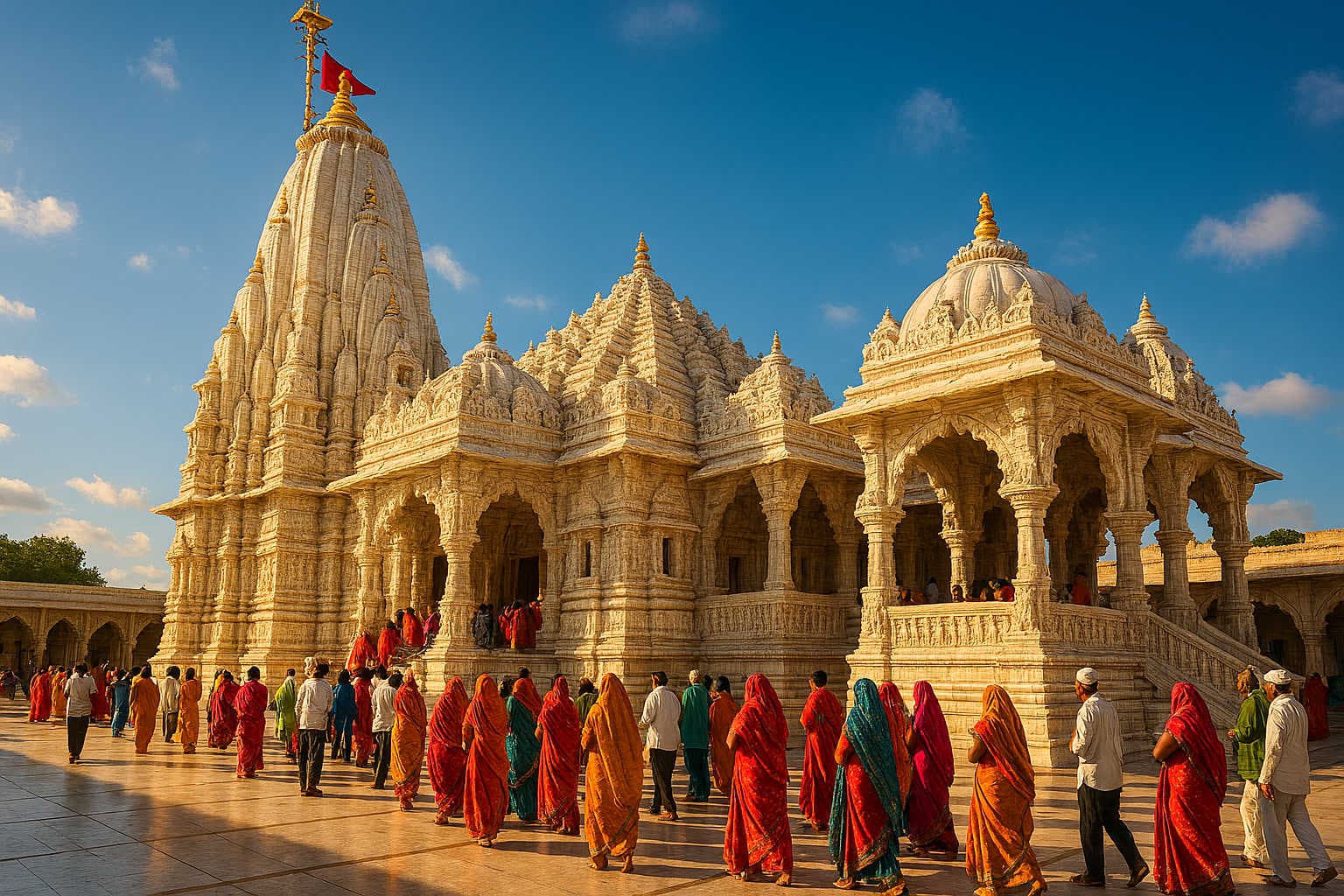
Ambaji Temple – The Heart of the Devi
In the vast spiritual landscape of India, the Ambaji Temple stands as a beacon of faith and devotion, revered as one of the 51 Shakti Peeths. Nestled in the serene Aravalli Hills of Gujarat, this temple is believed to mark the spot where the heart of Goddess Sati fell after her self-immolation in the Daksha Yagna. Known as the heart of the Devi, Ambaji is not only a sacred pilgrimage destination but also a place of profound spiritual significance and architectural beauty.
The Legend of Ambaji – Where Sati’s Heart Fell
The story of Ambaji Temple is rooted in the legendary tale of Sati and Shiva. When Sati immolated herself at her father Daksha’s Yagna after being humiliated, Lord Shiva was consumed by grief. Carrying her lifeless body, he performed the Tandava, the cosmic dance of destruction. To restore balance, Lord Vishnu released his Sudarshan Chakra, which cut Sati’s body into 51 pieces, scattering them across the Indian subcontinent. Each of these spots became a Shakti Peeth.
Ambaji is believed to be the place where Sati’s heart (hridaya) fell, symbolizing pure devotion and compassion. This is why Ambaji is considered one of the most powerful centers of Shakti worship.
History and Significance of Ambaji Temple
Ambaji Temple is located in Ambaji town, near the Gujarat-Rajasthan border, in Banaskantha district. Its history dates back thousands of years, with references found in Skanda Purana and other ancient scriptures. The temple is dedicated to Arasuri Amba, a form of Goddess Shakti, and has been a prominent pilgrimage site for centuries.
Unlike many temples, Ambaji does not have any idol of the deity. Instead, the holy Shree Yantra, inscribed on a marble plate, is worshipped. This sacred geometric symbol represents the cosmic energy of the Goddess and is the central focus of devotion.
Architecture and Divine Aura
Ambaji Temple is a masterpiece of white marble architecture, featuring intricate carvings, symbolic motifs, and a towering shikhara that dominates the skyline. The sanctum houses the sacred Shree Yantra, which devotees cannot directly touch or see. Instead, they offer prayers from a distance, maintaining the sanctity of the shrine.
The temple complex includes beautifully designed courtyards, pillared halls, and artistic gateways. During sunrise and sunset, the temple glows with golden hues, creating a mesmerizing spiritual ambiance.
Festivals and Major Events
Ambaji Temple becomes the epicenter of devotion during Bhadarvi Purnima, a grand festival that attracts millions of pilgrims from across India. The celebrations include bhajans, yajnas, cultural performances, and yatra (procession), making it one of the most vibrant religious events in Gujarat.
Other significant occasions include:
-
Navratri Festival – Nine days of devotion, dance, and Garba near the temple.
-
Diwali and Sharad Purnima – When the temple is illuminated beautifully, creating a divine spectacle.
Rituals and Offerings at Ambaji Temple
Since there is no idol, the main offering is made to the Shree Yantra, which represents the Goddess in her cosmic form. Devotees bring coconuts, red clothes, silver ornaments, and flowers as offerings. Many also perform special rituals for health, prosperity, and success.
The Spiritual Significance of Ambaji
Ambaji is not just a temple; it is a power center of divine energy. Pilgrims believe that worshipping here removes negativity, fulfills desires, and grants strength to overcome challenges. The heart being the seat of emotions and compassion, Ambaji symbolizes pure love and devotion.
How to Reach Ambaji Temple
-
By Air: The nearest airport is Sardar Vallabhbhai Patel International Airport (Ahmedabad), about 179 km away.
-
By Train: The nearest railway station is Abu Road, 22 km from the temple.
-
By Road: Ambaji is well-connected by road to major cities in Gujarat and Rajasthan. Regular buses and taxis are available.
Best Time to Visit
The temple is open throughout the year, but the best time to visit is:
-
Bhadarvi Purnima (August–September) for the grand fair
-
Navratri (September–October) for traditional celebrations
-
Winter season (October–February) for pleasant weather
Nearby Attractions
-
Gabbar Hill: Believed to be the original seat of the Goddess, about 4 km from Ambaji Temple. Pilgrims often climb the 999 steps or take the ropeway to reach the hilltop shrine.
-
Mount Abu: A famous hill station and Jain pilgrimage center, just 50 km away.
-
Kumbhariya Jain Temples: Ancient temples near Ambaji, known for their intricate marble carvings.
Ambaji in Scriptures
The temple finds mention in the Skanda Purana, Markandeya Purana, and other sacred texts, which highlight its role as a center of divine energy. The power of Ambaji is said to resonate across the universe, making it one of the most spiritually significant places for Shakti worship.
Conclusion
Ambaji Temple is not just a destination—it is a journey of the heart, a sacred experience where faith meets divine energy. As the heart of the Devi, it continues to attract millions of devotees seeking blessings, peace, and spiritual fulfillment. Whether you visit during a festival or in solitude, Ambaji promises an experience that stays with you for a lifetime.