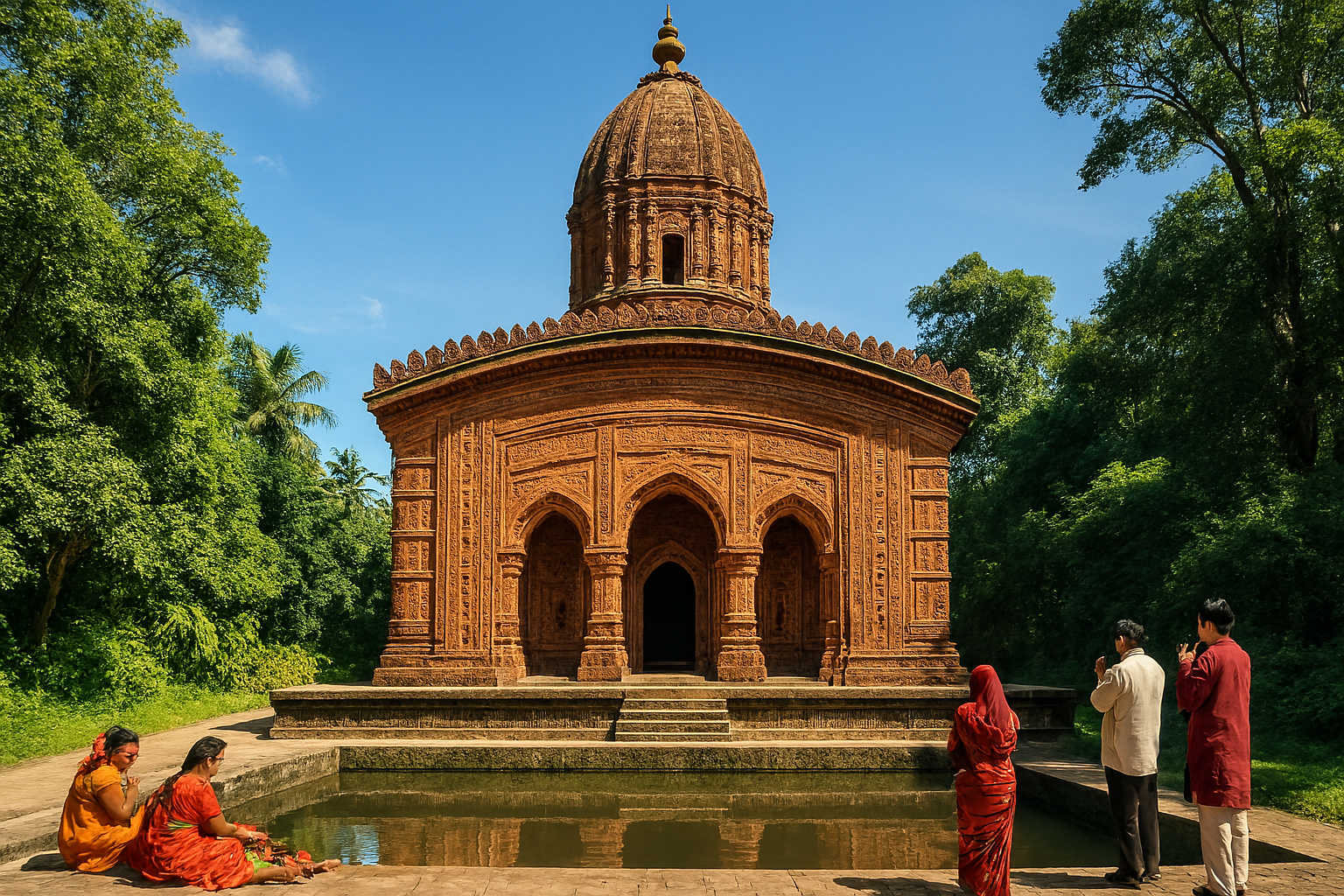
Sati’s Tongue – The Story of Jalpesh Temple
India is a land of sacred stories, and among them, the legend of Sati’s body parts falling across the subcontinent is one of the most revered in Hindu mythology. These places became known as the 51 Shakti Peethas, each sanctified by the presence of a divine fragment of Goddess Sati. One such holy shrine is the Jalpesh Temple in Jalpaiguri, West Bengal, believed to mark the spot where Sati’s tongue fell after the cosmic dance of destruction by Lord Shiva.
This temple is not only a symbol of faith but also a masterpiece of art, devotion, and cultural heritage that draws pilgrims from all corners of India.
The Legend of Sati’s Tongue
The story begins with Daksha Yagna, where Goddess Sati, the daughter of King Daksha, immolated herself in the sacred fire after being insulted by her father for marrying Lord Shiva. Overcome with grief and anger, Lord Shiva carried Sati’s lifeless body across the universe and performed the Tandava, a dance of destruction. To calm Shiva and restore cosmic balance, Lord Vishnu used his Sudarshan Chakra to dismember Sati’s body into 51 pieces. These pieces fell at different places, each becoming a Shakti Peeth.
It is said that Sati’s tongue fell at the site where Jalpesh Temple stands today. This is why the temple holds special reverence, as the tongue symbolizes speech, communication, and expression, making this Shakti Peeth deeply significant for devotees seeking blessings for eloquence, wisdom, and strength in communication.
Historical Background of Jalpesh Temple
The Jalpesh Temple is situated in the Jalpaiguri district of West Bengal, near the Indo-Bhutan border. It is an ancient temple dedicated primarily to Lord Shiva in the form of Jalpesh, meaning the “Lord of Water.” While the temple’s connection to Sati’s tongue makes it a Shakti Peeth, it is also a major Shaivite pilgrimage center.
Historical accounts suggest that the temple was built during the reign of the Koch kings, around the 16th century. Over time, the temple has undergone renovations but has retained its traditional charm with intricate terracotta carvings and a distinct Bengal architectural style.
Architecture and Spiritual Vibes
The Jalpesh Temple showcases the unique terracotta temple architecture of Bengal, adorned with intricate floral motifs, mythological figures, and symbolic patterns. The sanctum sanctorum houses a Shivalinga, which is worshipped as Lord Jalpesh. The temple complex also has a serene water tank, enhancing its spiritual ambiance.
During festive occasions, the temple courtyard becomes vibrant with devotees, rituals, and cultural performances. The sound of bells, the aroma of incense, and the chants of mantras create a mystical atmosphere that leaves a lasting impression on every visitor.
Why Is It Called Jalpesh?
The name Jalpesh derives from two Sanskrit words – Jal (water) and Pesh (Lord), referring to Lord Shiva as the protector of water. This symbolism is deeply rooted in agrarian communities that depend on water for sustenance, making this temple an important place for farmers seeking blessings for a good harvest.
Festivals and Rituals at Jalpesh Temple
The temple comes alive during Shivratri, attracting thousands of devotees who fast and offer Bel leaves, milk, and water to Lord Shiva. Another significant occasion is the Jalpesh Mela, organized during the month of Shravan (July–August), when pilgrims from far and wide gather to offer prayers.
Special rituals are performed for those seeking blessings for eloquence, academic success, and artistic expression, in alignment with the belief that the site holds the divine power of Sati’s tongue.
Spiritual Importance for Devotees
Jalpesh Temple is not just about ritual worship; it is a place where devotees experience inner peace and spiritual awakening. The energy of the temple is believed to help people overcome obstacles related to communication, speech disorders, and self-expression. Many artists, singers, and students seek blessings here for excellence in their fields.
How to Reach Jalpesh Temple
-
By Air: The nearest airport is Bagdogra Airport, about 65 km away.
-
By Train: The closest railway station is Jalpaiguri Road.
-
By Road: Well connected by road from Siliguri, Jalpaiguri, and nearby towns.
Best Time to Visit
The ideal time to visit the Jalpesh Temple is during Maha Shivratri or the Shravan month, though the temple is open year-round. Winter months (November–February) are also pleasant for travel.
Nearby Attractions
-
Jalpaiguri Town: Known for its colonial charm
-
Gorumara National Park: A wildlife sanctuary famous for rhinos
-
Teesta River Viewpoints: Scenic river landscapes ideal for nature lovers
Significance in Scriptures
The Skanda Purana and other sacred texts mention this site as a part of the Shakti Peeth network, highlighting its importance in spiritual geography. This connection makes Jalpesh not just a local shrine but a globally recognized symbol of divine feminine energy.
Conclusion
The Jalpesh Temple is more than a sacred space—it is a living legend of devotion, history, and spirituality. From the story of Sati’s tongue to its role as a cultural hub, this temple represents the profound depth of Hindu beliefs and traditions. For anyone seeking divine blessings for wisdom, speech, and inner strength, a visit to Jalpesh Temple is a soul-enriching experience.