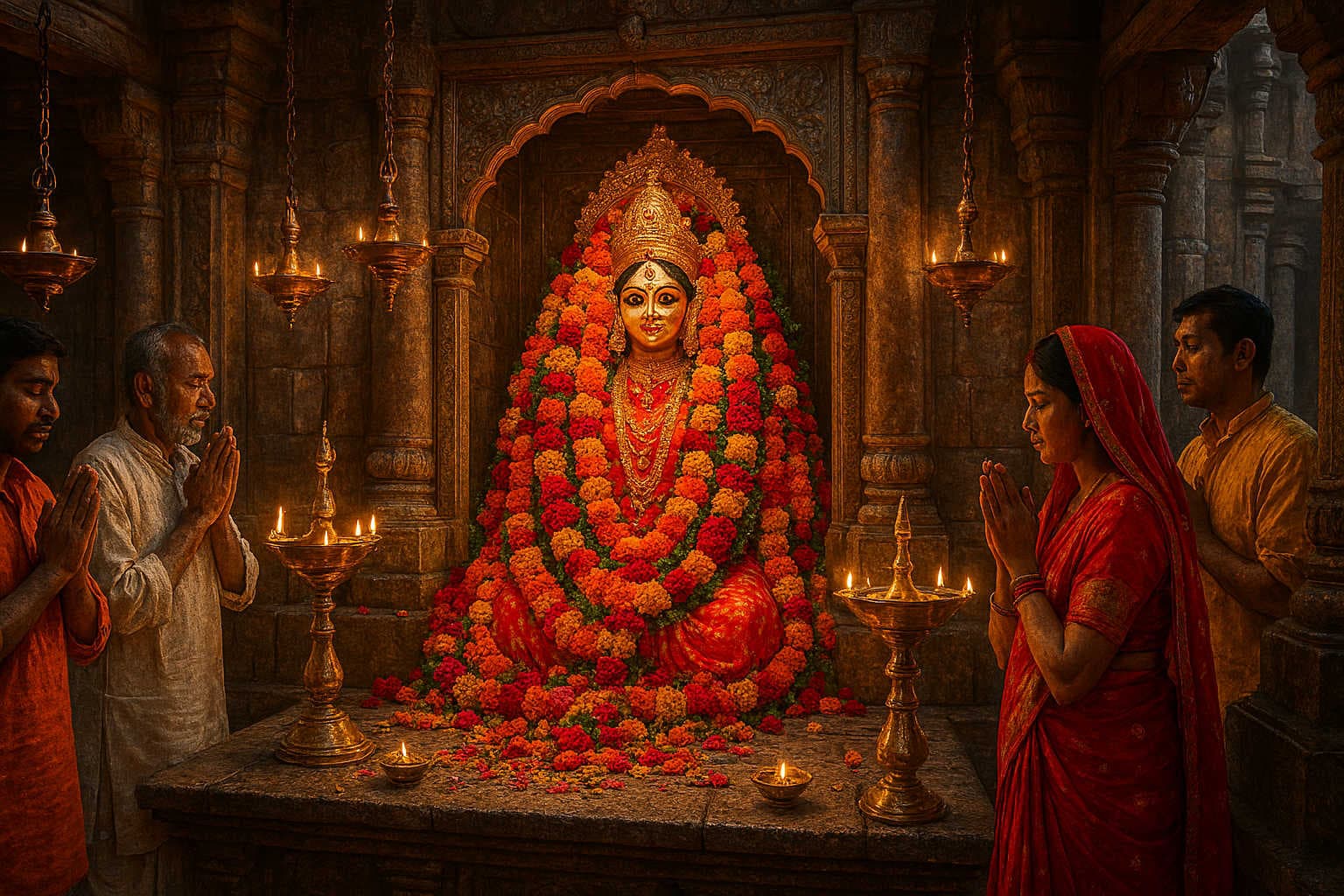
Ujjain Shakti Peeth – The Sacred Seat of Goddess Avantika
Among the 51 revered Shakti Peethas scattered across the Indian subcontinent, Ujjain Shakti Peeth holds a unique place of honor. Situated in the holy city of Ujjain, Madhya Pradesh, this sacred shrine is not only a spiritual powerhouse but also a significant cultural and historical landmark. It is closely associated with the mythological story of Goddess Sati and forms an integral part of Hindu pilgrimage circuits, along with the famous Mahakaleshwar Jyotirlinga.
The Legend Behind Ujjain Shakti Peeth
The origin of all Shakti Peethas lies in the timeless tale of Goddess Sati and Lord Shiva. When Sati immolated herself at her father Daksha’s yagna, Lord Shiva, enraged and grief-stricken, carried her body and wandered across the universe in sorrow. To calm Shiva and restore balance to creation, Lord Vishnu used his Sudarshan Chakra to cut Sati’s body into pieces. Each piece fell at a different location, which became a sacred Shakti Peeth.
According to the scriptures, Sati’s upper lip (or elbow, as mentioned in some texts) fell at Ujjain, making it one of the most powerful Shakti Peethas. Here, the Goddess is worshipped as Goddess Avantika or Mahakali, and Lord Shiva is revered as Mahakal.
The Temple and Its Unique Location
Ujjain is one of the seven Moksha-puris (sacred cities for liberation) in Hinduism. The temple dedicated to Goddess Avantika is located in close proximity to the Mahakaleshwar Jyotirlinga, making this city an extraordinary destination for devotees of both Shiva and Shakti.
The temple is adorned with ancient architecture, featuring intricate carvings and vibrant idols of the Goddess. The sanctum houses the Shakti idol smeared with vermillion, decorated with flowers and ornaments, radiating divine energy. Devotees believe that visiting this temple fulfills wishes, grants protection, and provides spiritual liberation.
Religious Importance of Ujjain
Ujjain is often referred to as the city of temples, and its spiritual significance extends beyond the Shakti Peeth. It is the site of the Kumbh Mela, one of the largest spiritual gatherings in the world. For devotees, the presence of both Mahakaleshwar Jyotirlinga and Ujjain Shakti Peeth makes the city a convergence point of Shaivism and Shaktism.
Festivals Celebrated at Ujjain Shakti Peeth
The temple comes alive during major Hindu festivals, especially:
-
Navratri – Celebrated with grandeur, involving nine nights of worship, dance, and devotion.
-
Mahashivratri – A festival that attracts thousands of devotees due to the close association of the shrine with Lord Mahakal.
-
Kumbh Mela – Held every 12 years in Ujjain, where millions gather to seek blessings and take a holy dip in the Shipra River.
During these times, the temple is beautifully decorated with flowers and lights, and devotional hymns echo through the holy city.
Rituals and Worship Practices
At Ujjain Shakti Peeth, rituals are simple yet powerful. Common offerings include:
-
Red Chunari (cloth) – Symbolizing respect and devotion to the Goddess.
-
Sindoor (vermilion) – Offered to honor her power and energy.
-
Coconuts and Sweets – Representing purity and fulfillment of wishes.
Priests chant sacred mantras dedicated to Goddess Avantika and perform arti at specific times of the day, creating a deeply spiritual environment.
The Spiritual Connection with Mahakaleshwar Jyotirlinga
One of the most fascinating aspects of Ujjain Shakti Peeth is its proximity to the Mahakaleshwar Jyotirlinga, one of the twelve sacred Jyotirlingas of Lord Shiva. Devotees often visit both shrines in a single pilgrimage, considering it highly auspicious. This divine combination of Shakti and Shiva reinforces the idea of balance in the universe.
How to Reach Ujjain Shakti Peeth
-
By Air: The nearest airport is in Indore (approx. 55 km from Ujjain).
-
By Rail: Ujjain Junction is well-connected to major Indian cities.
-
By Road: Regular buses and taxis connect Ujjain with Indore, Bhopal, and other cities.
Best Time to Visit
-
Navratri (March–April and September–October) – The most spiritually charged time to visit.
-
Mahashivratri – For those who wish to combine the darshan of Mahakal with Goddess Avantika.
-
Winter months (October to March) – Pleasant weather for exploration and temple visits.
Nearby Attractions
-
Mahakaleshwar Temple – One of the 12 Jyotirlingas.
-
Kal Bhairav Temple – Dedicated to the fierce form of Shiva.
-
Ram Ghat – On the banks of Shipra River, famous for evening arti.
-
Sandipani Ashram – Associated with Lord Krishna’s childhood education.
Significance in Scriptures
References to Ujjain as a sacred city are found in Skanda Purana, Devi Bhagavata Purana, and other ancient texts. The city has also been mentioned in Kalidasa’s works, enhancing its cultural and literary importance.
Conclusion
Ujjain Shakti Peeth is more than just a temple—it is a spiritual powerhouse that draws devotees from across the world. The divine energy of Goddess Avantika, coupled with the presence of Mahakaleshwar, makes Ujjain a must-visit destination for seekers of truth, liberation, and blessings. Visiting this Shakti Peeth is not merely a ritual; it is an experience that connects the soul to the eternal power of the divine feminine.