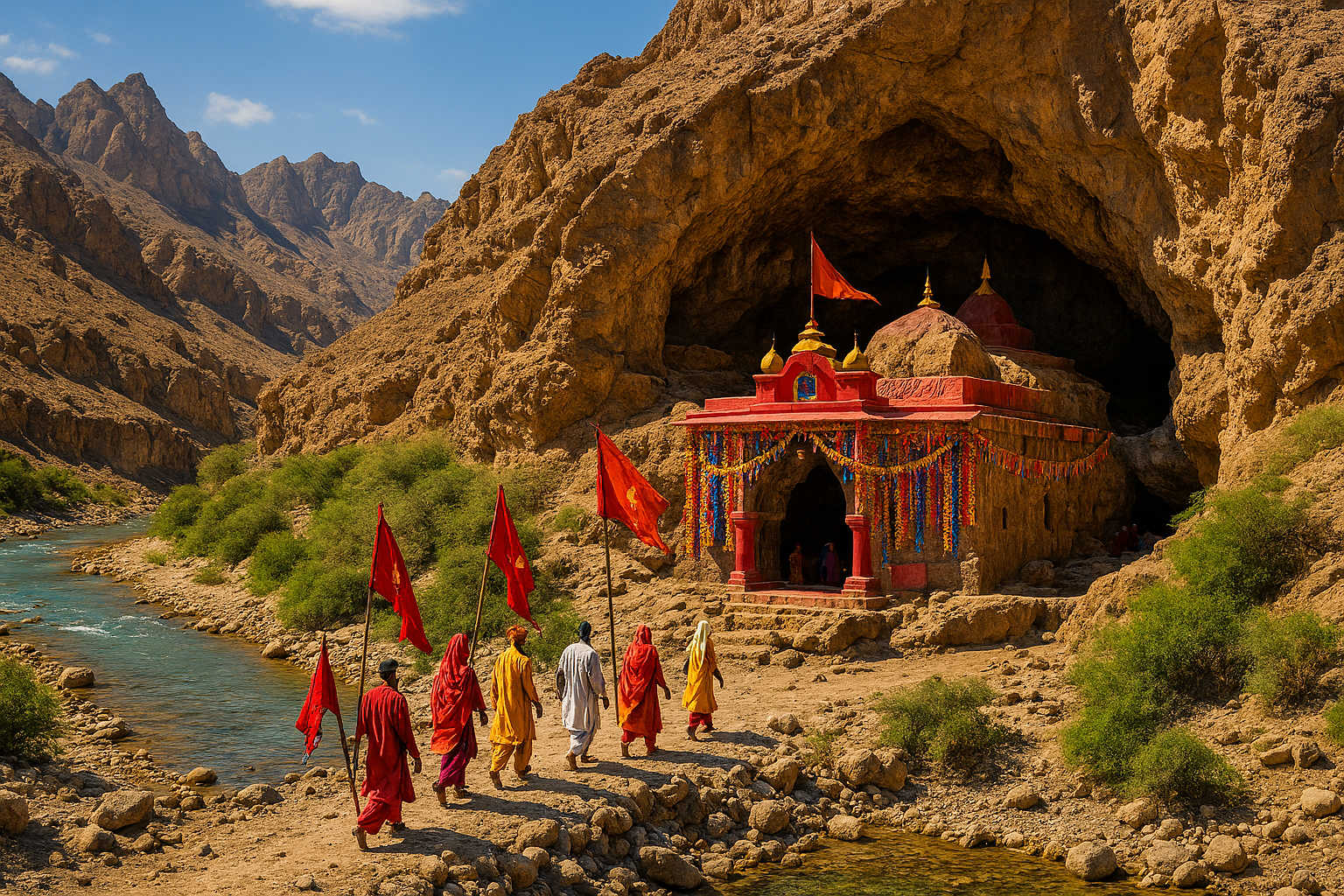
Hinglaj Mata – The Shakti Peeth in Pakistan
In the arid and rocky landscapes of Balochistan, Pakistan, lies one of the most revered Shakti Peethas in the Hindu faith—the Hinglaj Mata Temple. This sacred site is not only a symbol of devotion but also a testament to faith thriving beyond borders, where culture and spirituality transcend political lines. Known for its mystical cave and centuries-old traditions, Hinglaj Mata continues to attract thousands of pilgrims every year during the famous Hinglaj Yatra.
The Legend of Hinglaj Mata
The story of Hinglaj Mata is deeply rooted in the Shakti Peeth tradition. According to Hindu mythology, Sati, the consort of Lord Shiva, immolated herself in protest against her father Daksha’s insult to Shiva. Enraged, Lord Shiva carried her body across the cosmos, performing the destructive dance known as Tandava. To pacify him and save the universe, Lord Vishnu used his Sudarshan Chakra to dismember Sati’s body. Her body parts fell in different locations across the Indian subcontinent, which became known as the 51 Shakti Peethas.
Hinglaj is the place where Sati’s head or forehead is believed to have fallen. This makes it one of the most significant and powerful Shakti Peeths. The deity here is worshipped as Hinglaj Mata, and the temple is nestled in a natural cave amid the rugged mountains of the Hingol National Park.
The Temple and Its Unique Setting
Unlike many grand temples, Hinglaj Mata’s shrine is a natural cave, giving it an aura of mysticism. Inside the cave, a small sanctum houses the sacred shrine marked by a pind (stone) smeared with sindoor (vermillion). This symbolizes the Goddess in her primal form. The cave is simple, untouched by excessive ornamentation, which enhances its spiritual charm.
The temple is located on the banks of the Hingol River, which adds to the serene and divine atmosphere of the place. Surrounding the temple are rugged mountains, arid plains, and the vast expanse of Hingol National Park, making the journey as awe-inspiring as the destination.
Historical and Cultural Significance
Hinglaj Mata holds immense cultural significance for Hindus in Pakistan, especially the Sindhi and Balochi Hindu communities, who regard the Goddess as their Kuldevi (family deity). Despite being in a Muslim-majority nation, the temple is protected and respected by local communities, showcasing a unique example of religious harmony.
The temple has also been mentioned in several ancient scriptures, including the Devi Bhagavata Purana and Skanda Purana, which refer to Hinglaj as an important pilgrimage center.
Hinglaj Yatra – A Journey of Faith
The most notable event at Hinglaj Mata Temple is the Hinglaj Yatra, held annually during the Chaitra month (March–April). Thousands of devotees from Pakistan, India, and other parts of the world undertake this arduous journey through the rocky terrains and desert landscapes to seek blessings from the Goddess.
The yatra involves a trek through the Makran coastal region, passing through mountains, rivers, and natural caves. Pilgrims chant devotional hymns and perform rituals along the way, creating an atmosphere charged with spirituality. This pilgrimage is not just a test of endurance but also a celebration of unity, devotion, and cultural heritage.
Rituals and Offerings
Unlike temples that follow elaborate rituals, Hinglaj Mata’s worship is simple and profound. Devotees offer:
-
Sindoor (Vermillion) – The most significant offering to the Goddess.
-
Coconuts and Sweets – As symbols of purity and devotion.
-
Prayers and Bhajans – Chanted within the cave, creating an atmosphere of sanctity.
The simplicity of these rituals reflects the raw and powerful energy of the Goddess in her natural abode.
Festivals at Hinglaj Mata Temple
The temple comes alive during:
-
Chaitra Navratri – The main festival when the Hinglaj Yatra is organized.
-
Hinglaj Fair – A cultural and spiritual gathering of devotees from across the region.
During these times, the cave is decorated with colorful fabrics and flowers, and devotional songs echo through the rugged mountains.
Scientific and Geographical Marvel
The temple’s location inside a natural cave and its surrounding geology make it a point of interest for travelers and researchers alike. The Hingol River, flowing nearby, adds to the area’s scenic beauty, while the desert landscape and rugged mountains make the journey an adventurous spiritual experience.
How to Reach Hinglaj Mata Temple
-
By Air: The nearest airport is in Karachi, about 200 km from the temple.
-
By Road: The journey is primarily by road through the Makran coastal highway, with the last stretch requiring a trek.
-
By Rail: Limited connectivity; most pilgrims prefer road travel.
Nearby Attractions
-
Hingol National Park – Known for its wildlife and scenic landscapes.
-
Princess of Hope Rock Formation – A natural rock structure shaped like a woman.
-
Mud Volcanoes – Unique geological formations in the region.
Spiritual Significance
For devotees, Hinglaj Mata is a protector and divine mother who grants strength, prosperity, and protection from negative forces. Pilgrims believe that visiting Hinglaj fulfills wishes and purifies the soul. Despite being in a remote and politically sensitive location, the temple continues to thrive, proving that faith knows no boundaries.
Conclusion
The Hinglaj Mata Temple is not just a Shakti Peeth—it is a spiritual beacon that stands as a symbol of faith, resilience, and devotion. Its remote location, combined with its mystical aura, makes it one of the most fascinating pilgrimage sites in the world. Visiting Hinglaj Mata is not merely a religious journey but a profound experience that connects the soul to the eternal energy of the Goddess.