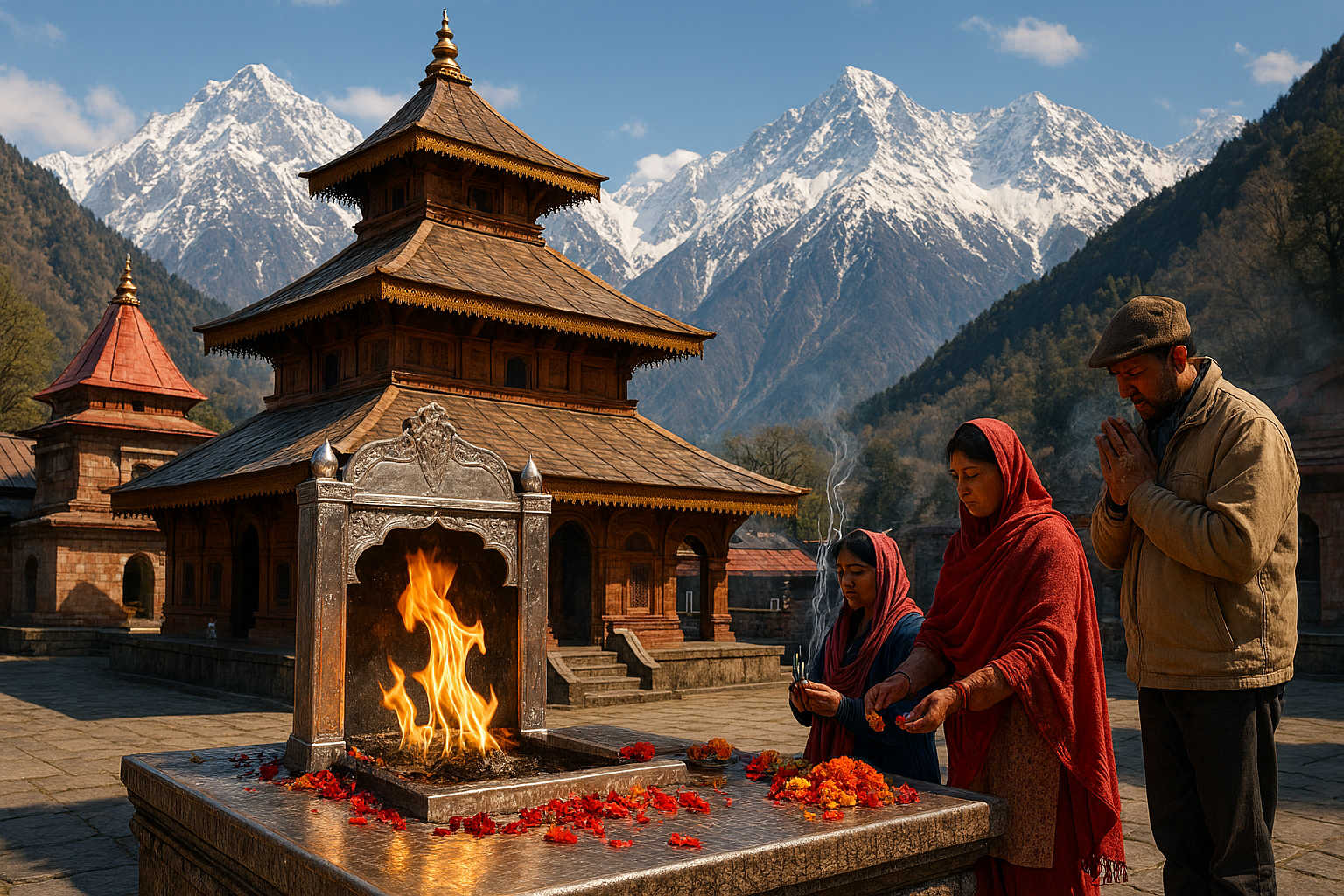
Jwalamukhi – The Temple of Eternal Flames
Amidst the scenic hills of Himachal Pradesh, in the serene Kangra Valley, lies a temple that defies the laws of nature—the Jwalamukhi Temple. Known as the Temple of Eternal Flames, this shrine is one of the most unique and revered Shakti Peethas in India. Instead of an idol, the divine presence here is symbolized by natural flames that have been burning continuously for centuries without any apparent source of fuel. This extraordinary phenomenon has made Jwalamukhi a spiritual and scientific wonder.
The Legend Behind Jwalamukhi
The origin of Jwalamukhi Temple is rooted in the ancient legend of Sati and Shiva. When Sati, the consort of Lord Shiva, sacrificed herself at her father Daksha’s Yajna, a furious Shiva carried her body across the universe, performing the Tandava dance of destruction. To calm him, Lord Vishnu dismembered Sati’s body with his Sudarshan Chakra. Her body parts fell at 51 locations, forming the Shakti Peethas.
At Jwalamukhi, it is believed that Sati’s tongue fell, and the eternal flames represent her fiery energy and speech. This is why the temple is also called the “Flame of the Goddess”, signifying the power of Shakti in its purest form.
The Eternal Flames: A Divine Phenomenon
Unlike traditional temples that house idols or statues, Jwalamukhi Temple enshrines seven to nine natural flames that emerge from the fissures of the rock inside the sanctum. These flames, known as Jwalas, represent different forms of Goddess Shakti, such as:
-
Maha Kali
-
Annapurna
-
Chandi
-
Hinglaj
-
Vindhya Vasini
-
Mahalakshmi
-
Saraswati
-
Ambika
-
Anjana
The flames burn on a silver-plated altar, and despite centuries passing, they have never extinguished, nor do they require any visible fuel source. This miraculous occurrence is considered the manifestation of the Goddess herself.
Historical and Cultural Significance
The Jwalamukhi Temple has been mentioned in several ancient texts and scriptures. According to Mahabharata, the Pandavas visited this holy site during their exile and offered prayers to the Goddess. The temple’s importance grew during the reign of various kings and rulers.
One of the most notable patrons was Maharaja Ranjit Singh, who visited the temple in the early 19th century and donated a gold umbrella for the Goddess. Later, Akbar, the Mughal emperor, also visited the shrine and was so moved by its sanctity that he offered a gold umbrella, which legend says turned into an alloy—a sign that divine power surpasses worldly grandeur.
Architectural Beauty
The Jwalamukhi Temple is built in the traditional North Indian style, featuring a gilded dome and intricate carvings. The sanctum houses the eternal flames emerging from natural crevices, which are encased in a silver-plated structure. Surrounding the main shrine are smaller temples dedicated to various deities, enhancing the spiritual ambiance.
Rituals and Worship
The temple follows elaborate rituals and offerings. Since there is no idol, devotees offer flowers, milk, coconut, and ghee to the flames. Blue flames are considered especially auspicious, believed to signify the presence of the Goddess in her most powerful form.
Special ceremonies take place during Navratri, when thousands of devotees throng the temple to seek blessings. The entire temple is beautifully decorated with lights and flowers, and devotional songs fill the air, creating an atmosphere charged with divine energy.
Scientific Curiosity Behind the Flames
Scientists have studied the phenomenon of the eternal flames and believe that natural gas emissions from the earth’s crust are the source. However, what remains unexplained is the consistency and unbroken existence of these flames for thousands of years, despite the absence of any external fuel source. This mystery adds to the temple’s spiritual significance, making it both a religious and geological marvel.
Festivals at Jwalamukhi
The temple witnesses grand celebrations during:
-
Navratri – Twice a year, during Chaitra (March–April) and Ashwin (September–October), devotees participate in special prayers and rituals.
-
Jwalamukhi Fair – Held during Navratri, it attracts pilgrims from all over the country for cultural programs, religious offerings, and spiritual discourses.
How to Reach Jwalamukhi Temple
-
By Air: The nearest airport is Gaggal Airport (Dharamshala), about 50 km away.
-
By Rail: Pathankot Railway Station is the closest major railhead, 120 km away.
-
By Road: The temple is well-connected by roads to cities like Kangra, Dharamshala, and Shimla.
Nearby Attractions
While visiting Jwalamukhi, you can explore:
-
Kangra Fort – A historic fort with stunning views.
-
Chamunda Devi Temple – Another important Shakti Peeth nearby.
-
Dharamshala and McLeod Ganj – Known for Tibetan culture and monasteries.
-
Baijnath Temple – A famous Shiva temple in the region.
Spiritual Significance
Jwalamukhi represents the unquenchable energy of the Goddess, a reminder that divine power is eternal and indestructible. Pilgrims believe that visiting this shrine fulfills wishes, removes negativity, and grants spiritual awakening. The eternal flames signify purity, strength, and infinite energy, making this temple a beacon of faith for millions.
Conclusion
The Jwalamukhi Temple is more than just a religious site—it is a mystery, a miracle, and a manifestation of divine power. The eternal flames, glowing bright for centuries, symbolize the indomitable force of Shakti that sustains the universe. Whether you visit as a devotee or a curious traveler, Jwalamukhi leaves an unforgettable impression on your heart and soul.