Kalighat – Shakti Peeth in Kolkata
According to Hindu mythology, Kalighat is one of the 51 Shakti Peethas, which are sacred sites associated with the legend of Sati and Shiva. When Sati, the consort of Lord Shiva, immolated herself during the sacrificial ritual of her father, King Daksha, Shiva was overcome with grief. Carrying her lifeless body, he performed the Tandava, the dance of destruction, threatening to destroy the universe.
To pacify him, Lord Vishnu used his Sudarshan Chakra to dismember Sati’s body into pieces, which fell at different locations across the Indian subcontinent. These spots became the Shakti Peethas. It is believed that at Kalighat, the toes of Sati’s right foot fell, making it an immensely significant pilgrimage site.
The Idol of Goddess Kali
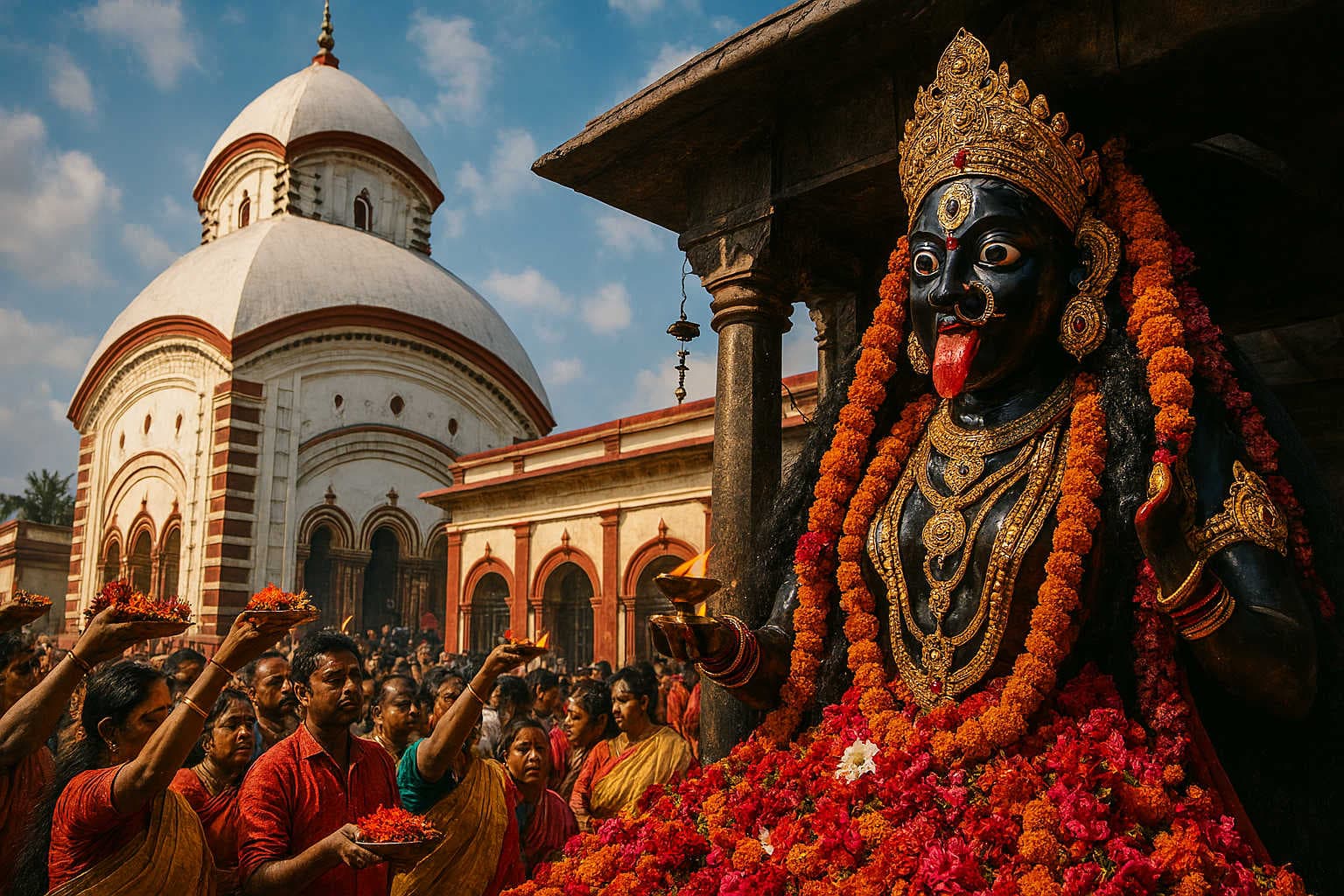
Unlike many temples where idols are crafted from stone or metal, the idol at Kalighat is unique. The black stone idol of Goddess Kali is adorned with a long protruding tongue, three golden eyes, and a garland of human heads, symbolizing the destruction of evil and the liberation of souls.
The temple represents Goddess Kali in her ferocious form—standing on the chest of Lord Shiva. She is depicted wearing gold ornaments, and her tongue is always highlighted with red, signifying her fiery nature and power.
Historical Significance
The present temple structure dates back to the early 19th century, though the site’s religious importance is much older, mentioned in texts and folklore centuries before. The Adi Ganga, an ancient channel of the river Ganges, once flowed near the temple, which is why it is called Kalighat—derived from “Kali” (the Goddess) and “Ghat” (riverbank steps).
Kalighat as a Major Pilgrimage Site
Kalighat is one of the four most important Kali temples in India, alongside Kalighat in Kolkata, Kamakhya in Assam, Dakshineswar in Kolkata, and Kalighat in Orissa. The temple is especially significant for devotees who follow the Shakti tradition.
Every day, thousands of pilgrims visit the shrine, but the crowd swells during Navratri, Diwali, and Kali Puja, when the temple is beautifully decorated with lights, flowers, and devotional music.
Unique Rituals and Offerings
The rituals at Kalighat are intense and deeply symbolic. Animal sacrifice, a controversial yet age-old tradition, is still practiced here in a regulated manner. Devotees offer red hibiscus flowers, vermilion (sindoor), sweets, and sarees to the Goddess. Lighting oil lamps and chanting mantras in the temple courtyard is believed to remove negative energies and grant spiritual strength.
Spiritual Experience at Kalighat
Stepping into the temple premises, one can feel the powerful vibrations of faith and devotion. The air is filled with the sound of bells, the chanting of “Jai Maa Kali”, and the fragrance of incense. Many devotees testify to experiencing a deep sense of peace and empowerment after seeking the blessings of Maa Kali here.
Festivals at Kalighat
The temple comes alive during major Hindu festivals, particularly:
-
Kali Puja – Celebrated on the new moon night of Diwali, dedicated to Goddess Kali.
-
Durga Puja – One of the biggest festivals in Bengal, also includes the worship of Kali.
-
Poila Boishakh – Bengali New Year celebrations see special prayers at the temple.
During these times, the temple is illuminated with thousands of lights, and elaborate rituals are performed by priests.
How to Reach Kalighat Temple
-
By Air: Netaji Subhas Chandra Bose International Airport is the nearest, about 25 km away.
-
By Train: Howrah and Sealdah are the main railway stations connected to major cities.
-
By Metro: Kalighat Metro Station is the closest, making it very convenient for visitors.
-
By Road: The temple is well-connected by buses, taxis, and auto-rickshaws across Kolkata.
Nearby Attractions
While visiting Kalighat, you can also explore:
-
Kalighat Art Market – Famous for traditional Kalighat paintings.
-
Birla Temple – A modern marvel of marble architecture.
-
Victoria Memorial – A grand monument reflecting Kolkata’s colonial heritage.
-
Dakshineswar Kali Temple – Another major shrine dedicated to Goddess Kali, located on the banks of the Ganges.
Significance of Kalighat in Spiritual Life
Kalighat represents the fierce yet motherly form of Shakti, reminding devotees that the Goddess protects her children but also destroys evil forces. Worshipping here is believed to remove obstacles, grant prosperity, and bestow courage. For spiritual seekers, it is a place where divine energy is palpable and transformative.
Conclusion
Kalighat is not just a temple; it is a symbol of Kolkata’s soul, where devotion meets tradition. Visiting this Shakti Peeth connects you to the primal energy of the universe—a reminder of the eternal power of the Divine Mother who nurtures and protects all creation. Whether you are a believer or a traveler seeking cultural depth, Kalighat is an experience that stays with you forever.