Vaishno Devi – Journey to the Goddess Cave
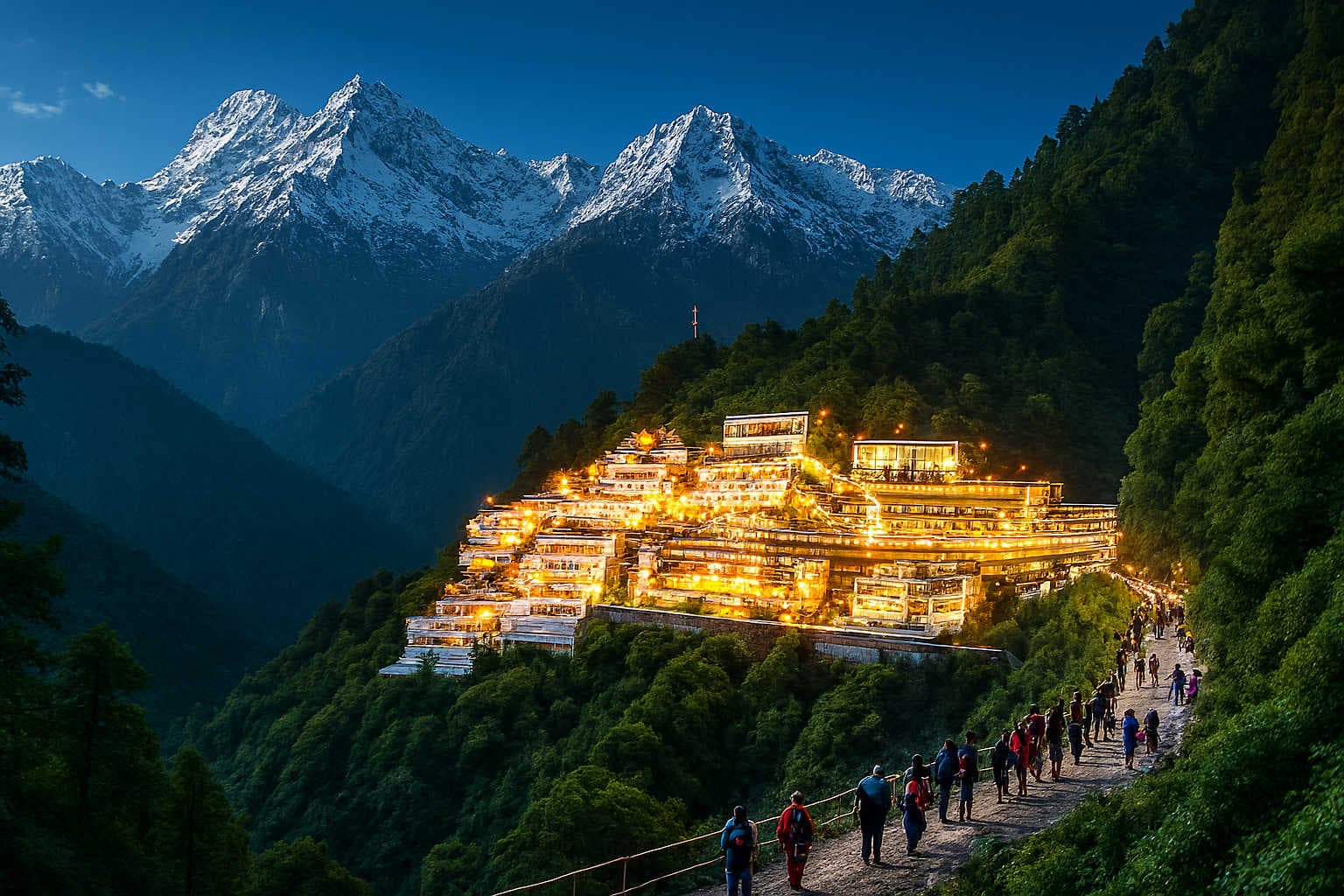
High in the Trikuta Hills of Jammu and Kashmir, at an altitude of about 5,200 feet, lies the sacred cave shrine of Mata Vaishno Devi. This revered pilgrimage attracts millions of devotees every year, making it one of the most visited spiritual destinations in India. Known as the abode of the Mother Goddess, Vaishno Devi is considered the manifestation of the combined energies of Maha Kali, Maha Lakshmi, and Maha Saraswati.
For devotees, the Vaishno Devi Yatra is more than a journey—it is a spiritual experience, a test of faith, endurance, and devotion.
The Legend of Mata Vaishno Devi
According to Hindu mythology, Mata Vaishno Devi was born as Vaishnavi, a divine incarnation created from the collective energy of the three supreme goddesses to protect the earth from evil forces. She was destined to live a life of purity, devotion, and meditation. Vaishnavi vowed to marry only when Lord Vishnu, her eternal consort, would take his Kalki avatar.
During her penance in the Trikuta Hills, she was pursued by Bhairon Nath, a tantric who desired her. To escape him, she fled into the mountains, leaving behind imprints of her feet at various points along the path. Finally, she took refuge in a cave and meditated for nine months. When Bhairon Nath discovered her hiding place and attacked, the Goddess manifested her true form and beheaded him outside the cave. His soul was granted liberation, and a temple was built in his honor near the shrine.
The Holy Cave and the Three Pindis
The sanctum of Vaishno Devi does not have an idol but instead houses three naturally formed rock structures called Pindis, representing the three goddesses:
-
Maha Kali – symbolizing strength and destruction of evil.
-
Maha Lakshmi – representing wealth and prosperity.
-
Maha Saraswati – signifying knowledge and wisdom.
These Pindis are continuously bathed by a natural stream of water, symbolizing purity and divine energy.
The Vaishno Devi Yatra – A Test of Faith
The journey to Vaishno Devi begins at Katra, a small town at the foothills of Trikuta. The trek to the holy cave is about 12 kilometers uphill. Pilgrims can undertake the yatra by:
-
Walking on the paved path.
-
Ponies or palanquins, for those who cannot walk.
-
Helicopter services, reducing the journey to just a few minutes.
The main stops along the route include:
-
Ban Ganga – where devotees take a holy dip before continuing.
-
Charan Paduka – believed to have the footprints of the Goddess.
-
Adhkuwari – a cave where Mata meditated for nine months.
Finally, after the long climb, devotees reach the Bhawan, where the sacred cave resides. The darshan inside the cave fills the heart with peace and divine bliss.
Spiritual Significance of the Journey
The pilgrimage is not just physical but deeply spiritual. It is believed that Mata herself calls her devotees, and only those who receive her divine summons can complete the yatra. Every year, millions of devotees undertake this journey, chanting “Jai Mata Di”, feeling the divine energy in the mountains.
Completing the yatra is considered highly auspicious, bringing prosperity, happiness, and spiritual awakening.
Festivals and Special Occasions
The temple sees an extraordinary rush during Navratri, the nine-day festival dedicated to the Goddess. The entire Bhawan is decorated with flowers and lights, and special rituals are performed. Devotees believe visiting Vaishno Devi during Navratri multiplies the blessings.
Modern Facilities for Devotees
The Shri Mata Vaishno Devi Shrine Board has ensured excellent facilities for pilgrims, including:
-
Comfortable accommodation and resting points along the path.
-
Medical aid, clean drinking water, and food stalls.
-
Ropeway services for reaching Bhairon Nath temple.
Despite modernization, the sanctity of the yatra remains untouched, preserving its spiritual essence.
How to Reach Vaishno Devi
-
By Air: Jammu Airport is the nearest, about 50 km from Katra.
-
By Train: Shri Mata Vaishno Devi Katra Railway Station connects major cities.
-
By Road: Well-connected by buses and taxis from Jammu and other towns.
From Katra, devotees start their trek, guided by faith and devotion.
The Bhairon Nath Temple
After visiting the holy cave, pilgrims traditionally proceed to the Bhairon Nath Temple, located 2.5 km above the main shrine. It is believed that the pilgrimage is incomplete without paying homage here, as Mata had granted liberation to Bhairon Nath and blessed this site.
Significance of Vaishno Devi
Vaishno Devi represents Shakti, the divine feminine power that sustains the universe. The journey signifies surrendering one’s ego and seeking blessings for a better life. Many devotees share miraculous experiences, reinforcing the belief that Mata fulfills the wishes of those who visit her with pure devotion.
Conclusion
The journey to Vaishno Devi is not just about reaching a destination—it’s about the spiritual transformation along the way. Every step taken on the mountain path echoes with faith, every chant of “Jai Mata Di” reverberates with devotion, and every glimpse of the holy cave fills the heart with divine bliss. Visiting Vaishno Devi is an experience that stays with you forever, reminding you of the eternal power of the Mother Goddess who protects and blesses her children.