Kamakhya Temple – The Yoni Shakti Shrine
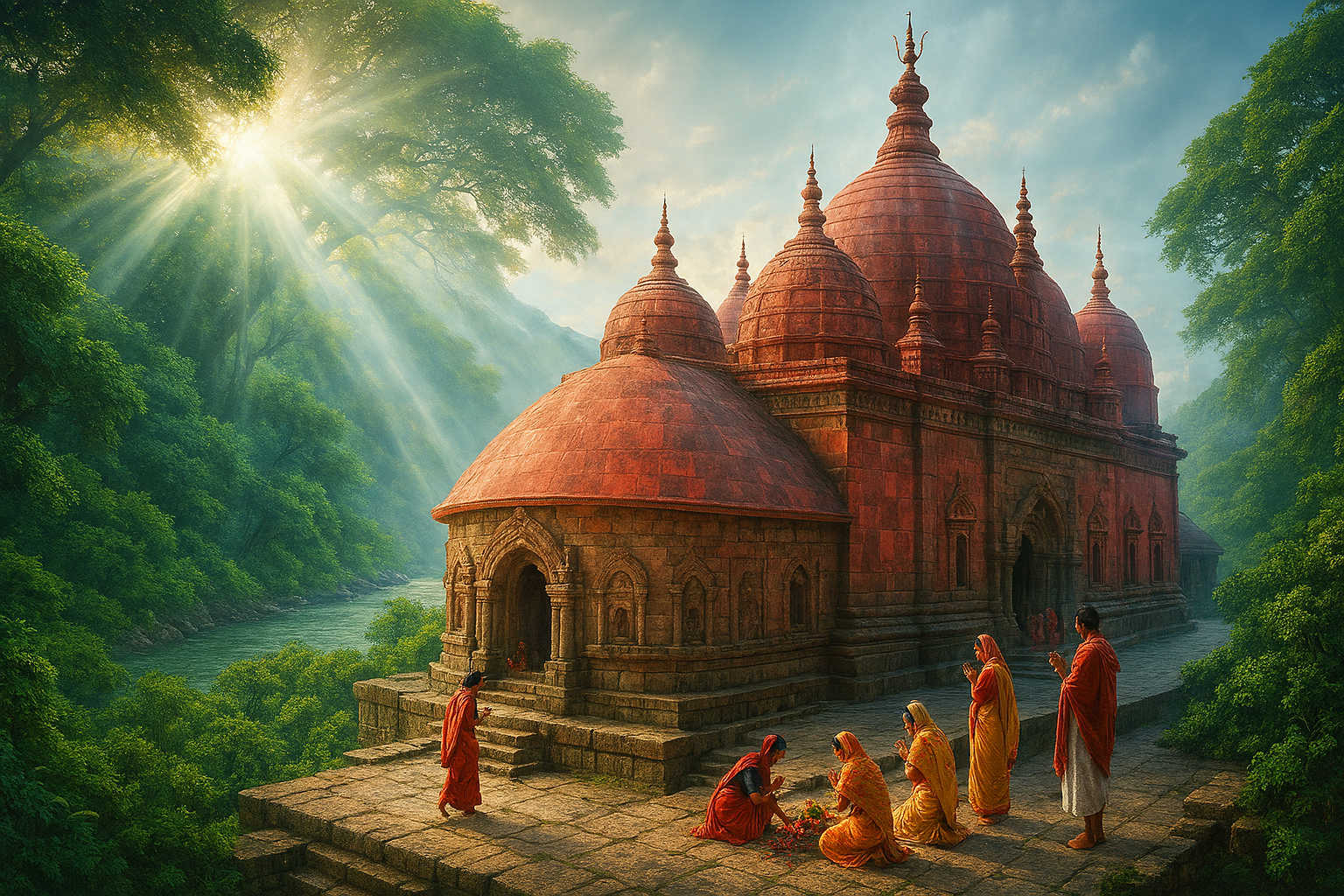
Nestled atop the Nilachal Hill in Guwahati, Assam, overlooking the mighty Brahmaputra River, lies one of the most revered and mysterious temples of India – the Kamakhya Temple. It is not just a temple; it is a symbol of fertility, creation, and divine feminine energy. Among the 51 Shakti Peethas, Kamakhya holds a unique and profound significance, for it is believed to be the place where the yoni (womb) of Goddess Sati fell, after her body was dismembered by Lord Vishnu’s Sudarshana Chakra to calm Lord Shiva’s rage.
This sacred shrine is considered the seat of Shakti, the source of life and the ultimate creative power of the universe.
The Legend Behind Kamakhya Temple
The story of Kamakhya is rooted in the eternal love of Sati and Shiva. When Sati immolated herself in the sacrificial fire during Daksha’s yajna, Shiva’s grief shook the universe. In his sorrow, Shiva carried Sati’s body and performed the Tandava, the dance of cosmic destruction. To prevent the annihilation of the cosmos, Vishnu cut Sati’s body into pieces. These fragments fell at various places, forming the Shakti Peethas.
Kamakhya marks the spot where Sati’s yoni (female reproductive organ) fell, making it a shrine that represents fertility, creation, and the essence of womanhood. The temple thus became a sacred site for those seeking prosperity, fertility, and spiritual liberation.
The Mystery of the Natural Yoni Stone
Unlike most temples where idols are worshipped, Kamakhya does not house a deity in human form. Instead, the sanctum of the temple enshrines a natural rock cleft shaped like a yoni, covered with a red cloth and continuously bathed by an underground spring. This sacred spot symbolizes the creative power of the Goddess.
Devotees believe that this eternal spring signifies the ever-flowing life energy of Shakti, and touching the water is considered highly auspicious.
Ambubachi Mela – The Festival of Fertility
One of the most unique aspects of Kamakhya Temple is the Ambubachi Mela, held in June during the monsoon season. This festival celebrates the annual menstruation of Goddess Kamakhya, symbolizing her fertility and creative energy. During these three days:
-
The temple remains closed, as it is believed the Goddess is resting.
-
Devotees from across India gather to observe rituals and receive blessings.
-
On the fourth day, the temple reopens with grand celebrations, marking a renewal of life energy.
This festival attracts thousands of tantrics, sadhus, and devotees, as Kamakhya is also considered the epicenter of Tantric worship in India.
Tantric Significance of Kamakhya
Kamakhya Temple is regarded as the most important Tantric Shakti Peetha in the country. Tantric practitioners believe that the temple is a gateway to mystical knowledge and liberation. The temple complex includes several smaller shrines dedicated to the Dasha Mahavidyas (ten forms of Goddess Shakti), making it a center of intense spiritual practices.
The rituals performed here often involve secret Tantric rites, aimed at attaining spiritual power, prosperity, and liberation.
Architectural Beauty of Kamakhya Temple
The Kamakhya Temple, as seen today, was reconstructed in the 17th century by the Ahom kings after its destruction by invaders. It exhibits a unique blend of Nagara and Saracenic architecture, featuring:
-
A beehive-shaped dome with intricate carvings.
-
Sculptures of gods, goddesses, and mythical creatures adorning the walls.
-
Multiple subsidiary shrines within the temple complex.
Surrounded by lush greenery and scenic beauty, the temple offers a serene and spiritual experience for visitors.
Spiritual Beliefs and Practices
Kamakhya is regarded as a wish-fulfilling temple, especially for those seeking:
-
Fertility and progeny.
-
Marital harmony and love.
-
Success and prosperity.
Devotees offer red clothes, sindoor (vermilion), flowers, and coconuts to the Goddess. Animal sacrifice is still practiced here as part of ancient traditions, though symbolic offerings are becoming more common among devotees.
How to Reach Kamakhya Temple
-
Location: Nilachal Hill, Guwahati, Assam.
-
Nearest Airport: Lokpriya Gopinath Bordoloi International Airport (20 km).
-
Nearest Railway Station: Kamakhya Railway Station (8 km).
-
Best Time to Visit: Throughout the year, especially during Ambubachi Mela and Navratri.
The Inner Meaning of Kamakhya
The Kamakhya Temple is more than a physical structure – it is a philosophical truth. The worship of the yoni represents the acceptance of life as sacred, honoring the feminine principle that creates and sustains existence. It teaches us that the Divine Feminine is the source of all energy, and connecting with her means connecting with life itself.
Conclusion
Kamakhya Temple stands as a living testimony to the power of Shakti, the creative force of the cosmos. It is not just a place for religious rituals; it is a pilgrimage for seekers of truth, devotees of the Goddess, and those who understand the sanctity of life. Visiting Kamakhya is an experience that touches the soul, reminding us of the union of the physical and the spiritual, the seen and the unseen.
When you bow your head in Kamakhya, you bow before the primordial source of creation, the Mother who gives birth to the universe and sustains it with her boundless energy.