The 51 Shakti Peethas – Body Parts of Sati
Hinduism is a faith rich in symbolism, mythology, and divine stories that embody eternal truths. Among the most sacred places of worship in India are the Shakti Peethas – holy shrines dedicated to Goddess Shakti, the Divine Mother. These shrines are not just centers of devotion but are also tied to one of the most powerful stories in Hindu mythology – the story of Sati and Lord Shiva.
The Origin of Shakti Peethas
The story begins with Sati, the daughter of King Daksha and the first consort of Lord Shiva. Sati loved Shiva deeply and chose him as her husband, despite her father’s disapproval. Daksha considered Shiva unworthy – a hermit who roamed cremation grounds, smeared in ash, wearing serpents as ornaments. His ego could not accept Shiva as his son-in-law.
To insult Shiva, Daksha organized a grand yajna (sacrificial ritual) and invited all the gods and goddesses, deliberately excluding Shiva and Sati. Sati, feeling humiliated by this exclusion, insisted on attending the yajna despite Shiva’s warnings. At the ceremony, Daksha mocked and insulted Shiva in front of all.
Unable to bear the disrespect towards her beloved, Sati was overwhelmed with grief and anger. She declared:
"I cannot bear the insult of my Lord. I renounce this body that was born from you."
With these words, Sati self-immolated in the sacrificial fire, leaving Shiva heartbroken and enraged.
Shiva’s Cosmic Dance and the Scattered Body of Sati
When Shiva learned of Sati’s death, his grief turned into fury. In his rage, he lifted Sati’s lifeless body and began the Tandava, the dance of destruction, threatening to annihilate the cosmos. The gods, alarmed by this, sought help from Lord Vishnu.
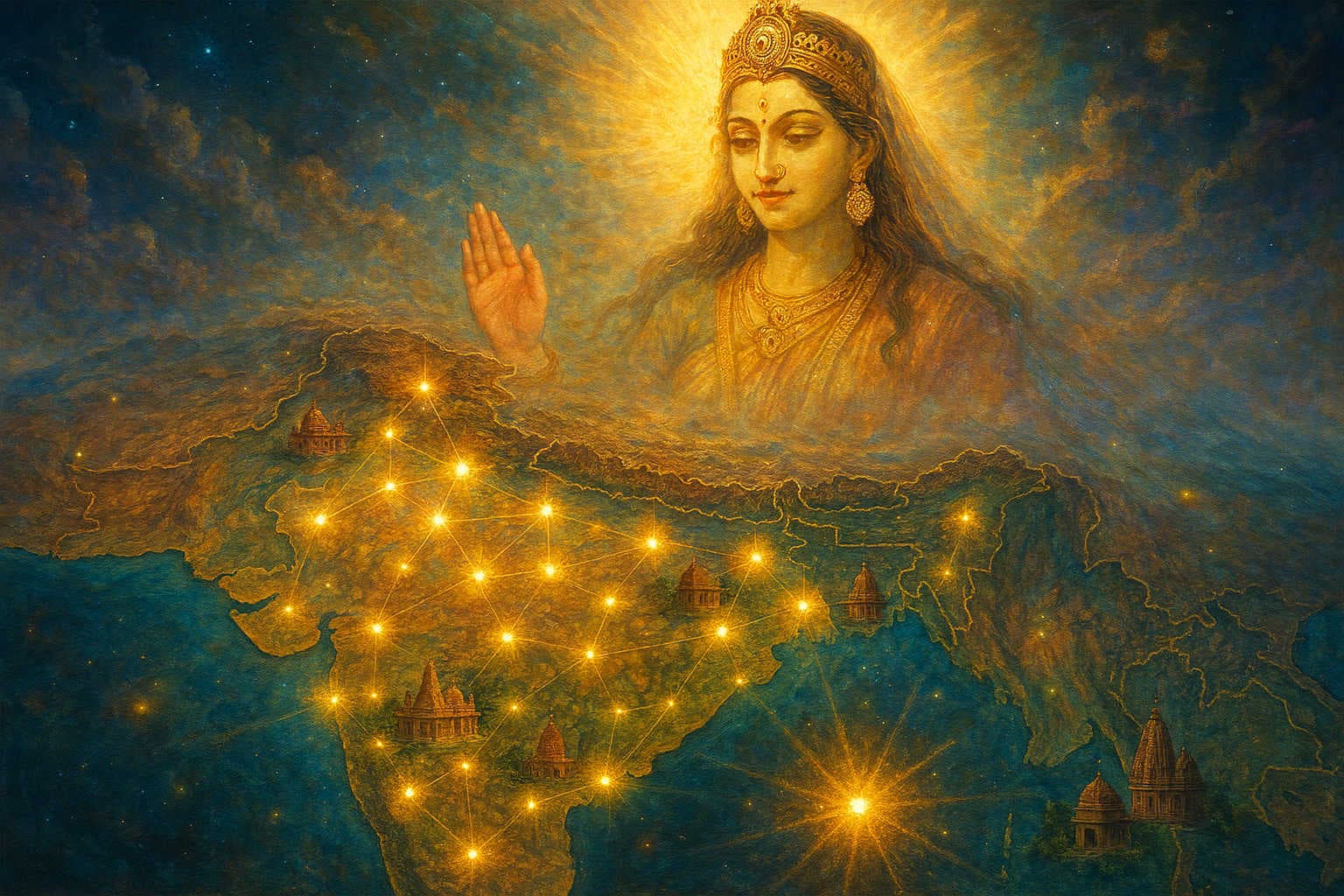
To pacify Shiva and restore cosmic order, Vishnu used his Sudarshana Chakra to cut Sati’s body into pieces. These pieces fell at different places across the Indian subcontinent, and each site where a piece landed became a Shakti Peetha – a sacred shrine of the Goddess.
The 51 Shakti Peethas – What Fell Where?
Tradition mentions 51 Shakti Peethas, each associated with a specific body part, ornament, or garment of Sati. These holy spots are spread across India, Nepal, Bangladesh, Pakistan, Tibet, and Sri Lanka. Every Shakti Peetha has:
-
A manifestation of Goddess Shakti (in various forms like Kamakhya, Kali, Bhavani, Durga, etc.)
-
A Bhairava (form of Shiva) as her protector.
Some of the most famous Shakti Peethas include:
-
Kamakhya Devi – Assam (Yoni fell here)
-
Kalighat Kali Temple – Kolkata, West Bengal
-
Vishalakshi Temple – Varanasi, Uttar Pradesh
-
Jwalamukhi – Himachal Pradesh
-
Maa Tarapith – West Bengal
-
Hinglaj Mata – Pakistan (Head)
-
Naina Devi – Himachal Pradesh (Eyes)
-
Kanchi Kamakshi – Tamil Nadu
Each Peetha vibrates with immense spiritual energy, and devotees believe that visiting them brings blessings, removes obstacles, and grants spiritual upliftment.
Spiritual Significance of the Shakti Peethas
The Shakti Peethas represent the indestructible feminine energy that sustains creation. They remind us that the Goddess is present everywhere – in the earth beneath our feet, the sky above, and within our own being. For devotees of Shakti, visiting these shrines is more than a ritual; it is a journey to unite with the Divine Mother.
The Connection of Shiva and Shakti
The story of the Shakti Peethas symbolizes the eternal truth that Shiva and Shakti are inseparable. Without Shakti, Shiva is inert; without Shiva, Shakti has no foundation. The scattered body of Sati across the land signifies that the Divine Feminine pervades every corner of existence.
Where Are the 51 Shakti Peethas Located?
Here are some major regions where these sacred sites are located:
-
Northern India – Himachal Pradesh, Uttarakhand, Jammu & Kashmir
-
Eastern India – West Bengal, Assam, Bihar, Odisha
-
Southern India – Tamil Nadu, Andhra Pradesh, Karnataka
-
Western India – Rajasthan, Gujarat, Maharashtra
-
Outside India – Bangladesh, Nepal, Pakistan, Sri Lanka, Tibet
Important Pilgrimage Practices
-
Devotees usually perform Shakti Peetha Yatras, visiting multiple Peethas in one trip.
-
Navratri is the most auspicious time to visit these temples.
-
Offerings include red clothes, sindoor, flowers, and sweets to please the Goddess.
Deeper Meaning of the Legend
The tale of the Shakti Peethas teaches us profound lessons:
-
Unconditional devotion and sacrifice – Sati’s love for Shiva was absolute.
-
The futility of ego – Daksha’s arrogance led to catastrophe.
-
The omnipresence of Shakti – The Goddess exists everywhere, protecting and nurturing all beings.
Conclusion
The 51 Shakti Peethas are not just temples; they are power centers of divine feminine energy, connecting us to the essence of life. From the snow-clad Himalayas to the southern tip of India, these shrines celebrate the glory of Shakti, the Mother of the Universe. For devotees, visiting these sacred sites is a path to liberation, devotion, and inner transformation.
When you stand before a Shakti Peetha, you are not just in a temple—you are in the presence of Adi Shakti, the primordial power that creates, sustains, and dissolves the cosmos.