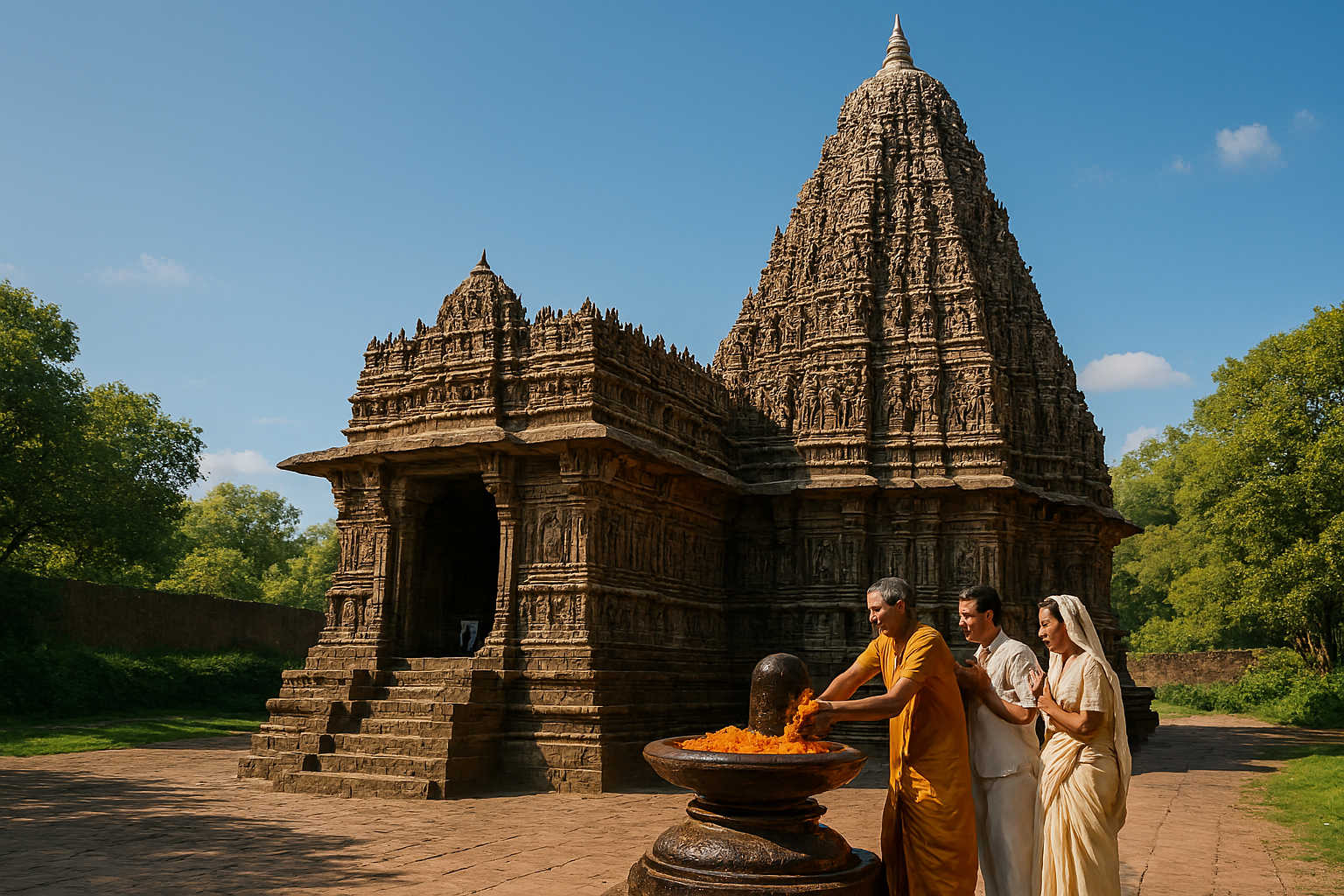
Grishneshwar – Near Ellora, the Smallest Jyotirlinga
In the heart of Maharashtra, near the world-famous Ellora Caves, lies the sacred Grishneshwar Jyotirlinga, the twelfth and smallest of the twelve Jyotirlingas of Lord Shiva. Despite its modest size, this temple is steeped in history, spirituality, and devotion. For thousands of years, it has been a beacon of faith for devotees who travel from across the country to seek Lord Shiva’s blessings.
Where is Grishneshwar Located?
The Grishneshwar temple is located in Verul village, about 30 km from Aurangabad and just 1 km from the Ellora Caves, a UNESCO World Heritage Site. The temple’s proximity to Ellora makes it a perfect combination of spiritual pilgrimage and cultural exploration. It is also very close to the Daulatabad Fort and Bibi Ka Maqbara, making the region rich in historical attractions.
The Significance of Grishneshwar Jyotirlinga
Grishneshwar, meaning “Lord of Compassion”, is revered as the twelfth Jyotirlinga in the sacred list of twelve. Devotees believe that visiting all twelve Jyotirlingas grants moksha (liberation), and Grishneshwar marks the completion of this spiritual journey.
Though the temple is smaller compared to other Jyotirlingas, it is considered extremely powerful. Pilgrims believe that worshipping here removes negativity and fills life with peace, prosperity, and divine grace.
The Legend of Grishneshwar
According to Shiva Purana, the story of Grishneshwar revolves around Ghushma, a devout woman who regularly made lingams from clay and worshipped them with great devotion. She lived a peaceful life with her husband Sudharm and son. However, fate took a cruel turn when her jealous sister-in-law killed Ghushma’s son and threw his body into a lake.
Despite this heartbreaking tragedy, Ghushma continued her daily worship of Lord Shiva without hatred or anger. Pleased with her unwavering devotion, Lord Shiva appeared before her, restored her son’s life, and blessed her with a boon. She requested Shiva to stay there permanently to bless devotees. The Lord agreed, and the Jyotirlinga was established, named Grishneshwar after Ghushma, also known as Grishna.
Why is it Called the Smallest Jyotirlinga?
The temple is relatively modest compared to other grand Jyotirlinga shrines like Somnath or Rameshwaram, which is why it is often called the smallest Jyotirlinga. However, its spiritual significance and architectural beauty are immense, making it an essential pilgrimage site.
Temple Architecture – A Marvel of Stone Craftsmanship
The current Grishneshwar temple was built in the 18th century by Queen Ahilyabai Holkar, a great patron of Hindu temples. The temple is a stunning example of Maratha temple architecture, featuring:
-
A 50-meter-high shikhara (spire) with intricate carvings depicting scenes from Hindu scriptures.
-
Sculptures of divine beings, animals, and floral motifs adorning the walls.
-
A beautiful Nandi Mandap (hall with a statue of Nandi, the bull of Lord Shiva).
-
The sanctum housing the swayambhu (self-manifested) Shiva Lingam.
Unlike some other temples, men are allowed to perform abhisheka (ritual bathing) of the Lingam after removing their upper garments, as per tradition.
Spiritual Practices and Beliefs
-
Worshipping Grishneshwar Jyotirlinga is said to remove sins and grant happiness in family life.
-
The temple attracts devotees especially during Shravan month and Mahashivratri, when special rituals and night-long prayers are held.
-
Pilgrims often combine their visit with a darshan of Ellora Caves, making it both a spiritual and cultural experience.
Festivals Celebrated at Grishneshwar Temple
-
Mahashivratri – The grand festival of Lord Shiva with special pujas, abhishekams, and bhajans.
-
Shravan Maas – The holy month when thousands of devotees flock to the temple for daily worship.
How to Reach Grishneshwar
-
By Road: The temple is well-connected to Aurangabad (30 km) by road.
-
By Rail: Aurangabad railway station is the nearest major railhead.
-
By Air: Aurangabad Airport is the closest airport, about 35 km away.
Best Time to Visit
The best time to visit Grishneshwar is between October and March, when the weather is pleasant. Monsoon and winter enhance the beauty of the surrounding hills and Ellora caves.
Nearby Attractions
-
Ellora Caves – A UNESCO World Heritage Site featuring 34 rock-cut caves, including the famous Kailasa temple.
-
Daulatabad Fort – A historic hilltop fort.
-
Bibi Ka Maqbara – Known as the “Mini Taj Mahal.”
-
Panchakki – A 17th-century water mill with historical significance.
The Inner Meaning – Devotion and Forgiveness
The story of Ghushma teaches us that true devotion lies in patience, forgiveness, and unwavering faith. Even when faced with grief, she chose devotion over anger, earning the eternal presence of Lord Shiva.
Conclusion
Grishneshwar Jyotirlinga may be the smallest among the twelve, but its spiritual power and serene atmosphere leave a lasting impression on every devotee. Visiting this temple near Ellora is not just a religious ritual but a journey into India’s glorious past and divine traditions. The chants of “Om Namah Shivaya” echoing in the temple premises, combined with the artistic grandeur of Ellora nearby, make Grishneshwar an unforgettable pilgrimage.