Mallikarjuna – Shiva and Parvati's Divine Abode
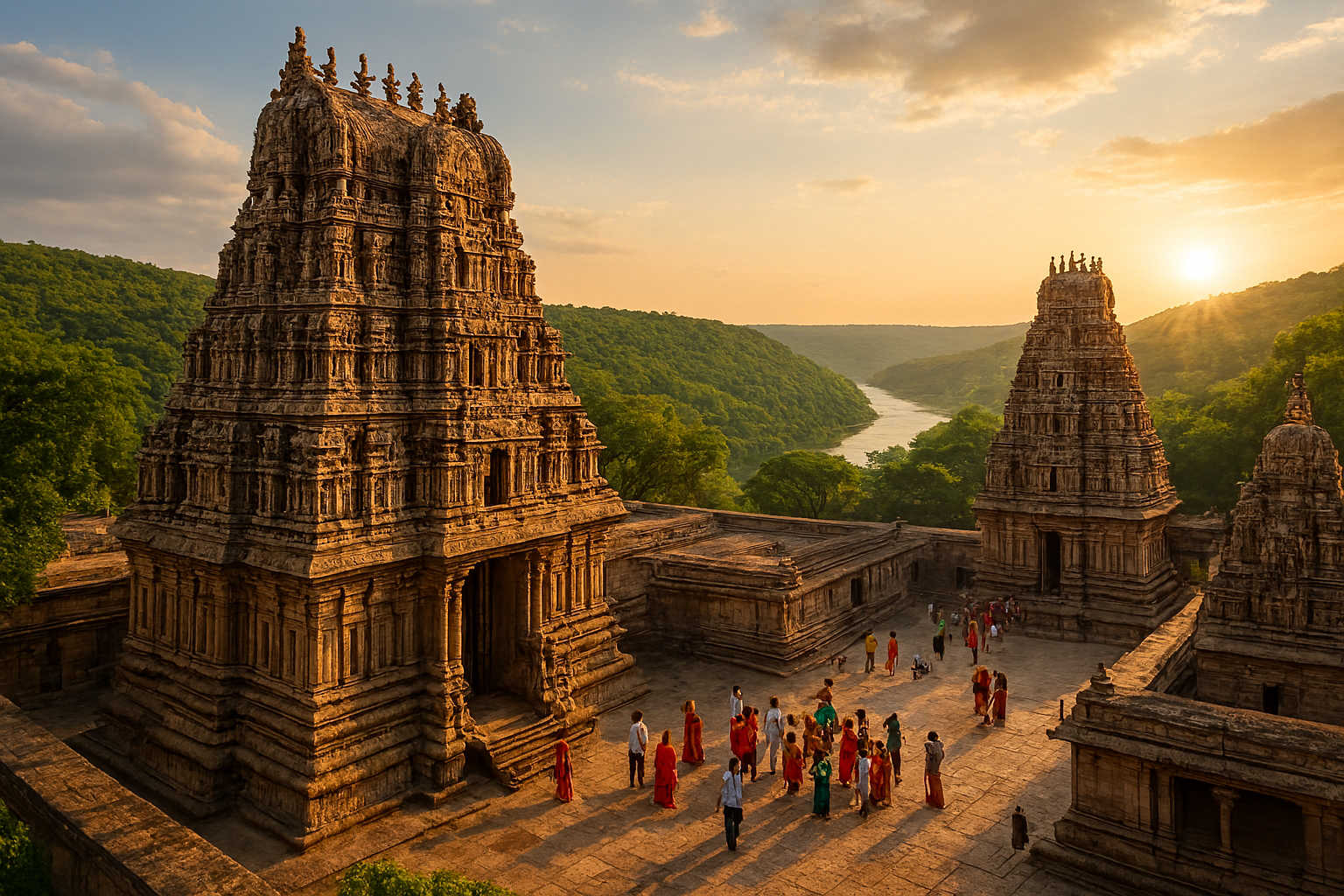
Perched on the scenic Srisailam hills in Andhra Pradesh lies one of the most revered Jyotirlingas of Lord Shiva—Mallikarjuna, also known as the divine abode of Shiva and Parvati. Among the twelve sacred Jyotirlingas, Mallikarjuna holds a special place because it symbolizes the eternal union of Lord Shiva and Goddess Parvati. Surrounded by lush forests and the flowing Krishna River, this temple is not only a spiritual destination but also a masterpiece of ancient architecture and culture.
Where is Mallikarjuna Jyotirlinga Located?
The Mallikarjuna temple is located on the Nallamala Hills at Srisailam, about 215 km from Kurnool in Andhra Pradesh. The temple stands at an elevation of 457 meters, overlooking the majestic Krishna River, making it a serene and picturesque pilgrimage spot.
The Significance of Mallikarjuna Jyotirlinga
Mallikarjuna Jyotirlinga is one of the twelve Jyotirlingas of Lord Shiva and also one of the 18 Shakti Peethas of Goddess Parvati. This dual significance makes the temple a unique and powerful center of devotion, where the masculine and feminine energies of the universe are worshipped together.
The presiding deities are Lord Mallikarjuna (Shiva) and Goddess Bhramaramba (Parvati). The temple thus represents divine harmony, love, and the union of two cosmic principles.
The Legend of Mallikarjuna Jyotirlinga
The story of Mallikarjuna is narrated in the Shiva Purana. According to legend, Shiva and Parvati’s sons, Ganesha and Kartikeya, once had a disagreement. The dispute arose when they were asked to circle the world to decide who would marry first. Kartikeya set out on his peacock to circle the world, while Ganesha, using his wisdom, circled his parents, considering them his entire universe.
Pleased by Ganesha’s devotion, Shiva and Parvati declared him the winner and married him first. When Kartikeya returned and learned about this, he felt betrayed and left for the Krauncha Mountain. Unable to bear separation from their son, Shiva and Parvati went to the mountain and stayed there. It is said that the place where they resided became Srisailam, and the Jyotirlinga there is known as Mallikarjuna.
Why the Name Mallikarjuna?
The name Mallikarjuna is derived from two words:
-
Mallika – meaning jasmine flowers, which were offered by Goddess Parvati during worship.
-
Arjuna – another name for Lord Shiva.
Thus, Mallikarjuna signifies the divine love and devotion of Parvati toward Shiva.
The Temple Architecture – A Glimpse of Ancient Grandeur
The Mallikarjuna temple showcases the Dravidian architectural style with towering gopurams (gateway towers), intricate carvings, and sprawling courtyards. The main sanctum houses the swayambhu (self-manifested) Shiva Lingam, adorned with flowers, sacred ash, and lamps. The temple complex also includes shrines of Goddess Bhramaramba, Kartikeya, and several other deities.
One of the highlights of the temple is its massive gateways decorated with exquisite sculptures depicting scenes from Hindu mythology. The beauty and spiritual energy of the temple attract millions of devotees every year.
Spiritual Beliefs and Significance
-
Worshipping Mallikarjuna Jyotirlinga is believed to remove sins and grant liberation (moksha).
-
Married couples often visit the temple to seek blessings for harmony and prosperity in their relationship.
-
Devotees believe that a pilgrimage to Mallikarjuna ensures protection from negative forces and fulfillment of desires.
Festivals at Mallikarjuna Temple
-
Mahashivratri – The grandest celebration, marked by special rituals, night-long prayers, and vibrant cultural programs.
-
Karthika Masam – A month dedicated to Lord Shiva, when thousands of devotees light lamps and offer prayers.
-
Brahmotsavam – A major annual festival celebrated with great enthusiasm and devotional fervor.
How to Reach Mallikarjuna
-
By Road: Well-connected by buses and taxis from major cities like Hyderabad (215 km) and Kurnool (180 km).
-
By Rail: The nearest railway station is Markapur Road (85 km away).
-
By Air: The closest airport is Rajiv Gandhi International Airport in Hyderabad.
Best Time to Visit
The ideal time to visit Mallikarjuna is between October and March, when the weather is pleasant for temple visits and exploring the scenic surroundings.
Nearby Attractions
-
Srisailam Dam – A massive dam on the Krishna River, offering stunning views.
-
Akkamahadevi Caves – Ancient caves associated with spiritual practices.
-
Sakshi Ganapati Temple – A sacred shrine visited by pilgrims before entering the Mallikarjuna temple.
The Inner Meaning – Divine Union of Shiva and Parvati
The story of Mallikarjuna reflects the eternal love and unity of Shiva and Parvati. It reminds us that divine grace is not just about worship but also about understanding harmony in relationships, humility, and unconditional devotion.
Conclusion
Mallikarjuna Jyotirlinga at Srisailam is more than a temple—it is a sacred space where nature, spirituality, and divine love converge. Standing in the temple’s majestic corridors, listening to the chants of “Om Namah Shivaya,” and witnessing the sacred union of Shiva and Parvati is an experience that stays with you forever.
A pilgrimage to Mallikarjuna is not just about seeking blessings; it is about connecting with the timeless energy of faith, devotion, and universal harmony.