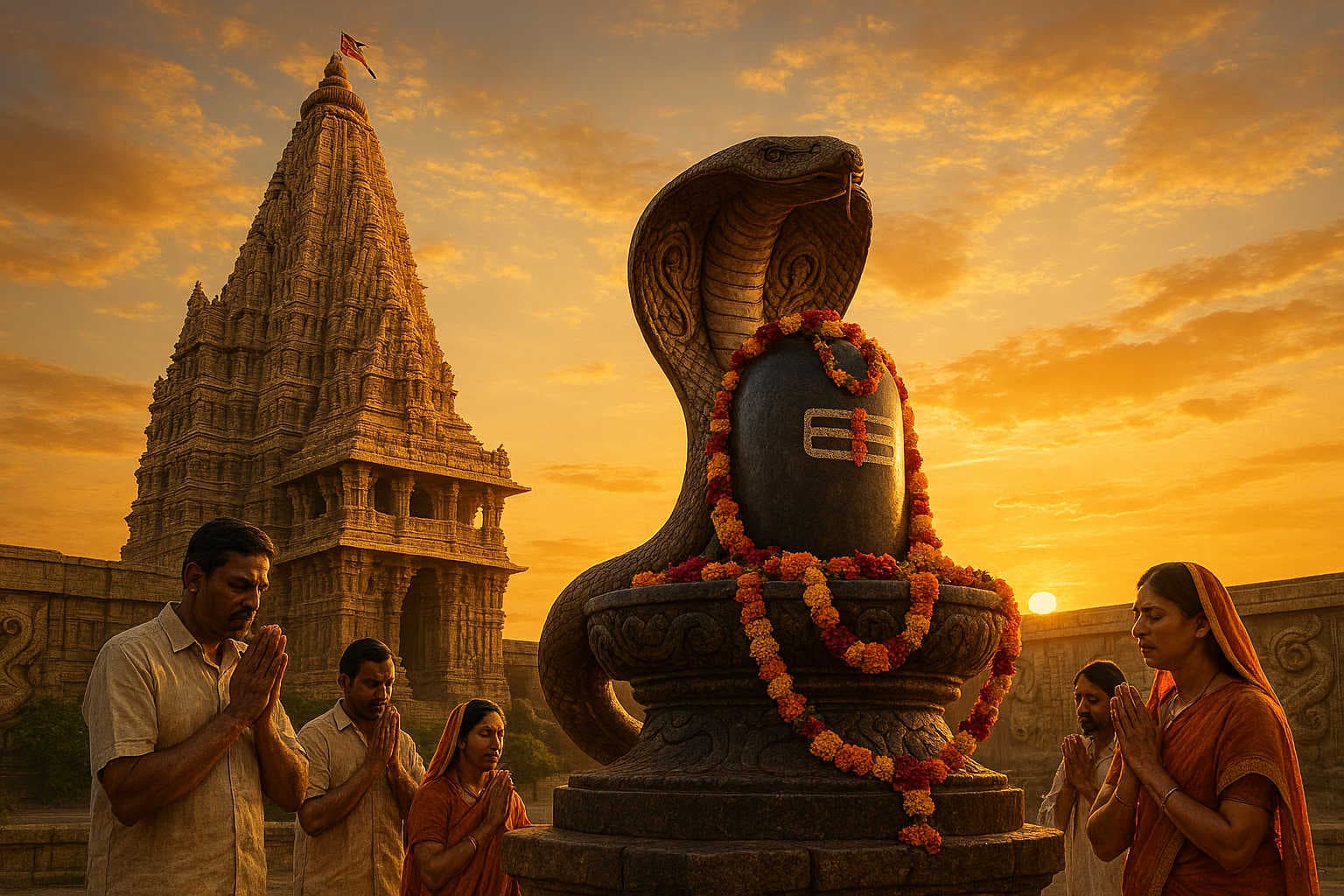
Nageshwar – Protector from Poisons
Among the twelve sacred Jyotirlingas of Lord Shiva, Nageshwar stands as a divine symbol of protection and strength. Situated near Dwarka in Gujarat, this holy shrine is revered for its connection to the serpent (Naga) and its significance as a protector from poison, both physical and spiritual. Nageshwar Jyotirlinga is not just a temple; it is a beacon of faith for millions of devotees who seek Lord Shiva’s blessings for courage, healing, and liberation from fear.
Where is Nageshwar Located?
Nageshwar Jyotirlinga is located about 17 km from Dwarka, the legendary city associated with Lord Krishna. The temple stands near the Gomti Creek on the Arabian Sea coast, offering a picturesque setting where spirituality meets the serenity of nature. It is one of the most visited pilgrimage sites in Gujarat and an important stop for devotees performing the Dwarka Char Dham Yatra.
The Significance of Nageshwar Jyotirlinga
The name “Nageshwar” comes from Naga, meaning serpent, and Ishwar, meaning Lord. Together, it represents Lord of the Serpents. In Hindu tradition, serpents are powerful symbols of both destruction and protection. Lord Shiva himself is often depicted with a serpent coiled around his neck, signifying his mastery over deadly forces and his role as a protector.
Nageshwar is also believed to safeguard devotees from the effects of poisons—whether physical toxins or the metaphorical poison of negative emotions like anger, hatred, and jealousy.
The Mythological Legend Behind Nageshwar
The story of Nageshwar is narrated in the Shiva Purana. Once, a devotee named Supriya, an ardent follower of Lord Shiva, was traveling by sea when his ship was attacked by a demon called Daaruka and his demoness wife, Daruki. They captured Supriya along with other passengers and imprisoned them in their underwater kingdom.
Supriya, being a true devotee, advised everyone to chant the mantra “Om Namah Shivaya” and worship Lord Shiva for protection. Enraged by this act of devotion, the demon tried to kill Supriya. At that moment, Lord Shiva manifested in the form of a Jyotirlinga and vanquished the demon, protecting his devotee. This sacred site where Lord Shiva appeared came to be known as Nageshwar.
Spiritual Lessons from the Legend
-
Faith is the ultimate weapon – Supriya’s unwavering devotion saved him even in the darkest hour.
-
Lord Shiva as a protector – The Jyotirlinga symbolizes Lord Shiva’s promise to protect those who surrender to him.
-
Victory of good over evil – Just like the destruction of Daaruka, Nageshwar represents the end of negative forces in our lives.
The Temple Architecture and Sacred Vibes
The Nageshwar Temple is built in a modern architectural style but retains the essence of traditional designs. The temple complex houses a massive 25-meter-tall statue of Lord Shiva, visible from a distance, standing as a guardian of the region. Inside the sanctum, the Swayambhu (self-manifested) Jyotirlinga is enshrined in a silver-plated chamber adorned with flowers and sacred offerings.
Devotees experience a deep sense of peace and positivity here, enhanced by the rhythmic chanting of Shiva mantras and the fragrance of incense filling the air.
Special Beliefs and Rituals
-
Devotees believe that worshipping Nageshwar Jyotirlinga removes fear of snakes and poison.
-
It is said to purify the mind and soul, eliminating toxic thoughts and fostering harmony.
-
On Mahashivratri, the temple witnesses grand celebrations with night-long prayers, bhajans, and special abhishekams.
Nearby Attractions
-
Dwarkadhish Temple – The famous temple of Lord Krishna is just a short drive away.
-
Gopi Talav – A serene lake with mythological significance.
-
Beyt Dwarka – An island associated with Lord Krishna’s childhood stories.
How to Reach Nageshwar
-
By Road: Well-connected by buses and taxis from Dwarka (17 km) and Jamnagar (125 km).
-
By Rail: The nearest railway station is Dwarka.
-
By Air: The nearest airport is Jamnagar Airport (137 km).
Best Time to Visit
The best time to visit Nageshwar is October to March when the weather is pleasant for sightseeing and temple visits. Mahashivratri is the most auspicious time, but it also draws huge crowds, so plan accordingly.
The Inner Meaning – Protector from Poisons
The phrase “Protector from Poisons” goes beyond its literal meaning of protection from snake bites or toxins. In spiritual terms, poisons represent anger, greed, lust, and ego—the elements that can destroy inner peace. Worshipping Nageshwar Jyotirlinga is believed to free the mind from these negative forces and bring divine grace into one’s life.
Conclusion
Nageshwar Jyotirlinga is not just a temple; it is a living testimony to Lord Shiva’s compassion and power. It stands as a reminder that no force—no demon, no poison—can harm those who surrender to the divine with unwavering faith. For devotees, a visit to Nageshwar is both a spiritual awakening and a cultural experience enriched by the beauty of Gujarat’s landscapes and traditions.
When you bow before the Jyotirlinga at Nageshwar, you feel the protective embrace of the Lord—shielding you from every poison, visible and invisible.