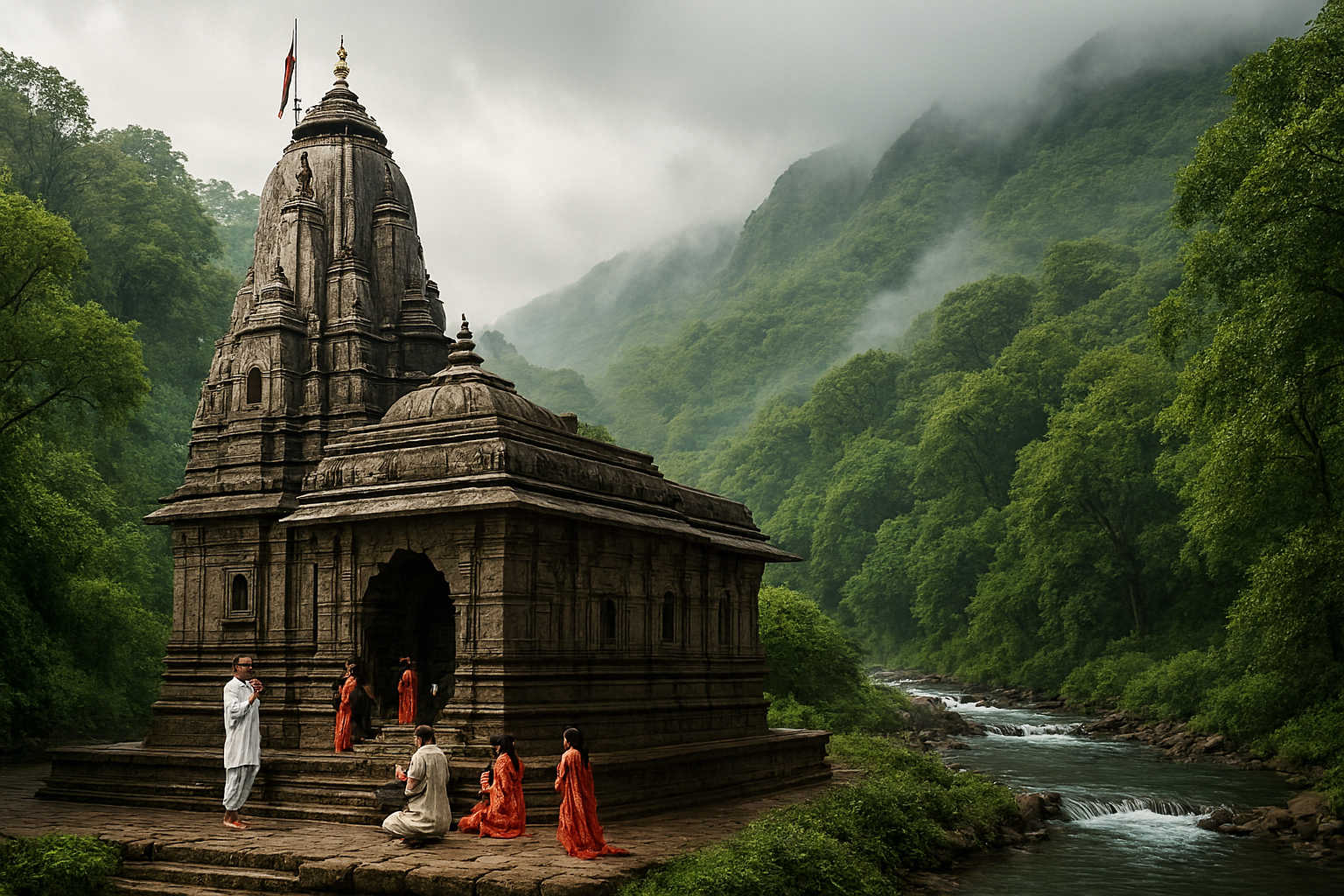
Bhimashankar – The Jungle Temple of Maharashtra
Deep within the lush green folds of the Sahyadri ranges lies Bhimashankar, one of the twelve sacred Jyotirlingas of Lord Shiva. Surrounded by dense forests, misty hills, and the tranquil sounds of nature, Bhimashankar is not just a spiritual destination but also a haven for nature lovers. It is a place where mythology, devotion, and ecology merge into a mystical experience.
In this post, we will uncover the legend of Bhimashankar, the significance of the Jyotirlinga, and the natural wonders of the surrounding wildlife sanctuary.
The Significance of Bhimashankar Jyotirlinga
Bhimashankar is revered as the sixth Jyotirlinga among the twelve sacred shrines dedicated to Lord Shiva. According to Hindu belief, visiting all twelve Jyotirlingas grants moksha (liberation). The Bhimashankar temple stands as a symbol of unwavering faith, architectural brilliance, and divine energy.
The temple is located in the Pune district of Maharashtra, approximately 110 km from Pune city and 220 km from Mumbai. What makes Bhimashankar truly special is its setting—it is nestled deep in the Sahyadri mountains, inside the Bhimashankar Wildlife Sanctuary, making it one of the most scenic pilgrimage sites in India.
The Mythological Legend Behind Bhimashankar
The story of Bhimashankar is rooted in ancient Hindu scriptures. It is said that a powerful demon named Bhim, the son of Kumbhakarna (the brother of Ravana), performed severe penance to please Lord Brahma and obtained immense strength. Intoxicated by his power, Bhim began tormenting sages and innocent people. He even challenged Lord Vishnu and defeated many celestial beings.
In his arrogance, Bhim captured Kamarupeshwar, a great devotee of Lord Shiva, and ordered him to stop worshipping the Lord. When the devotee refused, Bhim raised his sword to kill him. At that very moment, Lord Shiva manifested in the form of a Jyotirlinga and killed Bhim, thus protecting his devotee. After the battle, Shiva settled there as Bhimashankar, blessing the land with his divine presence.
The Temple Architecture and Atmosphere
The Bhimashankar temple showcases Nagara-style architecture, with intricate stone carvings and a sanctum that houses the self-manifested (swayambhu) Shiva Lingam. The temple exudes a serene and mystical aura, with the rhythmic chants of “Om Namah Shivaya” echoing through the hills.
Devotees can feel the ancient energy within the stone walls, as the temple is believed to be over 800 years old, with contributions from various dynasties including the Peshwas and Marathas. The Shikhar (spire) of the temple was constructed by Nana Phadnavis, a prominent minister of the Maratha Empire.
The Bhimashankar Wildlife Sanctuary – A Nature Lover’s Paradise
One of the most unique aspects of Bhimashankar is its location inside a protected wildlife sanctuary. Declared a sanctuary in 1985, it is home to rare species like the Indian Giant Squirrel (Shekru), which is also the state animal of Maharashtra. The forest is rich in biodiversity, boasting numerous medicinal plants, evergreen trees, and a variety of birds.
During monsoon, the entire region transforms into a green wonderland with gushing waterfalls, mist-covered hills, and vibrant flora. Trekking enthusiasts often combine their pilgrimage with a thrilling trek through the sanctuary trails.
The Bhima River and Its Sacred Connection
The temple is also the origin point of the Bhima River, which flows eastward and eventually merges with the Krishna River. The river is considered holy, and many pilgrims take a dip in its waters before offering prayers at the temple.
Festivals and Celebrations at Bhimashankar
The temple sees massive footfall during Mahashivratri, a festival dedicated to Lord Shiva. Devotees from across India flock to the shrine, participating in night-long prayers, abhishekams (ritual baths), and chanting. The atmosphere becomes vibrant with spiritual energy, bhajans, and traditional rituals.
How to Reach Bhimashankar
-
By Road: Well-connected by buses and taxis from Pune and Mumbai.
-
By Rail: The nearest railway station is Pune (110 km).
-
By Air: The closest airport is Pune International Airport.
Those seeking adventure often prefer trekking routes like Ganesh Ghat or Shidi Ghat, which pass through dense forests and offer mesmerizing views of the Sahyadri ranges.
Best Time to Visit
While Bhimashankar can be visited throughout the year, the best time is post-monsoon (September to February) when the weather is pleasant, and the greenery is at its peak. The monsoon season is also beautiful but requires caution due to slippery trails.
Spiritual and Ecological Harmony
What makes Bhimashankar extraordinary is the perfect harmony between spirituality and nature. It is not just a temple visit but an immersive experience where one can feel the divine presence amidst pristine forests. Pilgrims often combine their trip with eco-tourism, bird watching, and exploring the local culture.
Conclusion
Bhimashankar is more than just a Jyotirlinga—it is a journey into the heart of nature, an encounter with ancient legends, and a reminder of the eternal bond between humanity and divinity. Whether you are a devotee seeking blessings, a trekker chasing adventure, or a nature lover longing for serenity, Bhimashankar offers something magical for everyone.
When you stand before the ancient Shiva Lingam, surrounded by the whispers of the forest and the distant calls of wild creatures, you truly understand why Bhimashankar is called the jungle temple of Maharashtra.