The Story of King Trishanku and His Heaven
Hindu mythology is filled with fascinating tales that explore ambition, devotion, and the eternal struggle between pride and humility. One such captivating story is that of King Trishanku—a ruler whose desire to ascend to heaven in his physical body led to one of the most extraordinary events in ancient lore: the creation of a parallel heaven by the powerful sage Vishwamitra.
This tale not only highlights the depth of human aspirations but also reveals the immense spiritual power of the sages in Sanatan Dharma. Let’s dive into the legendary story of Trishanku Swarga—the heaven of King Trishanku.
Who Was King Trishanku?
King Trishanku belonged to the Ikshvaku dynasty, the same illustrious lineage that produced great rulers like Lord Rama. Known for his valor, righteousness, and devotion to dharma, Trishanku ruled his kingdom with justice and generosity. However, despite his virtues, he harbored an unusual desire—one that defied the natural laws of life and death.
Trishanku wished to ascend to heaven with his mortal body. Traditionally, after death, the soul departs to higher realms, leaving behind the physical body. But Trishanku wanted the impossible: to experience the heavenly abode without dying.
The King’s Desire and Sage Vashistha’s Refusal
In pursuit of this extraordinary wish, King Trishanku approached his family guru, Sage Vashistha, the revered rishi and spiritual guide of the Ikshvaku dynasty. He humbly requested the sage to perform a yajna (sacrificial ritual) that would grant him entry into heaven with his earthly body.
However, Sage Vashistha was a firm adherent to the laws of nature and cosmic order. He refused the request, explaining that the natural cycle of birth and death must not be broken. Vashistha reminded Trishanku that such an act would go against the divine principles established by the Creator.
But Trishanku was relentless. Consumed by his desire, he even approached the sons of Vashistha, hoping they would grant his wish. Unfortunately, they too declined, mocking the king for his audacity.
Trishanku’s Desperation and Vishwamitra’s Entry
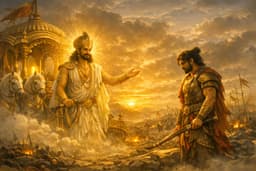
Humiliated and rejected, King Trishanku turned to another powerful sage—Vishwamitra, known for his fierce determination and mastery of tapasya (penance). Unlike Vashistha, Vishwamitra saw this as an opportunity to demonstrate his spiritual prowess and surpass his rival in power and influence.
When Trishanku expressed his desire, Vishwamitra did not refuse. Instead, he vowed:
"O King, if the heavens deny you entry, I shall create a new heaven for you!"
With this declaration, Vishwamitra prepared to challenge the cosmic order itself.
The Grand Yajna and Ascension
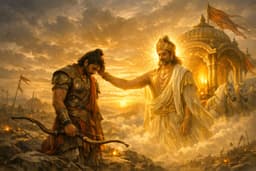
Vishwamitra organized a grand yajna to fulfill Trishanku’s wish. The sacred fire blazed as mantras echoed through the forest. Vishwamitra invoked the celestial beings and commanded them to accept Trishanku into heaven.
However, Indra, the king of the gods, was enraged. He saw this as an act of arrogance—both on Trishanku’s part and Vishwamitra’s. Indra declared that heaven’s gates would never open for Trishanku’s mortal body.
But Vishwamitra was unwavering. With the sheer force of his penance and spiritual might, he lifted Trishanku towards the heavens. The king began ascending, his body defying gravity, rising higher and higher into the sky.
The Twist – Trishanku Suspended in Mid-Air
Just as Trishanku approached heaven’s gates, Indra appeared with the other gods and blocked his entry. Declaring that no mortal body could enter heaven, Indra hurled Trishanku back toward the earth.
The king, terrified, cried out:
"Save me, O Sage! Do not let me fall!"
In that moment, Vishwamitra’s anger knew no bounds. His voice thundered as he commanded,
"Stop! You shall not fall, nor rise further. Remain where you are!"
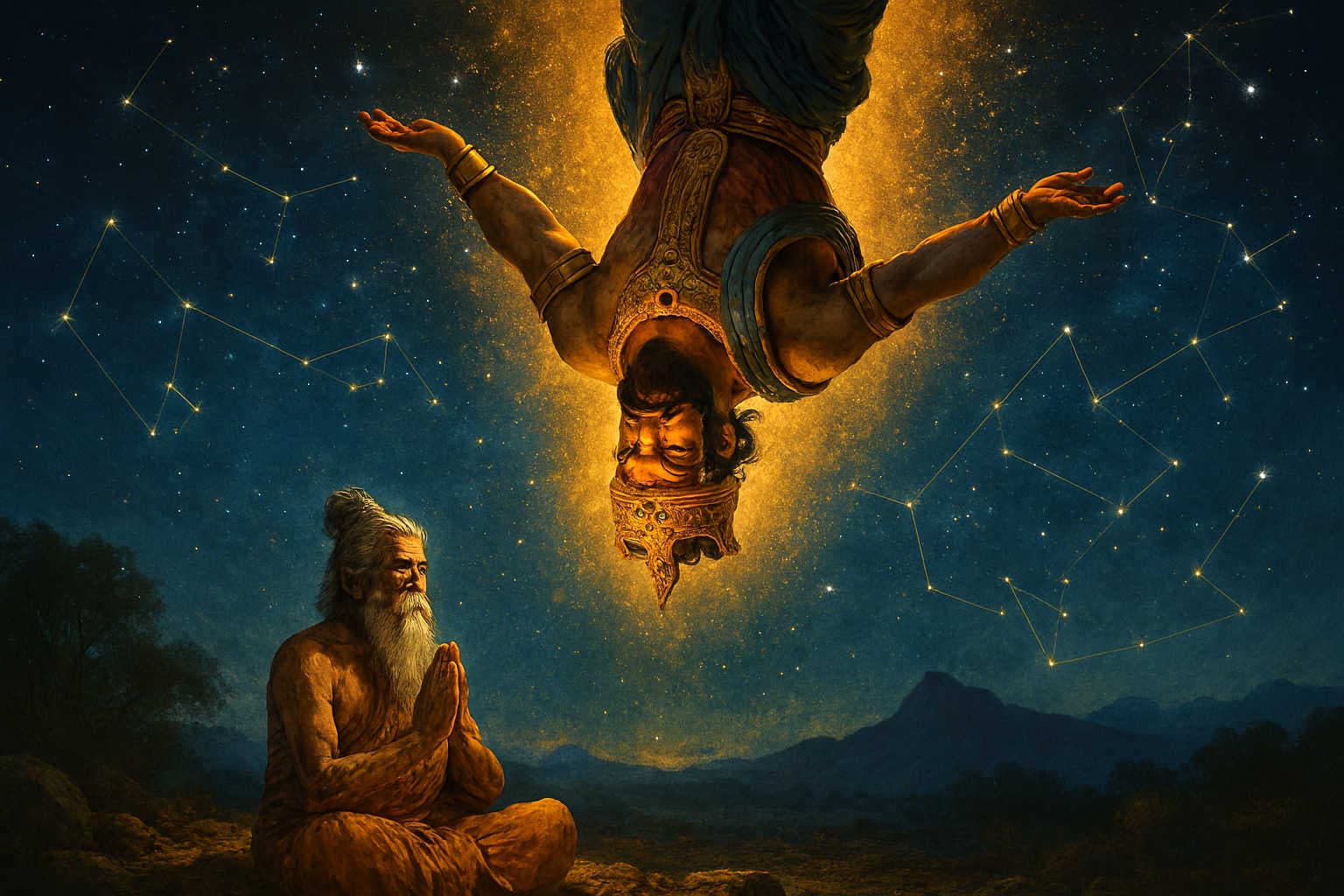
And so, Trishanku was suspended upside down in the sky, midway between earth and heaven.
The Creation of Trishanku Swarga
Determined to keep his promise, Vishwamitra unleashed the full extent of his yogic powers. He declared,
"If Indra denies you entry into heaven, I shall create a new heaven for you—a heaven where you shall reign as king forever!"
With his tapas shakti (power of penance), Vishwamitra created an alternate heaven—a celestial realm that glittered with stars, radiant palaces, and divine light. He placed Trishanku there, granting him the status of a king in his own heaven.
This extraordinary creation came to be known as Trishanku Swarga—the parallel heaven. To this day, in Hindu astronomy and folklore, Trishanku is associated with a star in the night sky, symbolizing his eternal presence in that intermediate realm.
The Deeper Meaning of the Story
The legend of Trishanku is not just a tale of ambition and divine power; it carries profound lessons:
-
Desire has consequences – Trishanku’s longing for the impossible led him to an unusual fate.
-
Power and ego can challenge the cosmic order – Vishwamitra’s creation of a new heaven reflects both his greatness and his pride.
-
Balance between ambition and dharma – While spiritual power can achieve miracles, it should align with universal laws.
Cultural Significance
-
Trishanku Swarga as a phrase – In Indian languages, the term “Trishanku Swarga” is often used to describe a state of being “neither here nor there”—a condition of uncertainty or suspension.
-
Astronomical reference – Some texts associate Trishanku with a constellation or a bright star visible in the night sky.
Conclusion
The story of King Trishanku and his heaven is a fascinating blend of human aspiration, divine intervention, and the limitless power of tapasya. It reminds us that even kings and sages are bound by cosmic laws, and that unchecked ambition can lead to extraordinary—but lonely—destinies.
The night sky, with its countless stars, silently bears witness to this tale—a king who hangs between two worlds, in a heaven created by sheer determination and willpower.