Rishi Kashyapa and the Origin of Devas and Asuras
In the vast ocean of Hindu mythology, certain sages hold a special place for shaping the destiny of the universe. Among them, Rishi Kashyapa stands out as one of the Saptarishis and a progenitor of many beings that inhabit the three worlds. His story is not just about lineage—it explains the cosmic balance between good and evil, light and darkness, and the eternal struggle that governs the universe.
In this post, we explore who Rishi Kashyapa was, how he fathered both Devas (gods) and Asuras (demons), and why his role is so significant in Sanatan Dharma.
Who Was Rishi Kashyapa?
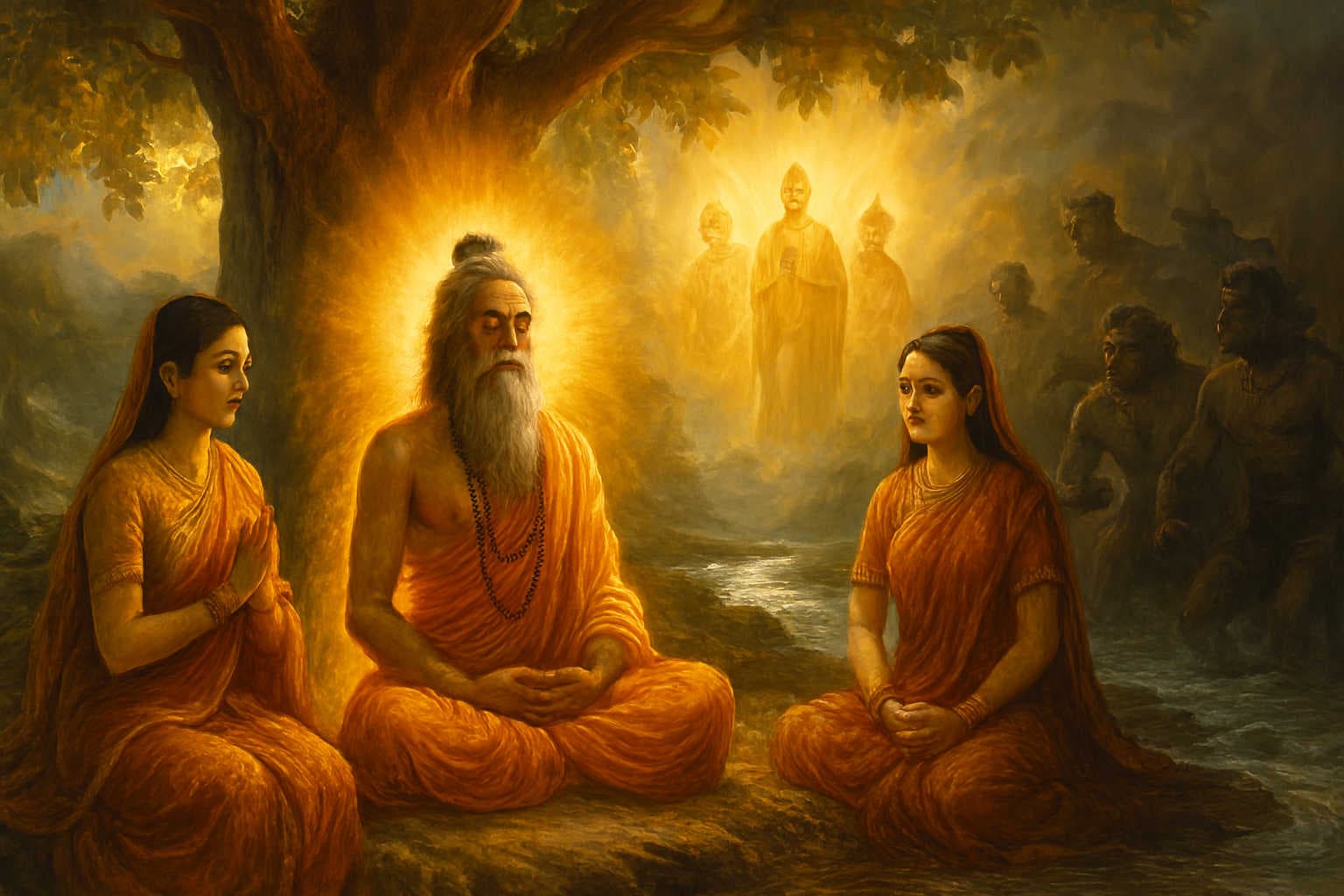
Rishi Kashyapa was the son of Prajapati Marichi and the grandson of Lord Brahma, the creator. He is considered one of the greatest sages of ancient times and is revered as a Prajapati—a progenitor of life. The very name “Kashyapa” signifies someone with deep vision and wisdom.
He is mentioned in several scriptures, including the Rig Veda, Mahabharata, Vishnu Purana, and Bhagavata Purana. Many clans, creatures, and even celestial beings trace their origin back to Kashyapa. In fact, the term Kashyap Gotra in Hindu tradition originates from him.
The Wives of Kashyapa and Their Importance
Kashyapa married many daughters of Prajapati Daksha, each of whom gave birth to different species of beings. Among these, Aditi and Diti are the most important for understanding the origin of Devas and Asuras.
-
Aditi – Known as the mother of the Adityas (Devas), she symbolizes light, order, and righteousness.
-
Diti – Known as the mother of the Daityas (Asuras), she represents power, ambition, and chaos.
Other wives of Kashyapa gave birth to various species:
-
Kadru – Mother of serpents (Nagas)
-
Vinata – Mother of Garuda and Aruna
-
Surasa – Mother of Rakshasas
-
Krodhavasha – Mother of fierce beings
This diversity shows that Kashyapa was not just the father of gods and demons but also of birds, snakes, and countless creatures.
The Birth of Devas (Adityas)
Aditi, the eldest and most virtuous wife of Kashyapa, prayed for divine children who would uphold dharma in the universe. Pleased with her devotion, Kashyapa blessed her, and she gave birth to the Adityas, a group of celestial beings who became the Devas (gods).
The twelve main Adityas include:
-
Varuna (god of water)
-
Mitra (god of friendship)
-
Aryaman, Bhaga, Anshuman, and others
-
Vishnu is also counted among the Adityas in some scriptures
These Devas reside in Svarga Loka (heaven) and are responsible for maintaining harmony, light, and justice in the cosmos.
The Birth of Asuras (Daityas)
Diti, on the other hand, desired sons who would be mighty and capable of defeating the Devas. When Kashyapa learned of her intention, he warned her about the dangers of giving birth out of anger and jealousy. However, Diti’s ambition was strong.
She performed intense austerities and persuaded Kashyapa to bless her. He agreed but set a condition—she must remain pure and observe certain rules for a hundred years. Unfortunately, Diti broke the discipline, and as a result, her children were born with Asuric (demonic) qualities.
The first two were:
-
Hiranyaksha – The demon slain by Vishnu’s Varaha avatar
-
Hiranyakashipu – The demon king who met his end at the hands of Narasimha, another avatar of Vishnu
Thus, the Daityas or Asuras were born—powerful beings who constantly fought with the Devas for supremacy.
The Eternal Conflict Between Devas and Asuras
The birth of Devas and Asuras from the same father but different mothers symbolizes the dual nature of creation. Light and darkness are not separate entities—they emerge from the same source. This eternal rivalry between Devas and Asuras is not just mythological; it represents the inner battle between virtue and vice within every being.
Why Did Kashyapa Allow This?
Rishi Kashyapa understood that the universe needs balance. Without darkness, light cannot be appreciated. Without challenges, virtues have no value. By fathering both Devas and Asuras, Kashyapa ensured that the cosmic drama of dharma vs. adharma continues, leading to the evolution of souls through struggle.
Kashyapa’s Legacy Beyond Devas and Asuras
Apart from being the progenitor of gods and demons, Kashyapa is also associated with:
-
The Kashyapa Samhita, an ancient Ayurvedic text
-
The spread of knowledge on astronomy, astrology, and agriculture
-
Founding the lineage from which many sages and kings were born
Even today, people with the Kashyap gotra consider him their ancestor.
Lessons from the Story of Kashyapa
-
Balance is Essential – The universe thrives on duality; good and evil coexist for a reason.
-
Control of Desires – Diti’s impatience led to the birth of destructive forces; discipline is crucial.
-
Equality of All Creation – From gods to demons, all beings have the same origin.
Conclusion
Rishi Kashyapa’s story is a profound reminder that creation is not black and white. It is a spectrum where light and darkness, good and evil, operate together to maintain the cosmic rhythm. The Devas and Asuras, though constantly at odds, serve the ultimate purpose of upholding the law of karma and dharma.
Next time you hear about the battles of gods and demons, remember—they are not just external wars. They reflect the eternal struggle within us, where wisdom (Devas) must conquer ignorance (Asuras) for spiritual evolution.