The Story of Nandi – Shiva’s Gatekeeper
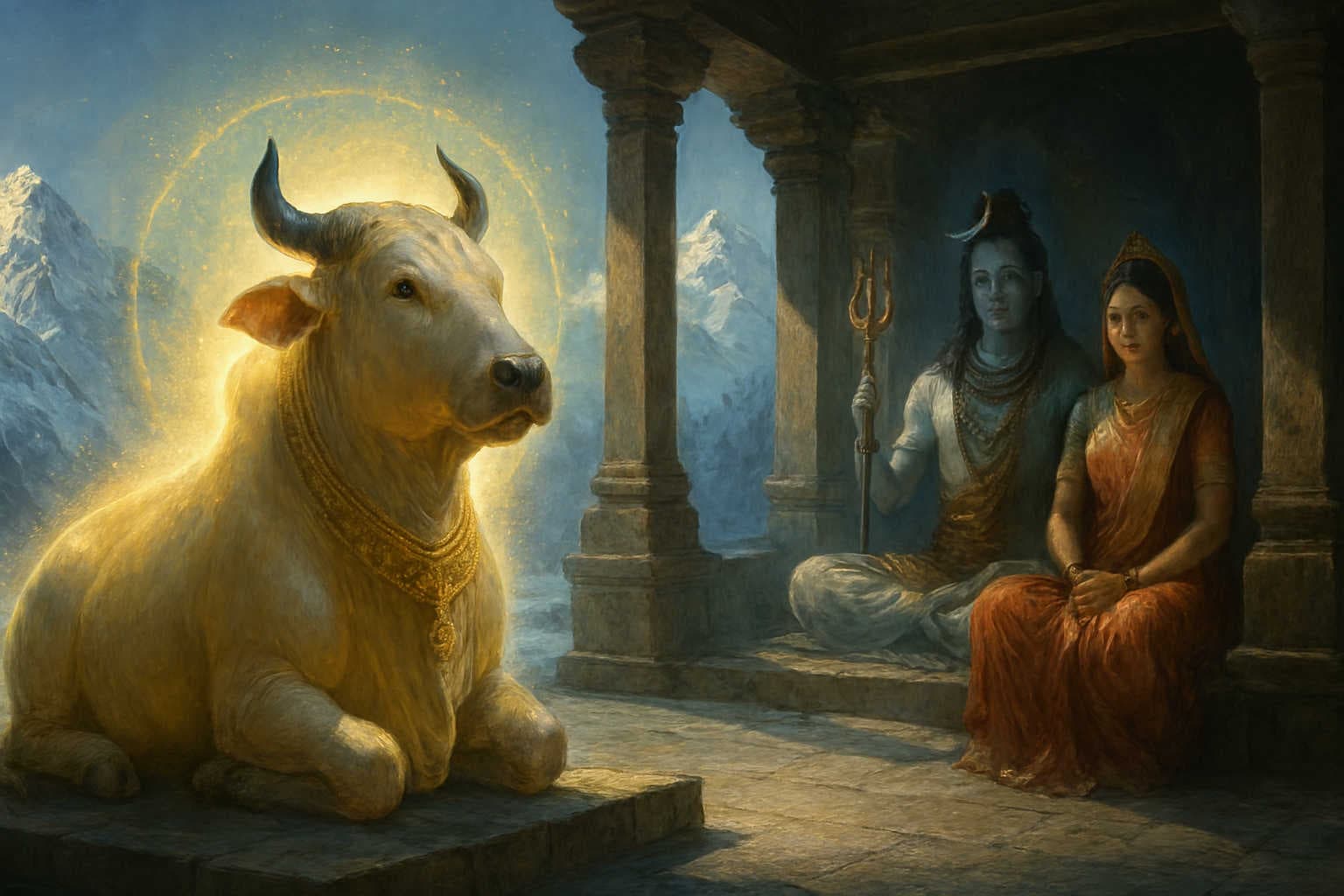
In Hindu tradition, whenever you visit a Shiva temple, you will notice a majestic bull seated before the sanctum, gazing directly at the Shiva Lingam. This bull is none other than Nandi, the divine vehicle (vahana) and gatekeeper of Lord Shiva. But Nandi is not just a bull; he is a symbol of faith, strength, and devotion. His story is deeply rooted in Sanatan Dharma and carries profound spiritual meaning. Let us dive into the tale of Nandi and his eternal connection with Mahadev.
Who is Nandi?
The word “Nandi” means joy, happiness, and satisfaction. In Hindu mythology, Nandi is described as a white bull with a calm yet powerful demeanor. He is revered as Lord Shiva’s chief attendant, gatekeeper, and the one who guards the entrance to Mount Kailash, the divine abode of Shiva and Parvati.
Nandi is not just a servant of Shiva; he is a devotee par excellence, embodying purity, humility, and unwavering loyalty. His presence in every Shiva temple is a reminder of the ideal relationship between the devotee and the divine.
Birth of Nandi
There are different versions of Nandi’s origin in Puranic literature, but one widely accepted version is found in the Shiva Purana. According to the legend, Nandi was born to Shilada, a sage who performed severe penance to have a child blessed by Lord Shiva himself.
Impressed by his devotion, Shiva appeared before Shilada and granted his wish. Nandi was thus born as a divine being with boons of immortality, wisdom, and strength. Right from birth, Nandi exhibited extraordinary qualities and grew into a devoted ascetic, constantly meditating on Mahadev.
Nandi Becomes Shiva’s Gatekeeper
As Nandi grew older, his longing to serve Lord Shiva became stronger. He left his father’s hermitage and went to Mount Kailash, where he performed intense tapas (penance) in Shiva’s honor. Pleased with his devotion, Lord Shiva blessed Nandi and accepted him as his chief attendant and gatekeeper.
From that day on, Nandi took the sacred responsibility of guarding the entrance to Kailash, ensuring that only the pure-hearted and worthy devotees could approach Mahadev.
Why is Nandi Placed Facing the Shiva Lingam?
Whenever you enter a Shiva temple, you will notice Nandi sitting directly opposite the Shiva Lingam in the main sanctum. This is not mere architecture; it holds deep spiritual meaning.
According to belief, whispering your prayers into Nandi’s ears is as good as conveying them directly to Lord Shiva. It is said that Nandi constantly chants the name of Shiva and acts as a messenger for devotees.
His posture—calm, meditative, and focused on the Lingam—teaches us the essence of one-pointed devotion. Nandi represents the mind that is steady and fixed upon the Supreme.
Nandi in Shaivism Philosophy
Nandi is not only a mythological figure but also a symbol of dharma (righteousness). In Shaiva Siddhanta, Nandi signifies the Guru, who helps devotees attain Shiva. The bull represents strength, stability, and patience—qualities essential for spiritual growth.
Moreover, the bull is associated with agriculture and fertility, emphasizing Nandi’s role as a protector of Dharma and nature. His association with Shiva also represents the harmony between power and purity.
Famous Legends Involving Nandi
Several fascinating stories highlight Nandi’s importance:
-
Nandi and Ravana – When Ravana tried to enter Kailash, Nandi stopped him. Angered, Ravana mocked Nandi, calling him a monkey. Enraged by the insult, Nandi cursed Ravana that monkeys would be the cause of his destruction—a curse that came true during the Ramayana when Hanuman and the vanara sena played a key role in Ravana’s defeat.
-
Nandi and Parvati – During the famous Daksha Yagna, when Parvati immolated herself, Nandi stood as a loyal guardian and fought for her honor. His loyalty to Shiva and Parvati remained unwavering.
-
Nandi as Guru – In some traditions, Nandi is considered the first student of Shiva, who received divine wisdom directly from him and shared it with other sages. Hence, Nandi is revered as a teacher of Shaivism.
Symbolism of Nandi
-
The Bull as a Symbol – Strength, virility, and determination.
-
Facing the Lingam – Single-minded devotion to God.
-
Calm Demeanor – Control over senses and desires.
-
White Color – Purity and truth.
Lessons from Nandi’s Devotion
The story of Nandi is not just a myth but a spiritual guide. Here are the key lessons:
-
Faithfulness – Nandi shows how loyalty and dedication to the divine lead to liberation.
-
Discipline – His meditative posture teaches self-control and focus.
-
Service Without Ego – Nandi serves Shiva without expectation, embodying humility.
Where is Nandi Worshipped?
Every Shiva temple has a Nandi idol in front of the sanctum. However, some famous places where Nandi is especially worshipped include:
-
Lepakshi, Andhra Pradesh – Home to one of the largest Nandi statues.
-
Chamundi Hills, Mysuru – Famous monolithic Nandi statue.
-
Brihadeeswarar Temple, Tamil Nadu – Houses a massive stone Nandi.
Conclusion
Nandi is more than Shiva’s gatekeeper—he is the ideal devotee, protector, and guide for those walking the spiritual path. His unwavering focus on Lord Shiva is a reminder that true devotion means surrender, patience, and service without pride.
So next time you visit a Shiva temple and see Nandi gazing at the Lingam, remember his story and whisper your prayers into his ears—they will surely reach Mahadev himself.