Narada Muni – The Divine Messenger
Among the many illustrious sages in Sanatan Dharma, Narada Muni holds a unique and fascinating place. Unlike most rishis who lived in forests or hermitages, Narada was a celestial traveler, moving freely across the three worlds – Swarga (heaven), Mrityuloka (earth), and Patala (netherworld). His presence is felt in countless Hindu scriptures, including the Mahabharata, Ramayana, and various Puranas.
Narada is not only a messenger but also an eternal devotee of Lord Vishnu, spreading the message of Bhakti (devotion) wherever he goes. His life symbolizes the power of devotion, music, and divine wisdom.
Who is Narada Muni?
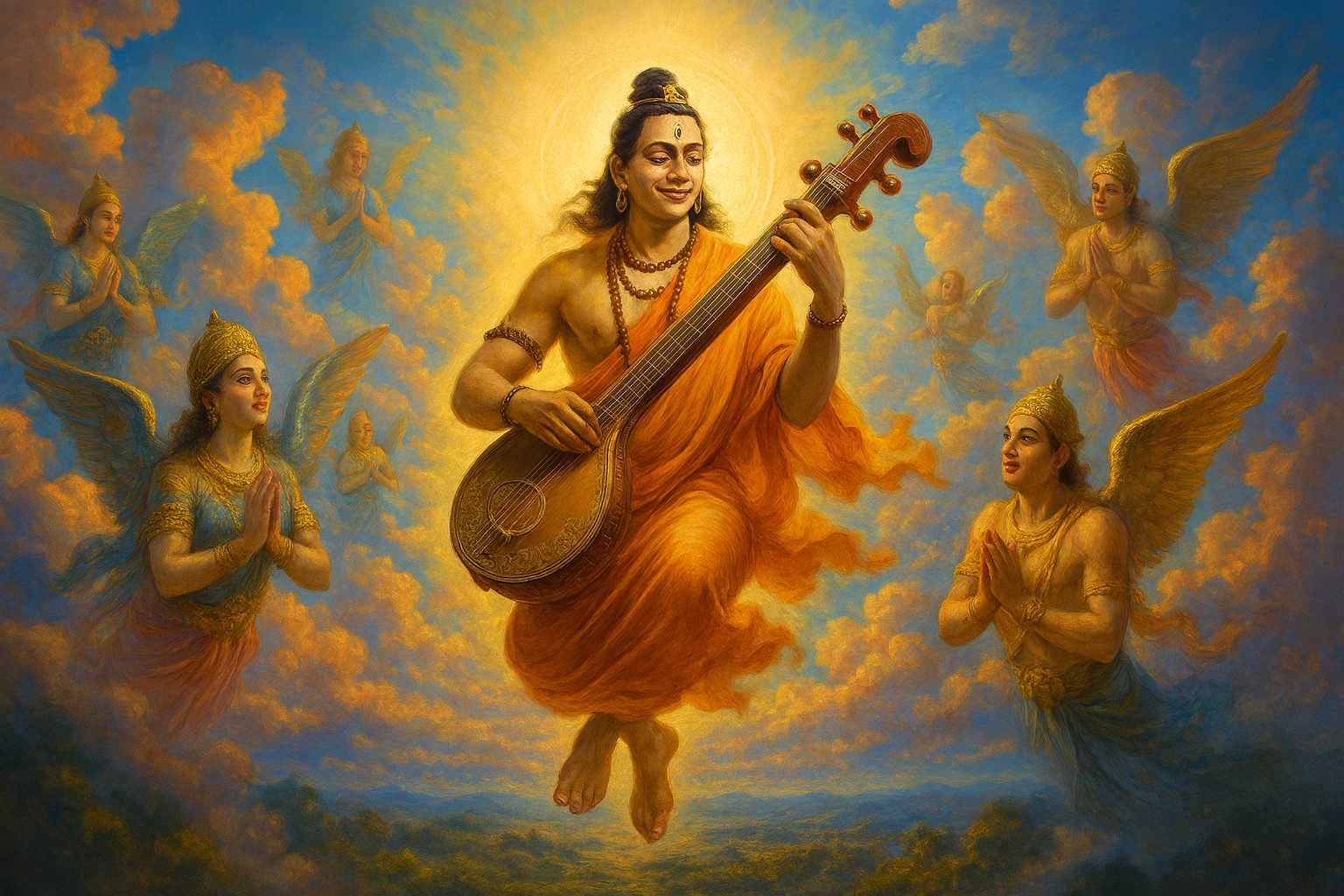
Narada Muni is considered a Devarishi (celestial sage) and a son of Lord Brahma. He is regarded as an eternal soul who appears in different yugas (ages) to inspire devotion and righteousness. Known for his veena and his constant chanting of “Narayana, Narayana”, Narada plays a vital role in connecting gods, sages, and humans.
Unlike most sages who engage in deep penance, Narada actively interacts with people and deities, often influencing significant events in Hindu mythology. Sometimes, his interventions create conflicts, but these are always intended to lead to higher spiritual truths.
Attributes and Symbols
-
Veena (Tanpura): Represents devotion expressed through music.
-
Chanting “Narayana”: A symbol of his unwavering devotion to Lord Vishnu.
-
Traveler Across Worlds: Signifies his role as a universal communicator and spiritual guide.
Narada in Hindu Scriptures
In the Puranas
Narada is a central figure in many Puranic stories. He often acts as a catalyst for events that lead to divine purposes. For instance:
-
He inspired Valmiki to compose the Ramayana by narrating the glory of Lord Rama.
-
In the Vishnu Purana, he promotes Bhakti Yoga, emphasizing devotion over rituals.
In the Mahabharata
Narada plays the role of a wise counselor. He warns the Kauravas about the dangers of their arrogance and advises Yudhishthira on dharma and governance.
In the Ramayana
Narada is indirectly responsible for several events, including the challenges that shape Rama’s destiny. He motivates sages and devotees to uphold righteousness.
The Philosophy of Narada
Narada is considered the foremost teacher of Bhakti Yoga. His scripture, the Narada Bhakti Sutra, is a profound text that defines the essence of devotion as pure, selfless love for God without any expectation of reward.
He teaches that:
-
Devotion is superior to knowledge and rituals.
-
True bhakti is unconditional love for the divine.
-
Music and chanting are powerful tools to connect with God.
Narada as the Divine Messenger
One of Narada’s most prominent roles is that of a messenger. He moves freely between gods, sages, and humans, delivering messages that shape cosmic events. His interventions often lead to major transformations, like:
-
Initiating the Samudra Manthan (Churning of the Ocean) by advising the Devas.
-
Inspiring great devotees like Prahlad and Dhruva to pursue devotion.
-
Motivating kings and warriors to choose the path of righteousness.
Misunderstood Trickster or Divine Guide?
Narada is sometimes perceived as a mischief-maker because his words often spark disputes or challenges. However, every act of Narada serves a divine purpose. His apparent mischief is a spiritual tool to bring out hidden virtues or expose hidden flaws, ultimately leading people toward liberation.
For example:
-
When he encouraged Kamsa to be cautious of Krishna, it resulted in events that restored dharma.
-
When he tested sages and kings, it revealed their pride and helped them attain humility.
The Power of Music and Devotion
Narada’s constant companion is his veena, through which he sings hymns in praise of Lord Vishnu. This reflects the idea that music is a path to liberation. His devotion is so pure that he remains unaffected by material temptations and ego.
Narada Bhakti Sutra – The Essence of Devotion
One of Narada’s greatest contributions is the Narada Bhakti Sutra, a concise and profound text outlining the philosophy of bhakti. Key principles include:
-
Bhakti is pure love for God.
-
It requires no ritual or condition.
-
It is accessible to everyone, regardless of caste or status.
Relevance of Narada Today
In today’s age of stress and materialism, Narada’s message of devotion and inner joy is more relevant than ever. His teachings remind us that:
-
Music and mantra can calm the mind.
-
Spiritual love brings peace and purpose.
-
Sharing wisdom positively impacts society.
Conclusion
Narada Muni is more than a messenger; he is a symbol of divine love, joy, and wisdom. His life teaches us that devotion is not about isolation but about sharing divine joy with the world. Through music, knowledge, and loving service, we can walk the path of bhakti and experience the eternal bliss that Narada himself enjoys.
Chant with Narada: Narayana, Narayana! and let your heart sing in devotion.