Role of Rishis in Sanatan Dharma – Vasistha, Vishwamitra, Narada
Sanatan Dharma, the eternal way of life, is rooted in profound wisdom and timeless principles. This spiritual tradition has been nurtured and preserved by the great rishis (sages) of ancient times. These enlightened beings dedicated their lives to discovering universal truths, guiding humanity, and transmitting sacred knowledge through scriptures like the Vedas, Upanishads, and Puranas.
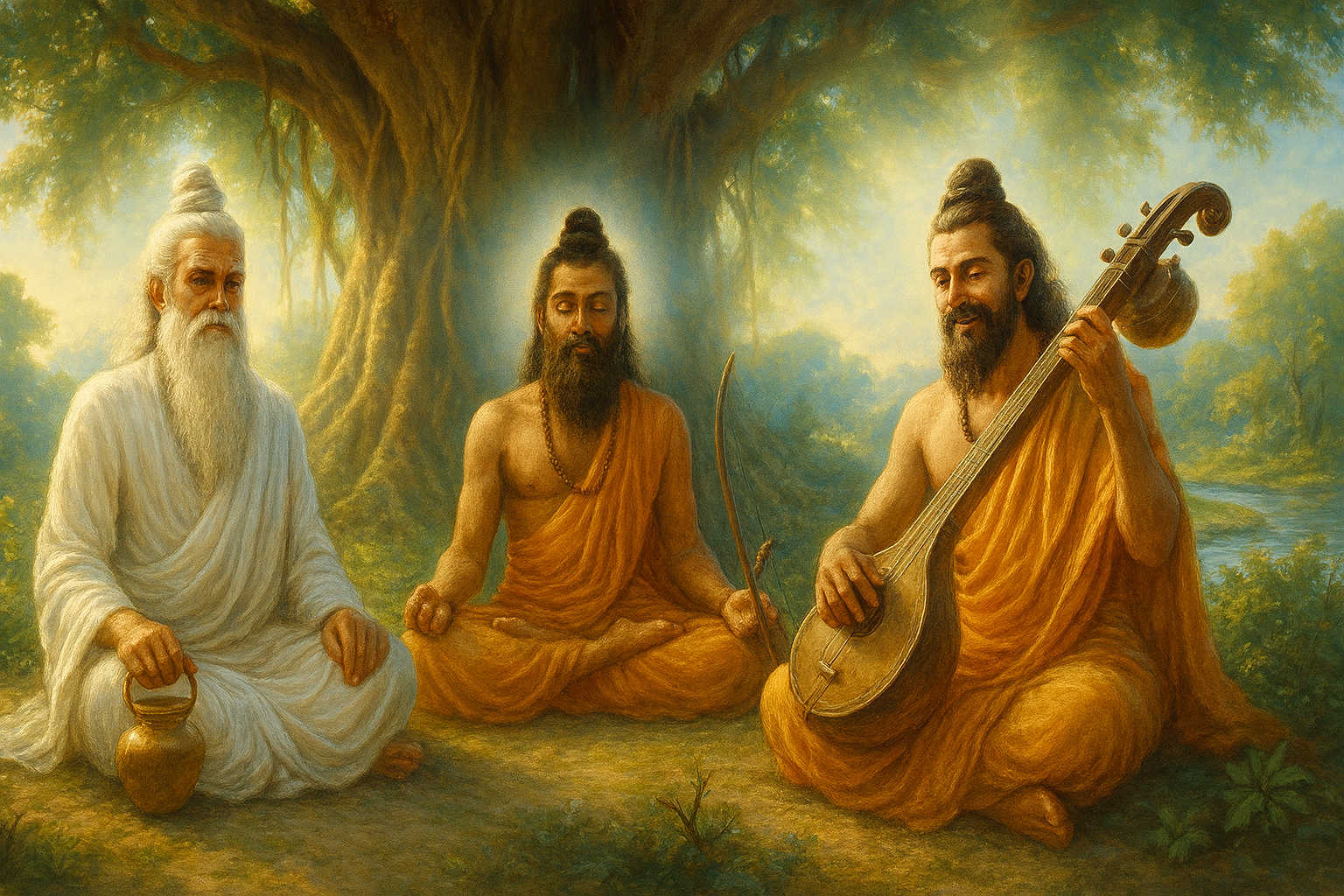
Among the numerous sages, three hold exceptional significance: Vasistha, Vishwamitra, and Narada. Each played a unique role in shaping the spiritual and cultural foundation of Hinduism.
Who Are Rishis?
In Sanatan Dharma, rishis are seers who have attained a high level of spiritual realization through intense meditation and austerities. They are credited with composing the Vedas and imparting moral, social, and spiritual guidance to kings and common people alike. Their insights transcend time and remain relevant even today.
Sage Vasistha – The Ideal of Wisdom and Dharma
Vasistha, one of the Saptarishis (seven great sages), is revered as a symbol of wisdom and righteousness. He served as the royal priest and spiritual guide to the Ikshvaku dynasty, which included kings like Dasharatha, the father of Lord Rama.
Teachings and Contributions
-
Yoga Vasistha: This philosophical scripture contains deep conversations between Vasistha and Rama, addressing the nature of reality, consciousness, and liberation.
-
Advocated balance between material life and spiritual pursuit.
-
Emphasized dharma (righteousness) as the foundation of governance and personal conduct.
Role in Society
Vasistha’s guidance ensured that kings ruled with justice, compassion, and adherence to spiritual principles. His life reflects stability, peace, and harmony—qualities essential for sustaining civilization.
Sage Vishwamitra – The Seer Who Became a Brahmarishi
Vishwamitra’s story is one of transformation, determination, and spiritual ambition. Born as a Kshatriya king, he aspired to become a Brahmarishi, a sage of the highest order. Through intense tapas (penance) and self-discipline, he earned this revered status.
Major Contributions
-
Gayatri Mantra: Vishwamitra revealed this supreme mantra from the Rigveda, which is considered the essence of Vedic wisdom.
-
Composed many Vedic hymns that remain central to Hindu rituals.
-
Played a significant role in the Ramayana, where he guided Lord Rama and Lakshmana in spiritual and martial training.
Philosophical Lesson
His life teaches that determination and perseverance can transcend birth and circumstances. He symbolizes the ideal of inner strength and unwavering focus on spiritual progress.
Sage Narada – The Messenger of the Gods
Unlike the other sages who were deeply ascetic, Narada is known as the divine sage who traveled freely across worlds. He carried messages between gods, demons, and humans, often acting as a catalyst for significant events in Hindu mythology.
Attributes
-
Known for his musical devotion, constantly singing praises of Lord Vishnu.
-
Recognized as a Bhakti Acharya, spreading the philosophy of devotion and love for God.
-
Featured prominently in Puranas, Mahabharata, and numerous other scriptures.
Role in Spiritual Evolution
Narada played a unique role by inspiring devotion and humility among individuals. He also guided kings, sages, and common people, often using humor and wisdom to convey profound truths.
Collective Significance of Rishis in Sanatan Dharma
The lives of Vasistha, Vishwamitra, and Narada illustrate the diversity of spiritual paths within Sanatan Dharma:
-
Vasistha represents wisdom and stability.
-
Vishwamitra embodies transformation and determination.
-
Narada personifies devotion and communication.
Together, they demonstrate that spirituality can be pursued through knowledge, discipline, and love. Their teachings are timeless, emphasizing the harmony of Jnana (knowledge), Karma (action), and Bhakti (devotion).
Why Are Rishis Important Today?
In a world of complexity and conflict, the guidance of the rishis offers clarity:
-
Ethical Leadership: Vasistha’s principles can inspire just governance and corporate ethics.
-
Self-Transformation: Vishwamitra’s perseverance teaches the power of determination.
-
Inner Joy: Narada reminds us of the importance of devotion and spreading positivity.
Their legacy encourages us to live a life of balance, virtue, and higher purpose.
Conclusion
The rishis of Sanatan Dharma were not mere ascetics; they were visionaries who shaped the spiritual and moral fabric of society. Vasistha, Vishwamitra, and Narada continue to inspire seekers across the world. By studying their lives and following their teachings, we can align ourselves with eternal values and attain inner peace.
The message is clear: Wisdom, discipline, and devotion are the three pillars of a fulfilling life.