Brahma, Vishnu, and Mahesh – The Trimurti Explained
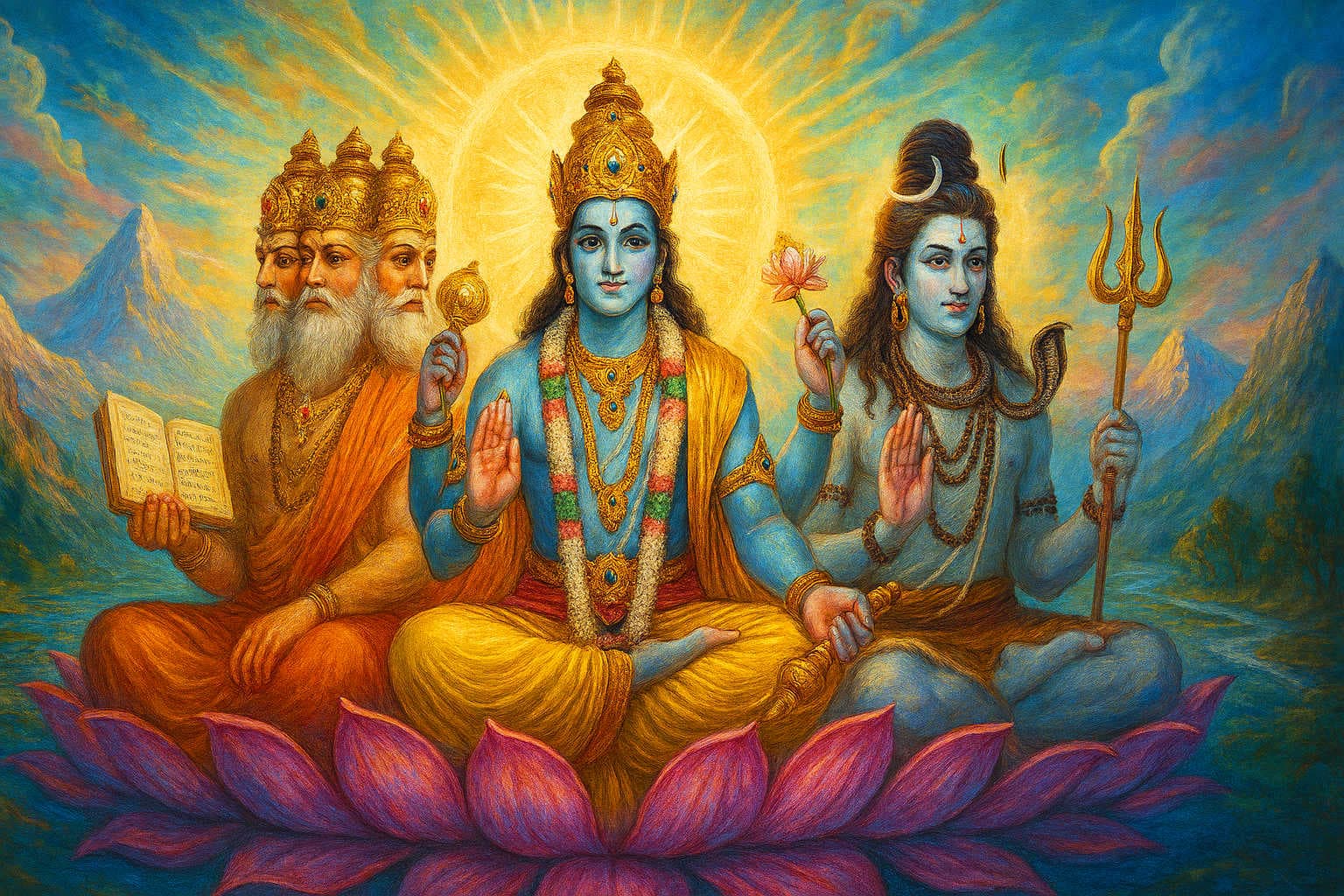
Hinduism, one of the world’s oldest religions, encompasses a profound and complex philosophy that represents the universe as a cycle of creation, preservation, and destruction. At the heart of this cosmic process lies the Trimurti, the trinity of three supreme deities: Brahma (the Creator), Vishnu (the Preserver), and Mahesh or Shiva (the Destroyer). These three aspects of the divine are not separate entities but different manifestations of the same supreme reality – Brahman.
The concept of Trimurti signifies the harmonious functioning of the universe and the continuous cycle of birth, life, and death.
Who are Brahma, Vishnu, and Mahesh?
Brahma – The Creator
Brahma is regarded as the creator of the universe, responsible for forming life and matter. Depicted with four heads, each representing the four Vedas (Rigveda, Yajurveda, Samaveda, and Atharvaveda), Brahma sits on a lotus that emerges from Lord Vishnu’s navel, symbolizing creation arising from preservation.
-
Consort: Goddess Saraswati, the goddess of wisdom and knowledge.
-
Role: Creates the planets, beings, and all forms of life.
-
Symbolism: The four faces represent mind, intellect, ego, and consciousness, and the four directions of space.
Despite his supreme role, Brahma is least worshipped among the three deities. Temples dedicated exclusively to Brahma are extremely rare, the most famous being the Pushkar Temple in Rajasthan.
Vishnu – The Preserver
Lord Vishnu sustains and preserves the universe. His role is to maintain order, harmony, and righteousness (dharma). Vishnu is depicted reclining on Ananta Shesha (the cosmic serpent) in the Kshira Sagara (ocean of milk), with Goddess Lakshmi at his feet, symbolizing prosperity.
-
Consort: Goddess Lakshmi, the goddess of wealth and prosperity.
-
Symbolism: His four hands hold the conch (sound of creation), discus (cosmic order), mace (power), and lotus (purity).
-
Avatars: Vishnu incarnates in different forms whenever dharma declines. His Dashavatara (ten incarnations) include Rama, Krishna, and the future avatar Kalki.
Vishnu’s presence ensures the continuity and balance of the universe, preventing chaos and destruction before its destined time.
Mahesh (Shiva) – The Destroyer
Shiva, also called Mahesh or Mahadeva, represents the destroyer and transformer. His role is not limited to annihilation; destruction in Hinduism signifies removal of ignorance and renewal for new creation. Without destruction, creation cannot take place, making Shiva an essential part of the cycle.
-
Consort: Goddess Parvati, symbolizing power and fertility.
-
Attributes: Trident (Trishul), crescent moon, and river Ganga flowing from his matted hair.
-
Symbolism: Shiva is worshipped in the form of the Shivlinga, representing infinite energy.
-
Abode: Mount Kailash, the center of spiritual power.
Shiva’s cosmic dance, the Tandava, represents the rhythm of creation and destruction.
Philosophical Meaning of the Trimurti
The Trimurti is more than three gods; it is a philosophical framework representing the eternal cycle:
-
Creation (Brahma): The birth of the universe, ideas, and life.
-
Preservation (Vishnu): Sustaining balance, harmony, and order.
-
Destruction (Shiva): Clearing the old to make way for the new.
These functions occur continuously, symbolizing that change is the essence of existence. The Trimurti reminds us that nothing is permanent—creation eventually leads to destruction, and destruction leads to a new beginning.
Trimurti in Scriptures
The concept of Trimurti is described in several Hindu scriptures:
-
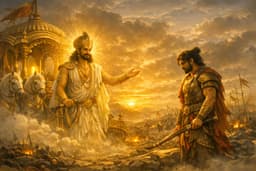
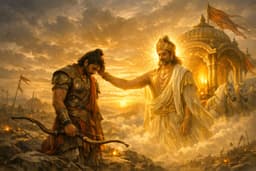
Bhagavad Gita: Lord Krishna (an avatar of Vishnu) emphasizes his supreme role in maintaining dharma.
-
Puranas: Especially Vishnu Purana and Shiva Purana elaborate on their cosmic roles.
-
Upanishads: Describe the unity of all three as aspects of Brahman (the ultimate reality).
Why is Brahma Less Worshipped?
While Vishnu and Shiva are widely worshipped, Brahma has few temples. According to legends, Brahma once lied in a dispute with Vishnu and Shiva about superiority, leading to a curse that he would not be worshipped extensively. Another reason is that creation is a one-time act, while preservation and destruction are ongoing processes, making Vishnu and Shiva more significant in daily devotion.
Spiritual Significance of the Trimurti
-
Unity in Diversity: Though represented as three, they signify one ultimate reality.
-
Life Lessons: Everything has a beginning, a phase of preservation, and an end.
-
Balance: All three forces are necessary; creation without destruction would cause imbalance.
Trimurti and Human Life
-
Brahma: Represents birth and new beginnings in our lives.
-
Vishnu: Symbolizes sustaining relationships, duties, and responsibilities.
-
Shiva: Reflects the end of phases, letting go of negativity, and transformation.
Conclusion
The Trimurti – Brahma, Vishnu, and Mahesh – beautifully symbolizes the cosmic cycle of creation, preservation, and destruction, essential for the universe to function. While they appear as distinct deities in stories and temples, they are manifestations of the same Supreme Reality, reminding us of the impermanence of life and the eternal nature of the soul.
Understanding the Trimurti helps us appreciate the interconnectedness of all forces and inspires us to maintain balance, righteousness, and humility in our lives.