.png&w=3840&q=75)
Why Lord Vishnu Took Ten Avatars (Dashavatara)
In Hinduism, Lord Vishnu, the preserver and protector of the universe, is believed to have descended in ten distinct avatars, collectively known as the Dashavatara. These incarnations represent the divine response to cosmic imbalance, ensuring the protection of dharma (righteousness) and the destruction of adharma (evil). Each avatar manifests at a time when humanity or the world faces challenges, teaching moral lessons, and restoring cosmic harmony.
Purpose of Dashavatara
The core reason behind Vishnu’s ten avatars is preservation of the universe:
-
Protection of Dharma: Whenever evil threatens the natural order, Vishnu incarnates to protect the virtuous and restore righteousness.
-
Guidance for Humanity: Each avatar demonstrates virtues, courage, devotion, and wisdom, providing moral and spiritual guidance.
-
Balance Between Good and Evil: Dashavatara illustrates the cyclical struggle between dharma and adharma across different yugas (eras).
The Ten Avatars of Vishnu
-
Matsya (Fish Avatar):
-
Vishnu appeared as a fish to save humanity and sacred scriptures from a great deluge.
-
Significance: Symbolizes protection, foresight, and preservation of knowledge.
-
-
Kurma (Turtle Avatar):
-
During the churning of the ocean (Samudra Manthan), Vishnu took the form of a turtle to support Mount Mandara, acting as the pivot.
-
Significance: Represents stability, patience, and support in cosmic endeavors.
-
-
Varaha (Boar Avatar):
-
Vishnu appeared as a boar to rescue the Earth (Bhudevi) from the demon Hiranyaksha, lifting her from the cosmic ocean.
-
Significance: Shows strength, courage, and protection of the Earth.
-
-
Narasimha (Half-Man, Half-Lion Avatar):
-
Manifested to destroy the demon Hiranyakashipu while protecting his devotee Prahlada.
-
Significance: Illustrates divine justice, devotion, and the victory of good over evil.
-
-
Vamana (Dwarf Avatar):
-
Vishnu incarnated as a dwarf to subdue King Bali and reclaim the three worlds using wisdom and humility.
-
Significance: Highlights intelligence, humility, and strategic action.
-
-
Parashurama (Warrior Sage Avatar):
-
Appeared to eradicate corrupt Kshatriya rulers and restore social balance.
-
Significance: Represents justice, discipline, and righteous warfare.
-
-
Rama (Prince of Ayodhya):
-
Central figure of the Ramayana, Vishnu incarnated as Rama to destroy Ravana and uphold dharma.
-
Significance: Embodies truth, morality, and ideal conduct.
-
-
Krishna (Divine Statesman and Guide):
-
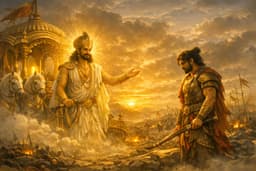
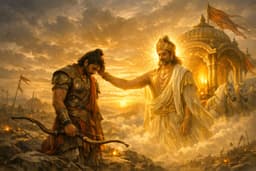
Appeared in the Mahabharata era to guide Arjuna through the Bhagavad Gita and defeat evil forces.
-
Significance: Teaches devotion, wisdom, love, and divine guidance.
-
-
Buddha (Sage Avatar):
-
Vishnu incarnated as Buddha to teach compassion and ethical living, reducing ritualistic excesses.
-
Significance: Promotes peace, non-violence, and spiritual wisdom.
-
-
Kalki (Future Warrior Avatar):
-
Yet to appear, Kalki will manifest at the end of the current age, Kali Yuga, to destroy evil and reestablish dharma.
-
Significance: Symbolizes restoration, hope, and divine justice.
-
Significance Across Yugas
The Dashavatara correspond to different yugas (ages):
-
Satya Yuga: Matsya, Kurma, Varaha – early manifestations of protection and preservation.
-
Treta Yuga: Narasimha, Vamana, Rama – reinforcing dharma through strength, humility, and righteousness.
-
Dvapara Yuga: Krishna, Parashurama – teaching devotion, wisdom, and justice.
-
Kali Yuga: Buddha and Kalki – guiding moral evolution and future restoration.
Philosophical Insights
-
Divine Intervention: Dashavatara shows that God intervenes when evil threatens cosmic order.
-
Teaching Through Action: Each avatar demonstrates ethical and spiritual principles in action.
-
Symbolism of Human Evolution: Many scholars interpret the avatars as symbolic stages of evolution, from aquatic life (Matsya) to human consciousness (Krishna, Kalki).
-
Universality of Dharma: The ten avatars transcend time, culture, and geography, reminding humanity of eternal values.
Lessons from Dashavatara
-
Faith and Devotion: Sincere devotion can invoke divine guidance and protection.
-
Righteous Action: Upholding dharma is essential even in the face of adversity.
-
Balance of Strength and Wisdom: Power alone is not enough; wisdom, humility, and strategy are equally vital.
-
Hope for the Future: Kalki represents hope that divine justice will prevail at the end of times.
Conclusion
The Dashavatara of Lord Vishnu illustrates the divine commitment to uphold dharma and protect the cosmos. Each avatar addresses specific challenges, providing guidance, inspiration, and moral lessons relevant for all ages. From the early protective forms of Matsya and Kurma to the forthcoming Kalki, Vishnu’s avatars remind devotees of the eternal cycle of creation, preservation, and eventual restoration of righteousness.
Understanding the Dashavatara deepens one’s appreciation of Hindu philosophy, mythology, and ethics, inspiring devotees to integrate faith, wisdom, and righteousness in their daily lives. The Dashavatara thus serves as a timeless reminder of divine intervention, cosmic balance, and spiritual evolution.