Story Behind the Sthala Purana of Chidambaram
The Chidambaram Temple, located in Tamil Nadu, is a renowned shrine dedicated to Lord Shiva in his cosmic form as Nataraja, the Lord of Dance. Celebrated for its spiritual significance, ancient architecture, and cosmic symbolism, Chidambaram is one of the most revered Pancha Bhoota Sthalas, representing Akasha (ether) among the five elements. The Sthala Purana, or sacred legend of the temple, offers deep insights into its mythology, philosophy, and devotion.
The Mythological Origin
According to the Sthala Purana, Chidambaram holds a unique spiritual essence:
-
Cosmic Dance of Shiva: Lord Shiva is believed to have performed the Ananda Tandava, or the Dance of Bliss, at Chidambaram. This dance symbolizes the creation, preservation, and destruction of the universe, highlighting the cyclical nature of existence.
-
Vishnu and the Demigods: The legend describes how Vishnu, Brahma, and other deities witnessed Shiva’s dance, acknowledging his supreme cosmic power.
-
Victory over Ignorance: Shiva’s dance at Chidambaram also signifies the triumph of knowledge over ignorance, guiding devotees toward spiritual enlightenment.
The Sthala Purana of Chidambaram
The Sthala Purana narrates the sacred story behind the temple’s location and its divine energy:
-
King Chidambara: In ancient times, a king named Chidambara was guided by sages to discover the sacred site for Lord Shiva’s dance hall.
-
The Forest of Wisdom: The name “Chidambaram” is derived from ‘Chit’ (consciousness) and ‘Ambaram’ (space), meaning “the space of consciousness”. This emphasizes that the temple is a spiritual space where the mind and soul unite with divine energy.
-
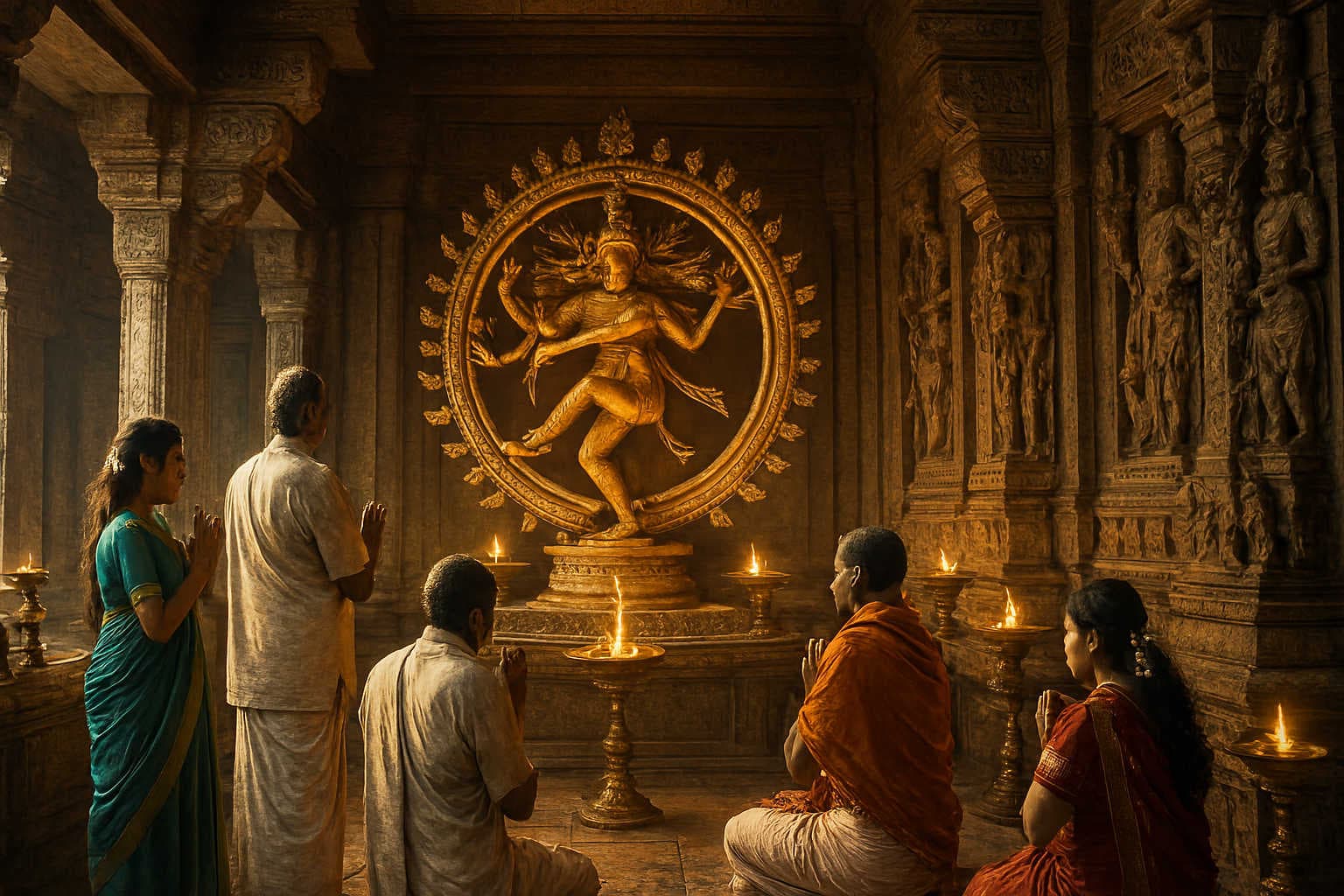
Sanctum Sanctorum: Inside the temple, the Nataraja idol represents Shiva performing his eternal cosmic dance, surrounded by the pancha bhoota elements, symbolizing the unity of nature and divinity.
Spiritual Significance
Chidambaram is not just a physical temple; it is a spiritual symbol:
-
Akasha Sthala: Representing ether, the temple teaches that spiritual consciousness transcends the material world, connecting devotees to higher awareness.
-
Cosmic Lessons: Shiva’s dance reminds devotees of the impermanence of life, the interconnectedness of creation, and the balance between destruction and renewal.
-
Pilgrimage and Enlightenment: Visiting Chidambaram is considered a journey of devotion and self-realization, purifying the mind, body, and soul.
Pilgrimage Experience
The experience of visiting Chidambaram temple combines spirituality, devotion, and culture:
-
Darshan of Nataraja: Devotees witness the idol in a meditative and dynamic dance posture, performing rituals, offering flowers, and participating in aarti.
-
Festivals and Celebrations: The Margazhi Deepam, Arudra Darshan, and Natyanjali Festival celebrate Shiva’s cosmic dance, drawing thousands of devotees and dancers from across India.
-
Cultural Immersion: The temple preserves classical dance, music, and Vedic traditions, making the pilgrimage a holistic spiritual and cultural experience.
Mystical Features of Chidambaram
Several mystical aspects make Chidambaram unique:
-
Akasha Lingam: Unlike other Shiva temples, the Nataraja lingam symbolizes space and consciousness, emphasizing the metaphysical aspect of worship.
-
Sacred Dance Hall (Chit Sabha): The sanctum, also called Chit Sabha, is believed to house the eternal energy of Shiva’s dance, accessible to devotees who meditate and pray with devotion.
-
Divine Vibrations: Many pilgrims report experiencing spiritual ecstasy, calmness, and enlightenment, affirming the temple’s powerful Shakti presence.
Cultural and Philosophical Insights
Chidambaram embodies ancient Indian philosophy, arts, and devotion:
-
Integration of Art and Spirituality: The temple is a hub for classical dance and music, demonstrating that devotion can be expressed through art.
-
Symbol of Knowledge and Wisdom: Shiva’s dance represents ultimate knowledge, inspiring seekers to pursue truth and consciousness.
-
Sthala Purana as Moral Guide: The legends teach that faith, perseverance, and spiritual discipline are essential for attaining divine grace.
Lessons from the Sthala Purana
-
Inner Awareness: Chidambaram emphasizes the awakening of consciousness and self-realization.
-
Harmony of Creation: Shiva’s dance teaches the balance between creation and destruction, reflecting cosmic order.
-
Devotion Beyond Rituals: True devotion is understanding the essence of consciousness and divinity, beyond mere rituals.
-
Unity of Arts and Spirituality: Music, dance, and devotion are intertwined, reflecting holistic spiritual practice.
Conclusion
The Story Behind the Sthala Purana of Chidambaram reveals the profound spiritual, cultural, and philosophical significance of this ancient temple. From the cosmic dance of Lord Nataraja to the mystical Akasha Lingam, Chidambaram represents consciousness, divine energy, and eternal wisdom.
Pilgrims visiting Chidambaram do more than witness an architectural marvel—they embark on a journey of inner awakening, learning the essence of life, devotion, and the interconnectedness of all creation. The Sthala Purana reminds devotees that true spirituality resides in understanding the self and the cosmos, making Chidambaram a timeless center of faith, knowledge, and divine grace.